BLOGS & TECHNICAL RESOURCES

Blower Insights, Selection Guides & Application Notes

Engineering-focused guides on energy-saving blower selection, retrofit, applications, installation, maintenance, and real-world operating challenges.

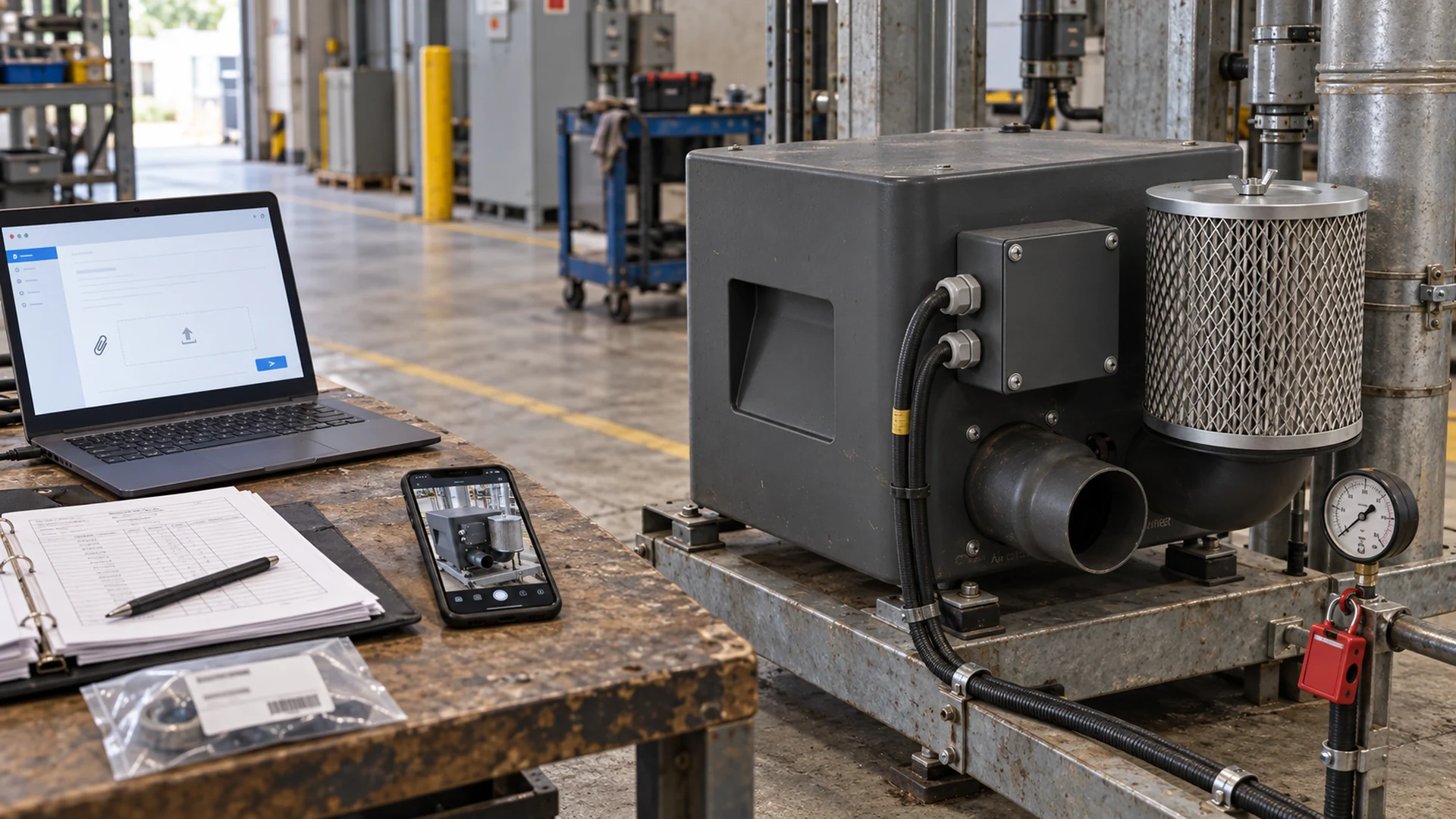
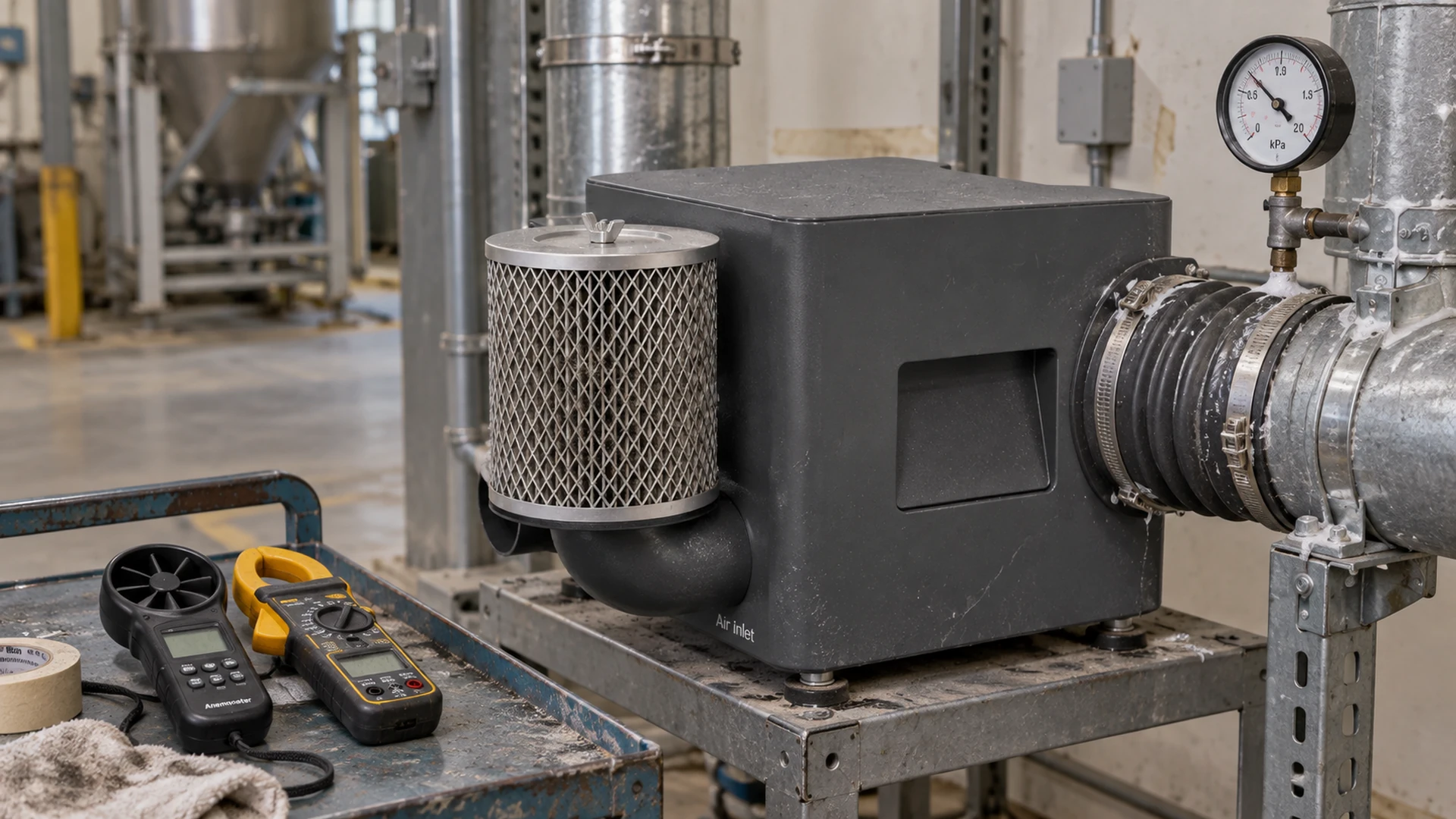
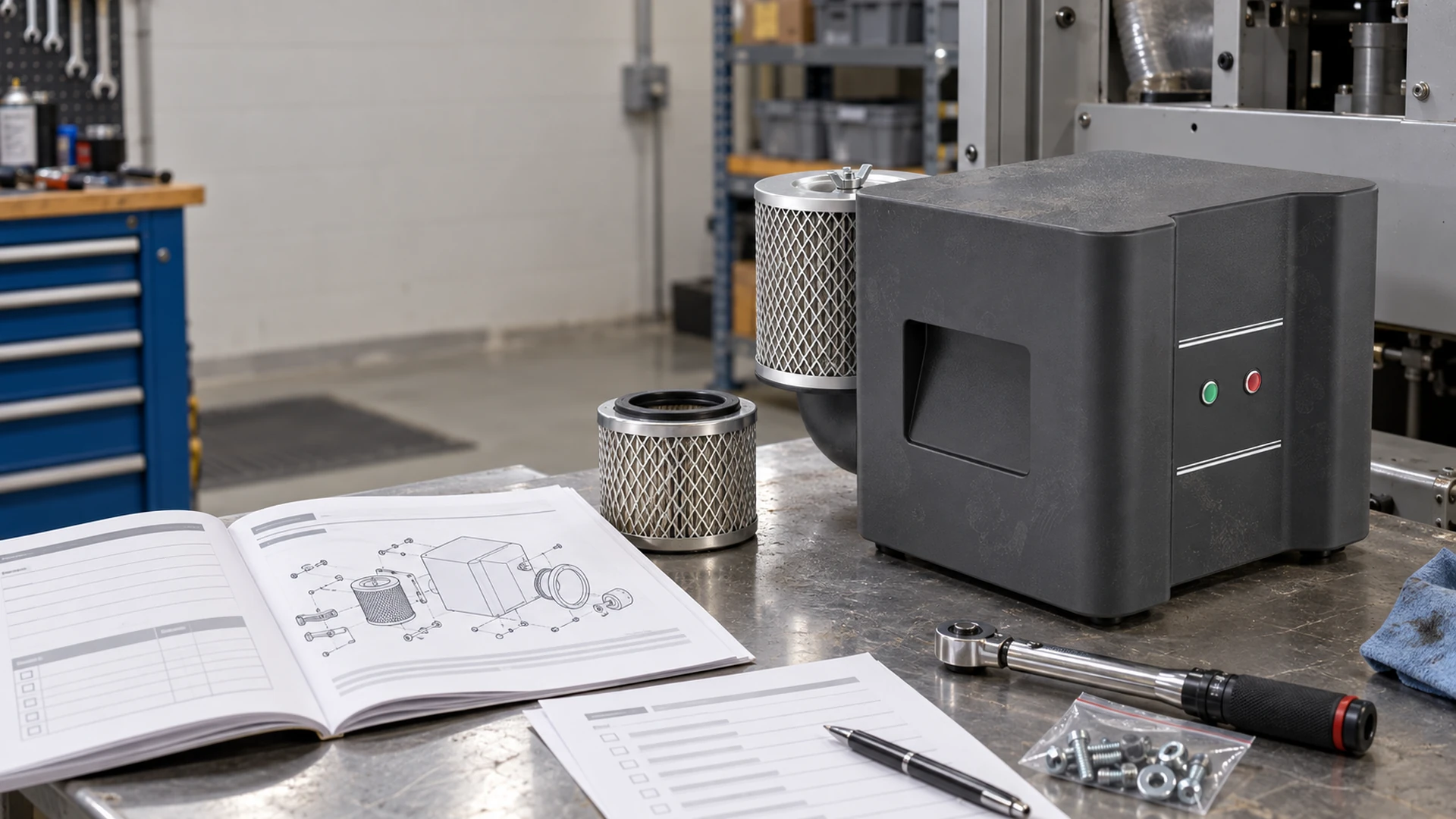
How to Inspect a Blower Inlet Filter

Installation

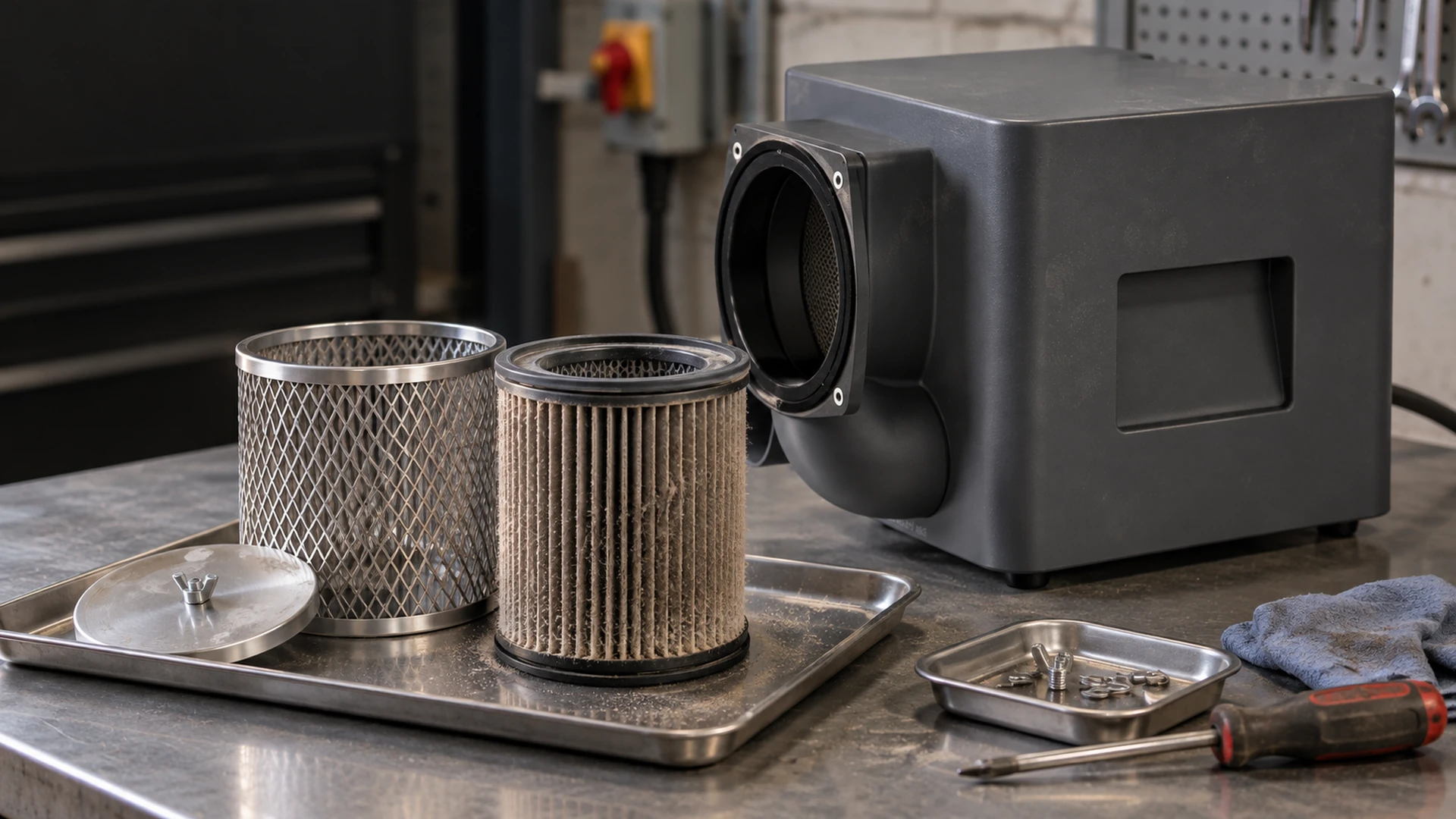
How to Inspect a Blower Inlet Filter

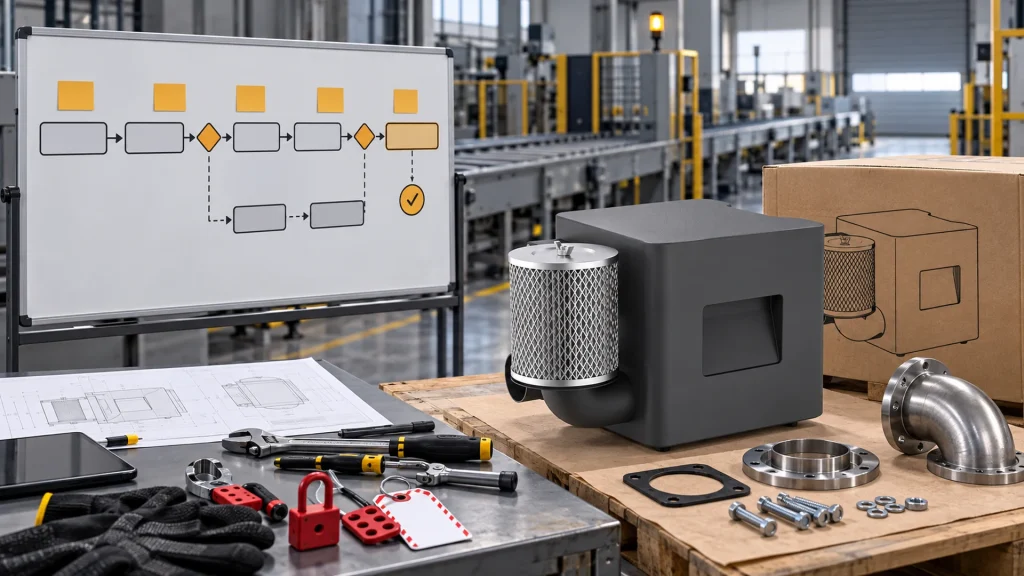
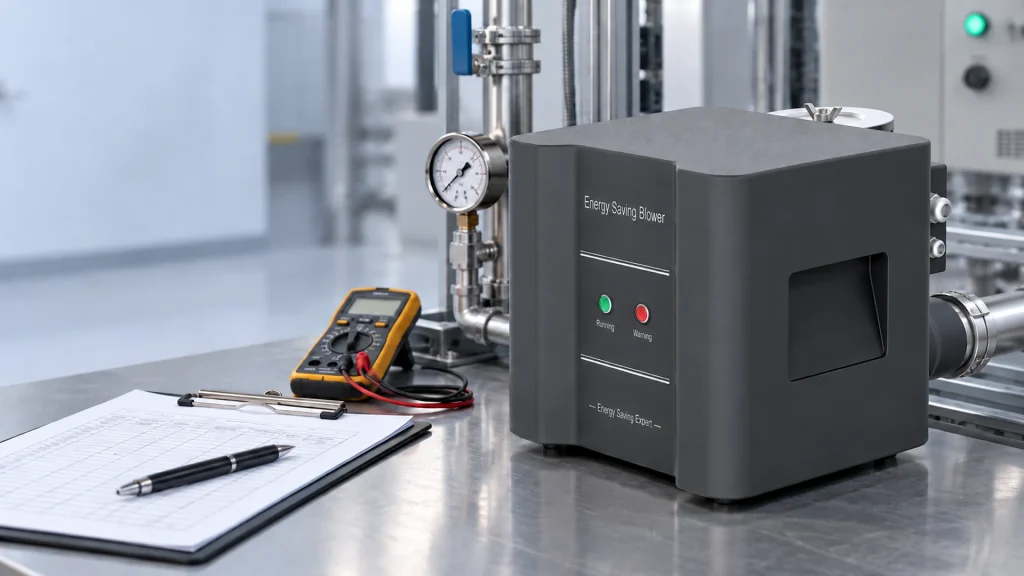
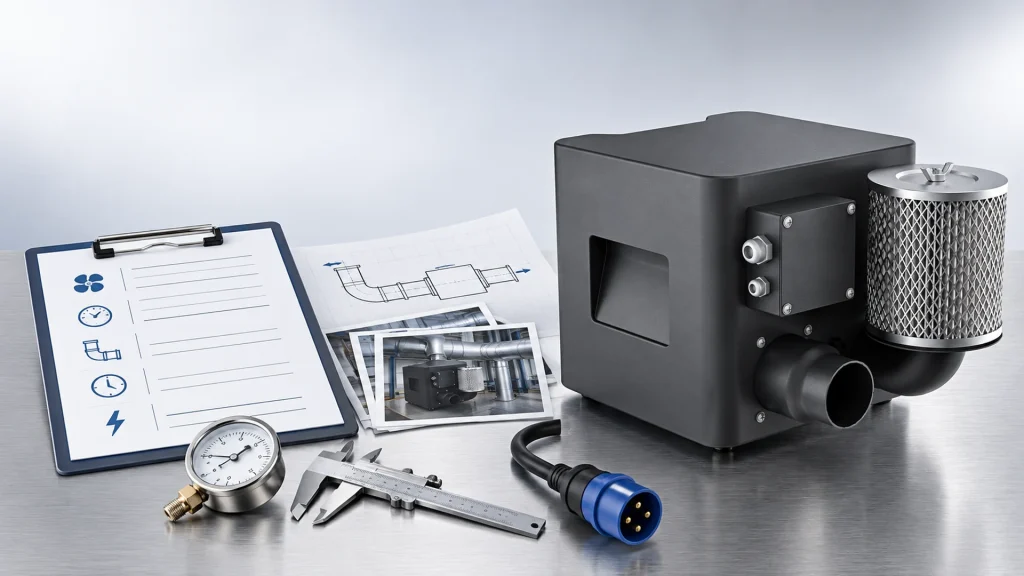
Learn how to inspect a blower inlet filter for loading, damage, poor sealing and bypass. Use model-specific limits and keep a useful service record.

Read article →
How Blower Outlet Size Affects Pressure, Velocity and System Losses

Retrofit

How Blower Outlet Size Affects Pressure, Velocity and System Losses

Blower outlet size affects the velocity at which air leaves the connection and enters the discharge system. If the downstream passage is too small for the required flow, friction, turbulence, sound and pressure loss can rise quickly. If it is enlarged without a reason, cost and installation space increase without changing the blower’s inherent curve.

Read article →
How to Choose the Right Pipe Size for a Blower System

Selection

How to Choose the Right Pipe Size for a Blower System

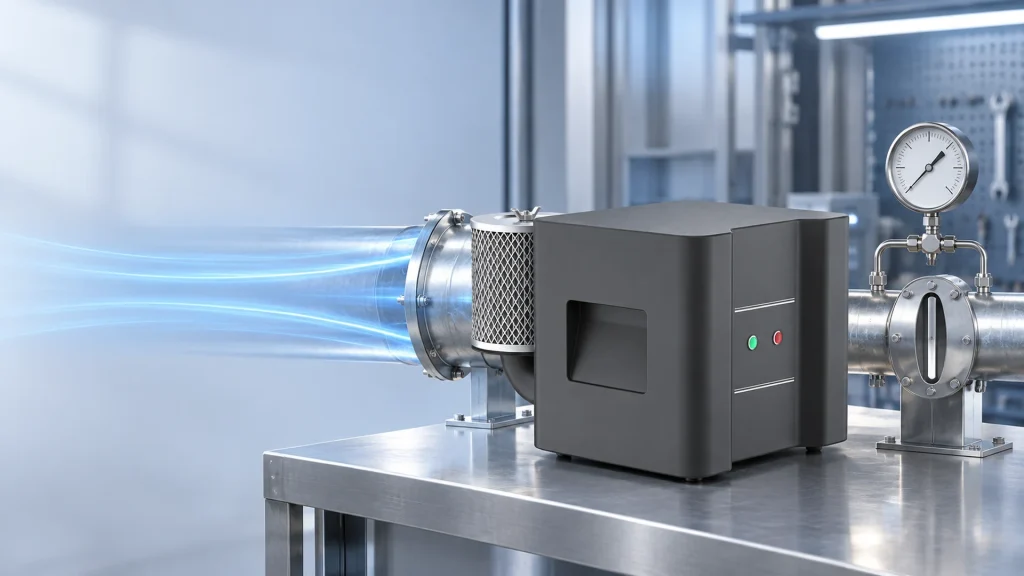
Blower pipe sizing affects the pressure available at the process, the blower operating point, noise, installation space and lifetime energy cost. A pipe that is too small creates high velocity and friction. A pipe that is unnecessarily large costs more, occupies space and can make connections awkward without improving the process.

Read article →
Blower Maintenance Checklist for Continuous Industrial Operation

Maintenance

Blower Maintenance Checklist for Continuous Industrial Operation

A useful blower maintenance checklist combines the final model manual with site conditions and commissioning data. It does not apply one generic interval to every factory. Dust, temperature, operating hours, process air, start frequency and production risk all affect what should be checked and how often.

Read article →
How Blower Inlet Size Affects Airflow and Efficiency

Retrofit

How Blower Inlet Size Affects Airflow and Efficiency

Blower inlet size affects the velocity and pressure loss of air entering the machine. If the actual internal passage is too small for the required flow, the blower may receive less air than expected, generate more inlet noise and operate at a different point from the selection curve.

Read article →
Blower Replacement Mounting and Electrical Interface Survey

Maintenance

Blower Replacement Mounting and Electrical Interface Survey

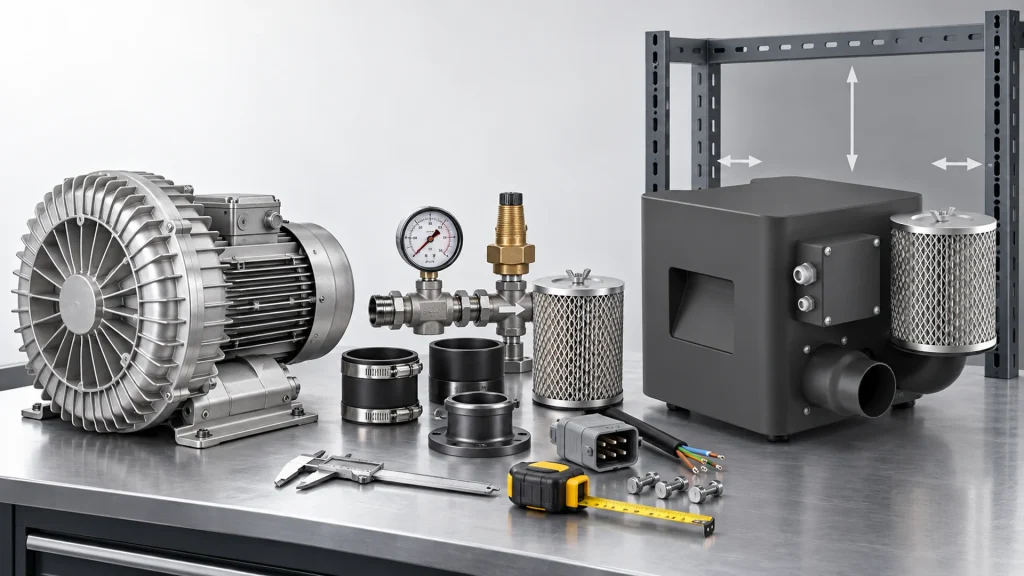
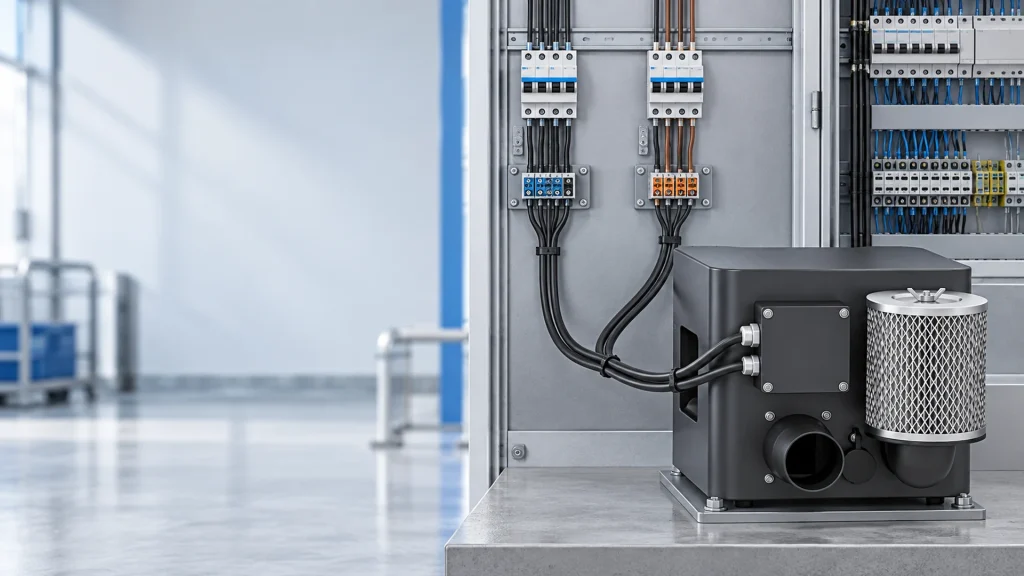
Before ordering a replacement blower, survey the mounting, electrical and control interfaces against the exact proposed model's drawing. Record datums, clearances and unresolved measurements; assess airflow and pressure duty separately.

Read article →
How Impeller Blade Angle Affects Blower Pressure and Efficiency

Retrofit

How Impeller Blade Angle Affects Blower Pressure and Efficiency

Impeller blade angle influences how air enters, moves through and leaves a blower. It affects pressure generation, airflow, power demand, efficiency, sound and the shape of the performance curve. However, one angle value cannot describe the complete aerodynamic design.

Read article →
How to Reduce Pressure Loss in an Industrial Blower System

Selection

How to Reduce Pressure Loss in an Industrial Blower System

Blower pressure loss is the pressure consumed as air passes through filters, pipes, bends, valves, hoses, manifolds and process outlets. Some loss is unavoidable because moving air through any component requires energy. Excess loss, however, raises the pressure the blower must produce and can reduce useful airflow at the process.

Read article →
Why Is My Blower Overheating?

Maintenance

Why Is My Blower Overheating?

Blowers generate heat during normal operation, so a warm housing does not by itself prove a fault. Overheating means a measured temperature, alarm or trend exceeds the permitted condition for the installed model—or rises abnormally at the same operating duty.

Read article →
How Impeller Diameter Affects Blower Performance

Retrofit

How Impeller Diameter Affects Blower Performance

Impeller diameter blower performance is a design relationship, not a simple buying rule. A larger impeller can create more tip speed at the same RPM and may support more pressure or airflow, but it can also require more torque, power, casing space and mechanical strength.

Read article →
Centralized Blower System vs. Individual Blower System

Selection

Centralized Blower System vs. Individual Blower System

A centralized blower system supplies several machines or zones through a common network. An individual system places a dedicated blower close to each process. The central option can reduce equipment count and consolidate maintenance. Local blowers can shorten piping, separate operating points and make energy use easier to assign to each machine.

Read article →
Why Does a Blower Motor Draw Too Much Current?

Maintenance

Why Does a Blower Motor Draw Too Much Current?

High blower current is a warning, not a complete diagnosis. It can result from supply problems, an unsuitable operating point, incorrect settings, restricted cooling, mechanical damage or a measurement mistake. The correct interpretation depends on the exact blower design and controller.

Read article →
How Blower Speed Affects Pressure, Airflow and Power Consumption

Retrofit

How Blower Speed Affects Pressure, Airflow and Power Consumption

The blower speed effect is easy to underestimate. A modest increase in RPM may produce a useful rise in airflow and pressure, but the required power can rise much faster. A lower speed can save energy, yet it may also reduce drying, cleaning or aeration below the process limit.

Read article →
Why Is My Blower Airflow Lower Than Expected?

Maintenance

Why Is My Blower Airflow Lower Than Expected?

Low blower airflow can appear as wet products, weak cleaning, poor aeration or a longer process cycle. Yet “low airflow” is often inferred from the process rather than measured. Pressure, velocity and airflow are related, but they are not interchangeable.

Read article →
Why Is My Blower Pressure Too Low? 10 Common Causes

Maintenance

Why Is My Blower Pressure Too Low? 10 Common Causes

Low blower pressure can stop drying, cleaning, aeration or conveying, but the gauge reading alone does not identify the fault. Pressure depends on where it is measured, how much air is moving and the resistance of the complete system.

Read article →
Blower Retrofit ROI: How Long Does Payback Take?

Retrofit

Blower Retrofit ROI: How Long Does Payback Take?

Blower retrofit ROI depends on more than the price of a new blower and a promised energy percentage. A useful investment case starts with the full installed cost, verifies annual energy savings under equivalent production and includes maintenance, downtime and any measurable process benefit.

Read article →
How to Avoid Blower Overload in Continuous Operation

Maintenance

How to Avoid Blower Overload in Continuous Operation

Blower overload is rarely prevented by one protective device alone. Reliable continuous operation depends on correct selection, a stable air path, suitable electrical protection, adequate cooling and maintenance readings that reveal deterioration before a trip.

Read article →
Energy Saving Blower for CNC Cleaning and Chip Removal

Applications

Energy Saving Blower for CNC Cleaning and Chip Removal

Machined parts often leave a process covered with coolant, loose chips or swarf. Air can help clear accessible surfaces before inspection, assembly or packaging, but not every cleaning task is suitable for a low-pressure blower. Chips can be sharp, heavy, trapped or hazardous, and uncontrolled blow-off can send them toward operators or sensitive machine components.

Read article →
How to Calculate Energy Savings After Replacing a Ring Blower

Retrofit

How to Calculate Energy Savings After Replacing a Ring Blower

A blower energy savings calculation is credible only when the old and new systems perform the same useful work. Subtracting a 1.5 kW nameplate from a 3.7 kW nameplate may look persuasive, but it does not prove either unit’s real input or whether airflow, pressure and production quality are equivalent.

Read article →
How Pipe Diameter Affects Blower Pressure and Airflow

Selection

How Pipe Diameter Affects Blower Pressure and Airflow

Pipe diameter changes the velocity required to carry a given airflow. That velocity affects friction, fitting losses, noise and the resistance seen by the blower. A pipe that looks convenient for the connection can therefore move the operating point far from the design target.

Read article →
Energy Saving Blower for UV Printing and Industrial Printing Machines

Applications

Energy Saving Blower for UV Printing and Industrial Printing Machines

Industrial printing machines use air for several purposes, but those purposes are not interchangeable. A blower may clean a substrate before printing, supply an air knife, cool a component or support a non-hazardous air-delivery function. Fume extraction, solvent vapor handling and safety ventilation require a separate engineered assessment.

Read article →
What Is System Resistance in an Industrial Blower System?

Installation

What Is System Resistance in an Industrial Blower System?

Blower system resistance is the pressure the air path requires at a given airflow. It comes from filters, pipe friction, fittings, valves, branches, manifolds and terminal devices such as air knives, nozzles or diffusers. As airflow changes, the required pressure usually changes as well.

Read article →
Energy Saving Blower for Textile Machinery

Applications

Energy Saving Blower for Textile Machinery

“Textile machinery” covers very different air duties. One machine may use an air knife to remove surface water, another may blow loose fibre from a path, and another may need suction or transport air. A blower selected for one task cannot be assumed suitable for all three.

Read article →
How to Match a Blower to the Actual Operating Point

Selection

How to Match a Blower to the Actual Operating Point

The actual operating point is where the blower and the connected system settle during operation. It combines delivered airflow and pressure under a defined machine condition. Selecting from motor power, maximum airflow or maximum pressure does not establish that point.

Read article →
Energy Saving Blower for Electroplating Tank Aeration

Applications

Energy Saving Blower for Electroplating Tank Aeration

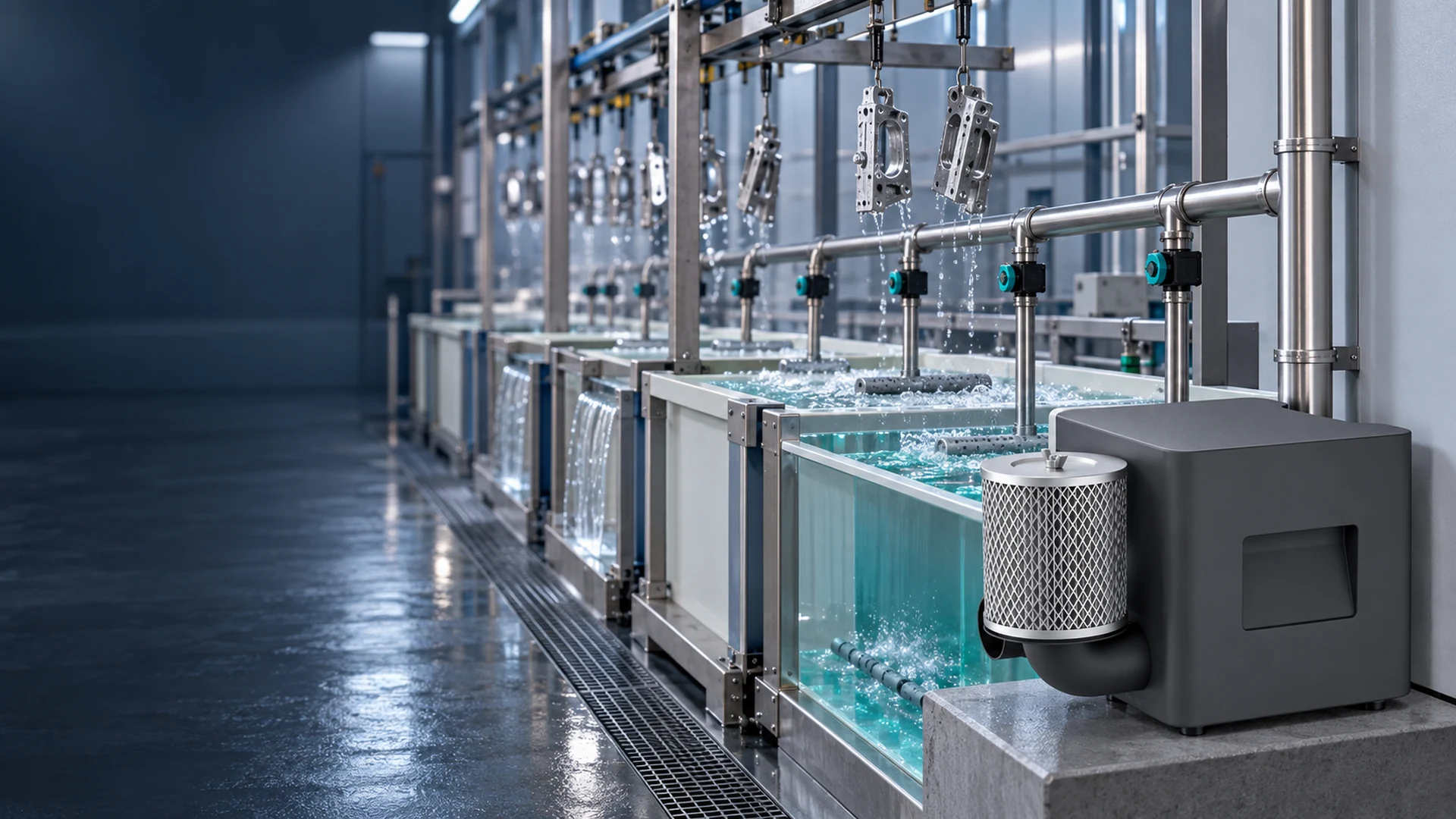
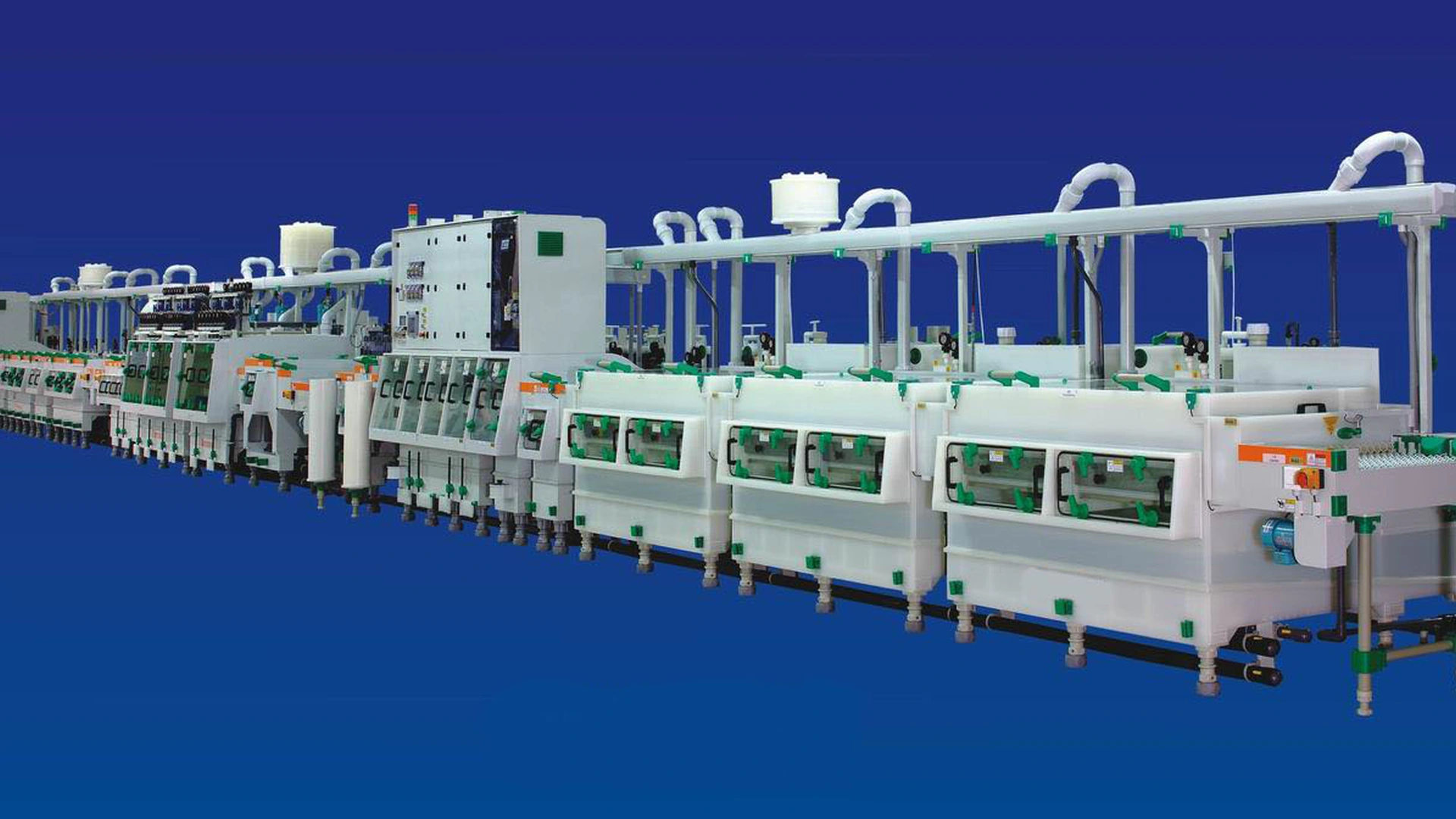
Air agitation is used in some electroplating and surface-treatment tanks to promote solution movement, reduce concentration differences or support a defined process condition. The blower may appear to be a simple air source, but the application combines hydraulic resistance, corrosive surroundings and strict product-quality requirements.

Read article →
Why Rated Blower Airflow Is Different from Actual Airflow

Installation

Why Rated Blower Airflow Is Different from Actual Airflow

Rated vs actual blower airflow differs because a catalogue number and a site measurement rarely describe the same condition. The rated value may be a maximum curve endpoint, a specified point at a stated pressure or a result corrected to reference air conditions. The installed blower must move air through filters, pipes, valves and terminals.

Read article →
How to Read a Blower Performance Curve

Selection

How to Read a Blower Performance Curve

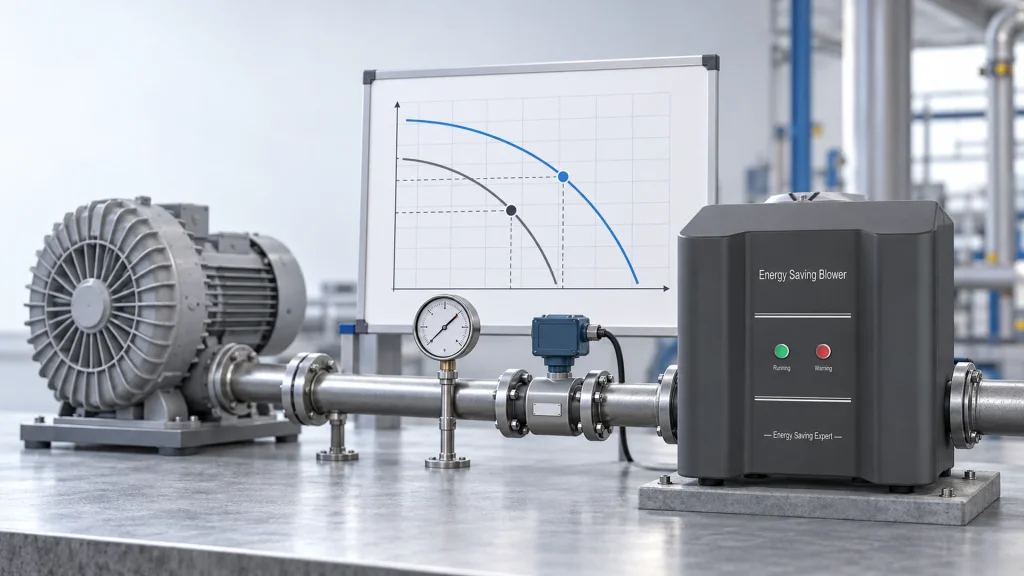
A blower performance curve connects pressure and airflow for a specific machine under defined test conditions. It answers a question that motor power and separate catalogue maximums cannot: how much air is available when the installed system requires a particular pressure?

Read article →
How to Select a Blower for Wastewater Aeration

Applications

How to Select a Blower for Wastewater Aeration

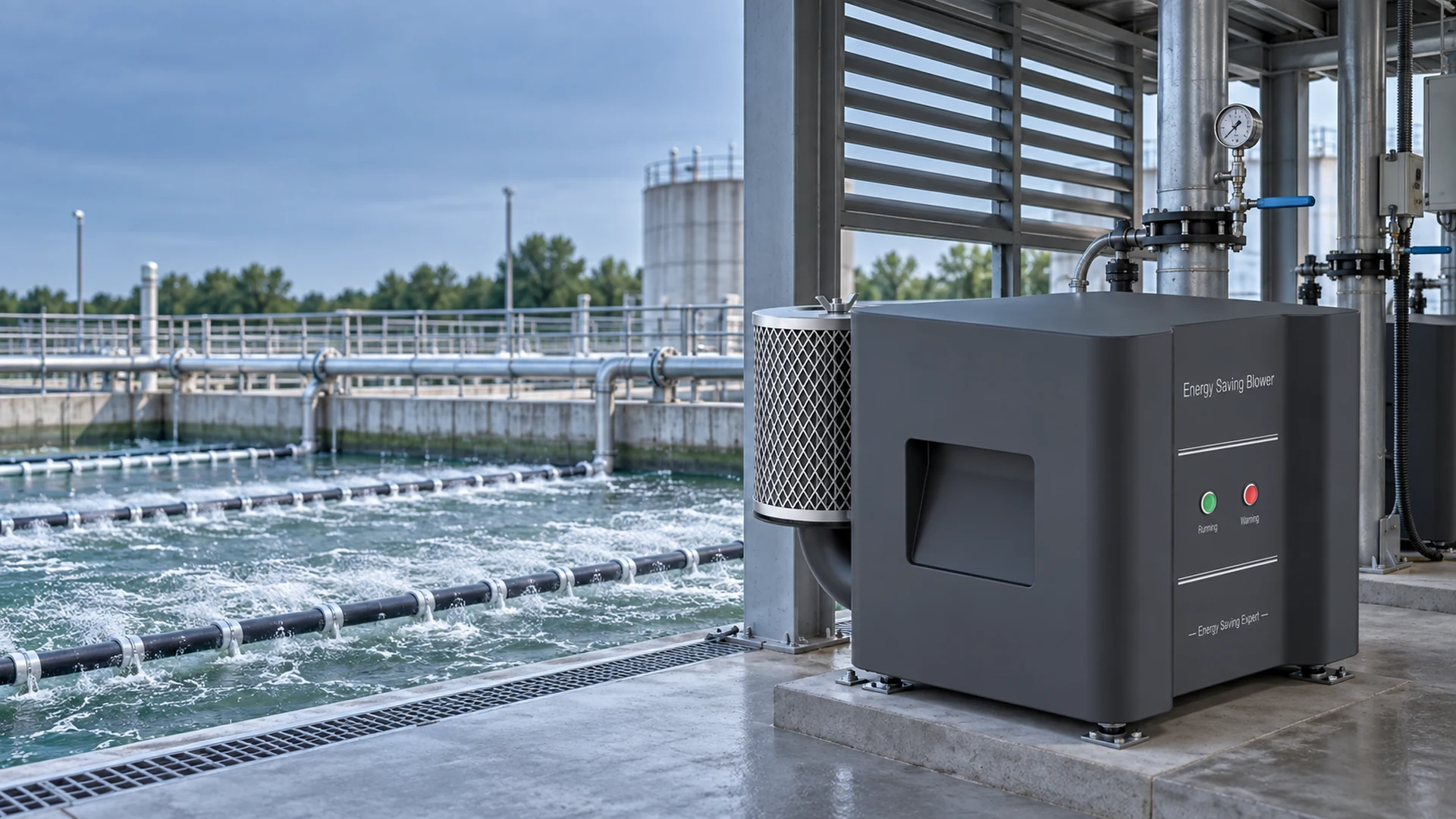
An aeration blower is part of the treatment process, not a standalone utility. Too little air can reduce treatment performance. Too much air wastes electricity, disturbs control and may create unnecessary wear. The correct selection must connect biological oxygen demand with the pressure and airflow required by the installed diffuser system.

Read article →
Static Pressure vs Dynamic Pressure in a Blower System

Installation

Static Pressure vs Dynamic Pressure in a Blower System

Static pressure vs dynamic pressure is not a choice between two competing blower ratings. They describe different parts of the air’s mechanical energy. Static pressure acts in all directions within the duct, while dynamic pressure is associated with air velocity. Their sum, under the appropriate reference and assumptions, forms total pressure.

Read article →
Air Compressor vs. Blower for Air Knife Drying

Retrofit

Air Compressor vs. Blower for Air Knife Drying

Compressed air and blower air can both create a fast jet, but they are not equivalent utilities. Compressed air provides relatively high pressure in a small flow path. A blower generally provides much larger air volume at lower pressure. The right choice depends on what the air knife must do, how wide it is, how long it runs and what infrastructure already exists.

Read article →
How to Calculate Blower Pressure for a Piping System

Selection

How to Calculate Blower Pressure for a Piping System

A blower does not create one fixed pressure regardless of the connected equipment. It moves air against resistance, and the resulting operating point depends on the blower curve and the system curve. A clean short duct may need little pressure; the same airflow through a loaded filter, undersized hose, several elbows and narrow air knives can require much more.

Read article →
Energy Saving Blower for Aquaculture Aeration Systems

Applications

Energy Saving Blower for Aquaculture Aeration Systems

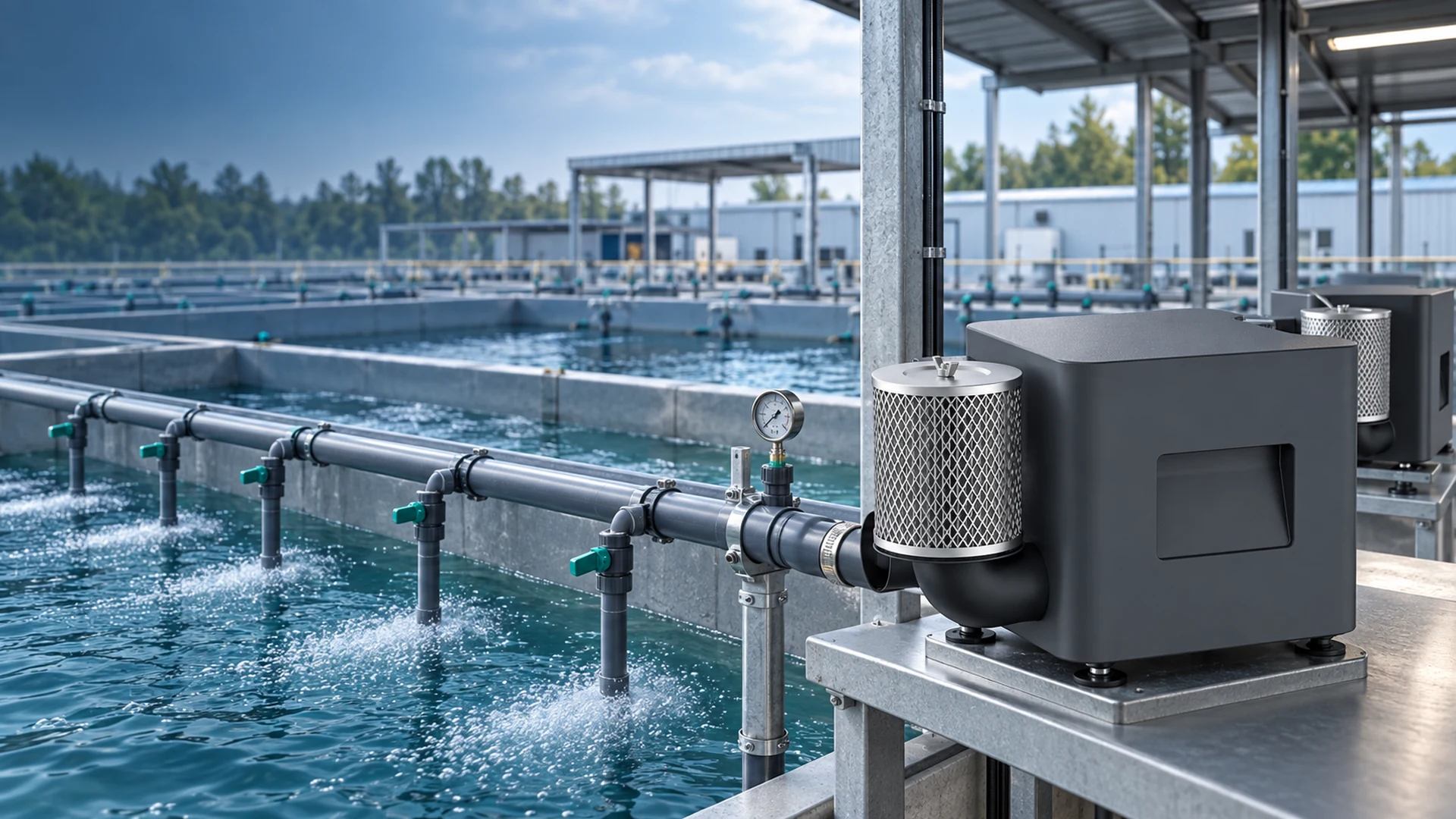
An aquaculture blower supports a biological process, not just a pipe network. If air supply is inadequate, dissolved oxygen can fall and stock can be stressed long before a maintenance team has time to investigate. If the system is oversized and poorly controlled, electricity becomes a permanent burden on farm operating cost.

Read article →
Energy Saving Blower for Aquaculture Aeration Systems

Applications

Energy Saving Blower for Aquaculture Aeration Systems

An aquaculture blower supports a biological process, not just a pipe network. If air supply is inadequate, dissolved oxygen can fall and stock can be stressed long before a maintenance team has time to investigate. If the system is oversized and poorly controlled, electricity becomes a permanent burden on farm operating cost.

Read article →
How to Adjust Blower Speed Without Losing System Stability

Installation

How to Adjust Blower Speed Without Losing System Stability

Blower speed control should change air output smoothly while keeping pressure, airflow, current, temperature and process quality inside their approved ranges. An unstable control loop can make pressure hunt, valves chatter, product quality vary and alarms appear even though the blower has enough capacity.

Read article →
Ring Blower vs. Energy Saving Blower for PCB Drying

Retrofit

Ring Blower vs. Energy Saving Blower for PCB Drying

Replacing a ring blower on a PCB drying line can look like a straightforward power-saving project. The old nameplate says 3.0 or 4.0 kW, a proposed blower has a much lower rating, and both suppliers describe strong airflow. That comparison is attractive, but it is incomplete. The line buys a drying result, not a motor rating.

Read article →
How to Calculate Blower Airflow for an Industrial Application

Selection

How to Calculate Blower Airflow for an Industrial Application

Blower airflow should describe what the process needs at the point of use, not the largest number printed in a catalogue. A drying machine may have several air knives, but only some operate together. An aeration system may split air among zones at different depths. A blow-off station may run for only part of each machine cycle. Those details determine the useful demand.

Read article →
Energy Saving Blower for Food Drying and Packaging Equipment

Applications

Energy Saving Blower for Food Drying and Packaging Equipment

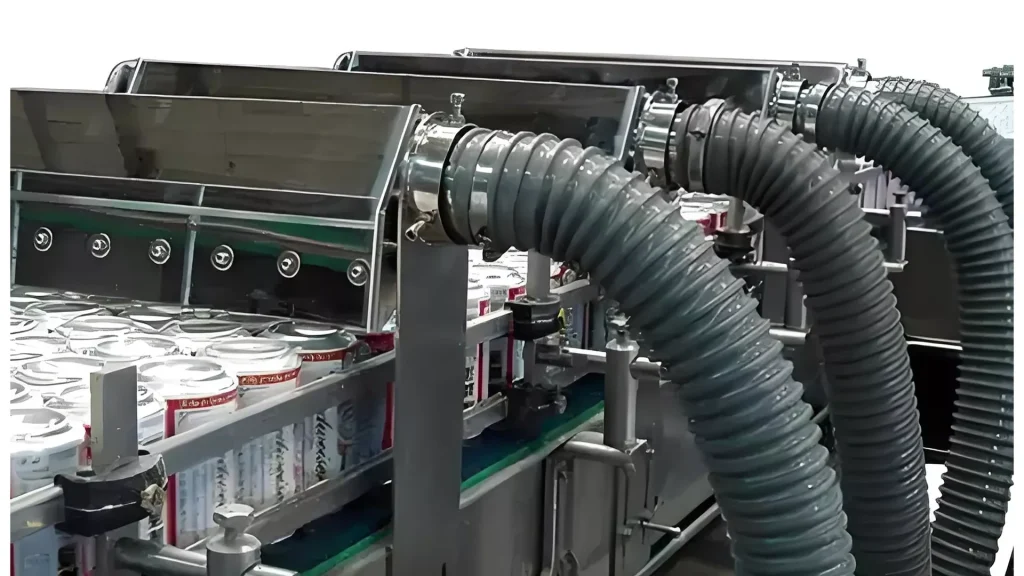
Water left on a bottle, can, jar or pouch can interfere with labels, date codes, inspection and secondary packaging. The drying section therefore has a clear production job: remove exterior moisture at line speed without damaging the package, spreading contamination or creating an impractical maintenance burden.

Read article →
How to Reduce Energy Consumption in Industrial Air Knife Systems

Selection

How to Reduce Energy Consumption in Industrial Air Knife Systems

The fastest way to waste energy in an air knife system is to treat excess air as free insurance. An oversized source runs at full output, valves are partly closed to control the result, filters load unnoticed, and every product receives the setting required by the most difficult job. The line may still dry or clean, but it pays for avoidable airflow during every production hour.

Read article →
Energy Saving Blower for Glass Washing and Drying Machines

Applications

Energy Saving Blower for Glass Washing and Drying Machines

Drying is the final quality gate in many glass washing machines. If water remains on the surface or along the edge, it can leave marks, disturb inspection, affect coating or lamination, and create handling problems. Yet supplying more air than the process needs adds noise and electricity cost without necessarily improving the result.

Read article →
Energy Saving Blower for Glass Washing and Drying Machines

Applications

Energy Saving Blower for Glass Washing and Drying Machines

Drying is the final quality gate in many glass washing machines. If water remains on the surface or along the edge, it can leave marks, disturb inspection, affect coating or lamination, and create handling problems. Yet supplying more air than the process needs adds noise and electricity cost without necessarily improving the result.

Read article →
When Variable Speed Control Can Reduce Blower Energy Use

Installation

When Variable Speed Control Can Reduce Blower Energy Use

Variable speed blower energy saving comes from matching air output to real process demand. A fixed-speed blower may produce more airflow or pressure than a line needs during reduced production, then dispose of the excess through a throttle valve, bypass or open branch. Speed control reduces the output at its source.

Read article →
Can a 1.5 kW Blower Replace a 4.3 kW Regenerative Blower? Technical Limits

Retrofit

Can a 1.5 kW Blower Replace a 4.3 kW Regenerative Blower? Technical Limits

A 1.5 kW Towwind blower may replace a 4.3 kW regenerative blower only when the old unit’s real duty is far below its nameplate capability and fits the verified TW1500B envelope. The review must identify whether the existing machine is single- or multi-stage and whether it serves pressure or vacuum duty.

Read article →
What Is the Best Blower for an Air Knife Drying System?

Applications

What Is the Best Blower for an Air Knife Drying System?

The best blower for an air knife is not always the model with the highest pressure, the largest airflow or the biggest motor. It is the blower that supplies the required air to every active knife, at the installed resistance, while meeting the line's drying or blow-off target with reasonable energy use and service risk.

Read article →
Can a 1.5 kW Blower Replace a 4.0 kW Ring Blower? Evidence Required

Retrofit

Can a 1.5 kW Blower Replace a 4.0 kW Ring Blower? Evidence Required

Replacing a 4.0 kW ring blower with a 1.5 kW unit is possible only when strong evidence shows that the old machine has substantial unused capacity. The power-class gap is large enough that a buyer should treat TW1500B as one candidate, not as the default energy-saving replacement.

Read article →
When Should You Replace a Side Channel Blower? A Maintenance Decision Guide

Selection

When Should You Replace a Side Channel Blower? A Maintenance Decision Guide

A side channel blower should be replaced when the combined risk of failure, process loss, energy waste and repair delay exceeds the risk and installed cost of a planned retrofit. Age alone is not enough. A well-maintained older blower may remain serviceable, while a newer but misapplied unit may deserve early replacement.

Read article →
Energy Saving Blower for PCB Air Knife Drying Systems

Applications

Energy Saving Blower for PCB Air Knife Drying Systems

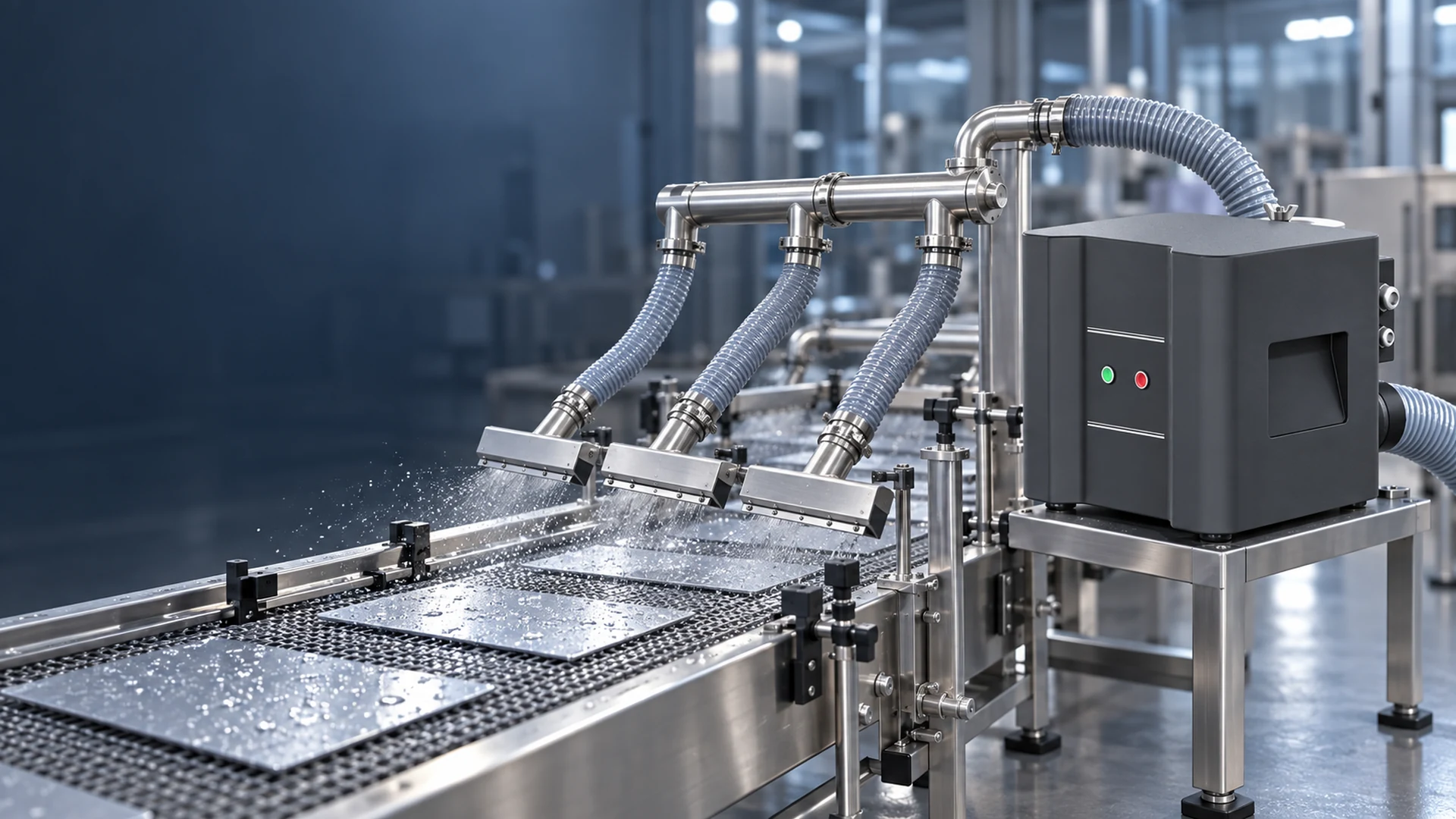
A PCB drying blower is easy to underestimate. The unit may look like a small component beside the washer, but its output influences water carryover, board stability, conveyor speed and the condition of the next process. If it is selected from motor power alone, the line may consume less electricity yet leave droplets around holes, edges and fixtures. If it is oversized, the machine may waste power and create unnecessary noise without improving the accepted product.

Read article →

How to Select an Energy Saving Blower: A Seven-Step Engineering Method

Selection

How to Select an Energy Saving Blower: A Seven-Step Engineering Method

Selecting an energy saving blower starts with the process result: what must be dried, aerated, cleaned, cooled or conveyed, and under which production condition? Convert that result into an airflow-pressure operating point, then check the air path, operating modes, electrical supply, controls and installation environment.

Read article →
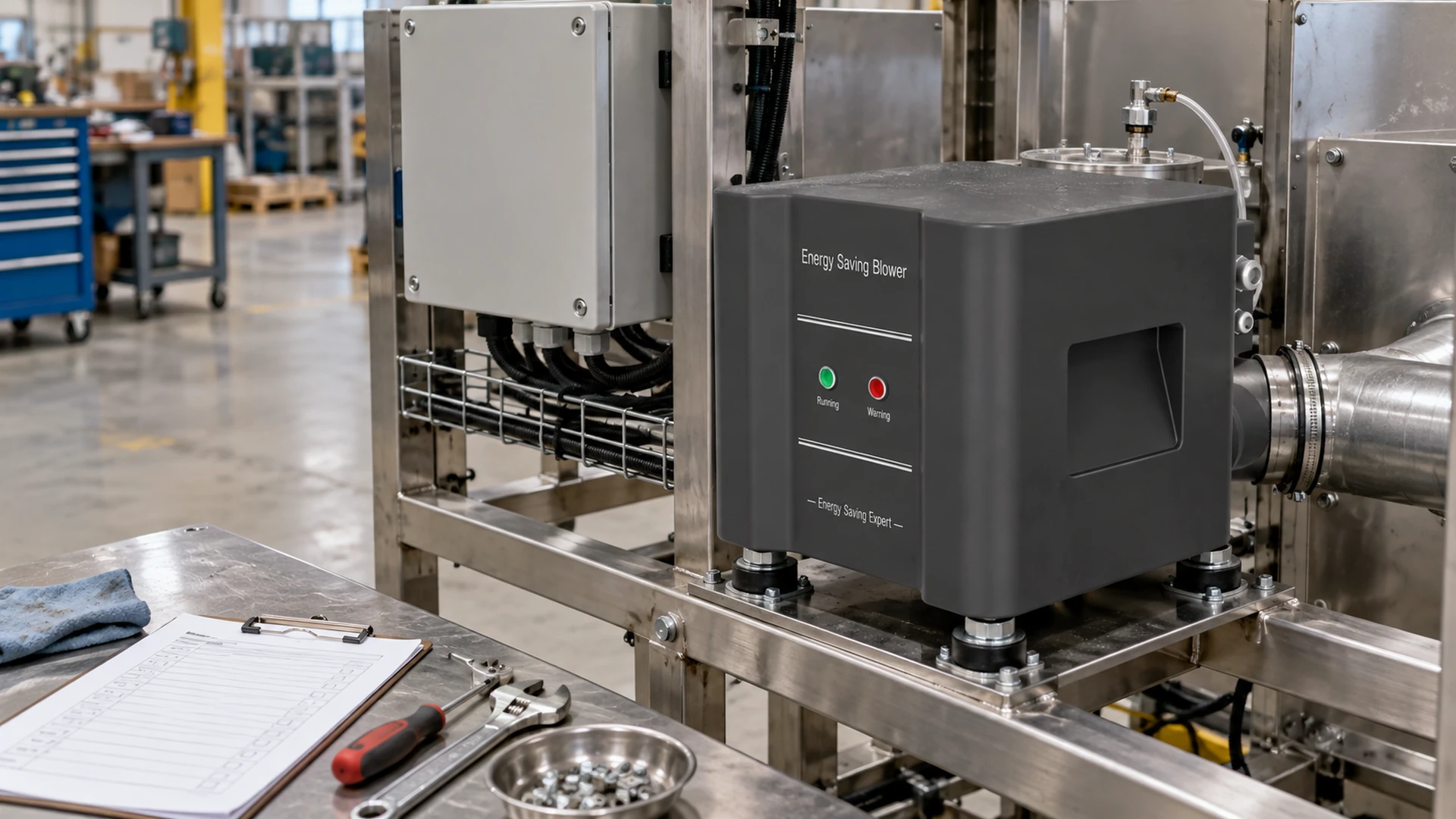
How PCB Air Knife Drying Works: Water Removal in Stages

Applications

How PCB Air Knife Drying Works: Water Removal in Stages

PCB air knife drying works by converting blower air into a controlled high-velocity sheet that pushes liquid across and off the board. The first stage removes bulk water; later stages clear the remaining film and droplets from surfaces, edges and holes.

Read article →
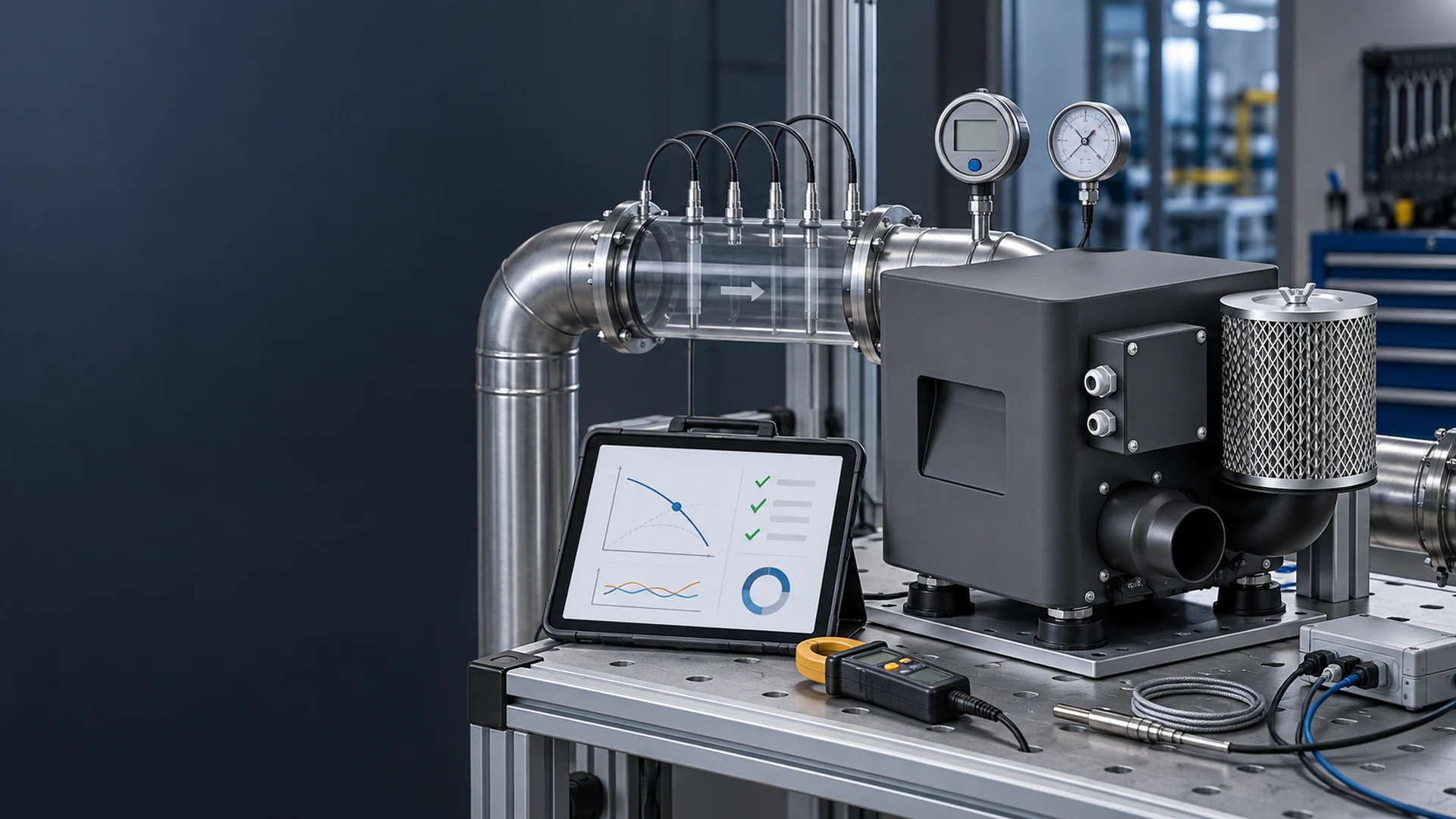
How Does an Energy Saving Blower Work? Motor, Control and Air Delivery

Selection

How Does an Energy Saving Blower Work? Motor, Control and Air Delivery

An energy saving blower converts electrical input into controlled airflow through a high-speed motor, drive electronics and an impeller matched to the casing. Towwind uses BLDC motor technology, so output can be adjusted electronically instead of relying only on a fixed-speed motor and mechanical throttling.

Read article →
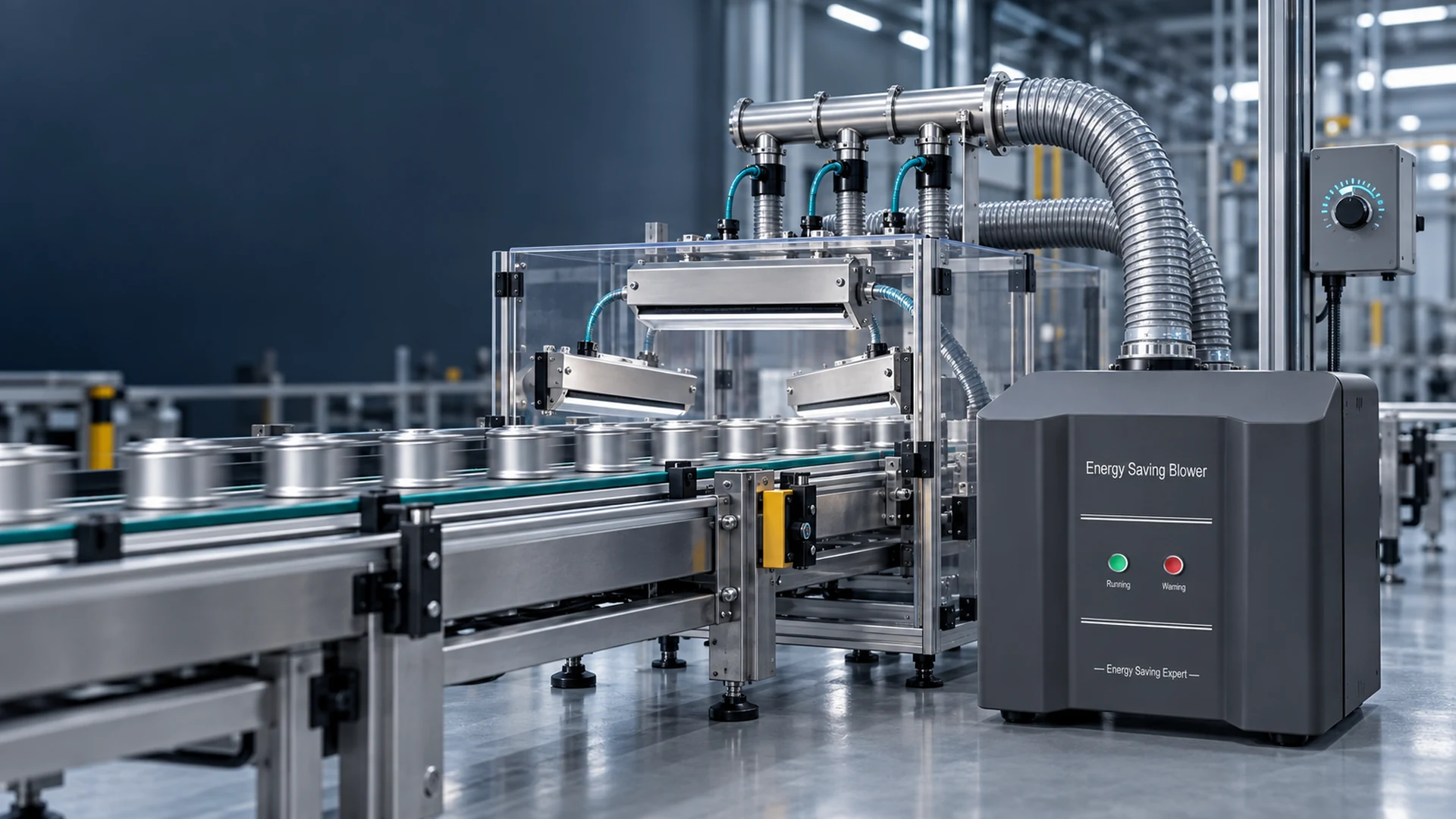
Energy Saving Blower vs. Ring Blower: A Like-for-Like Comparison

Retrofit

Energy Saving Blower vs. Ring Blower: A Like-for-Like Comparison

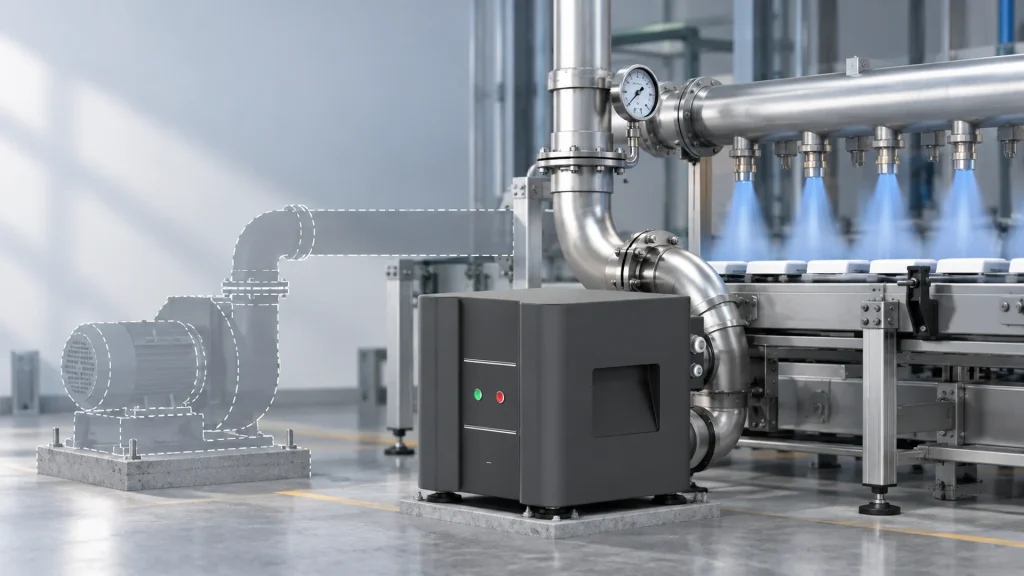
An energy saving blower should outperform a traditional ring blower on useful air delivered per unit of electricity—not merely carry a smaller motor rating. A defensible comparison holds airflow, pressure and process output constant, then measures electrical input and reviews installation, control and maintenance over the expected service life.

Read article →
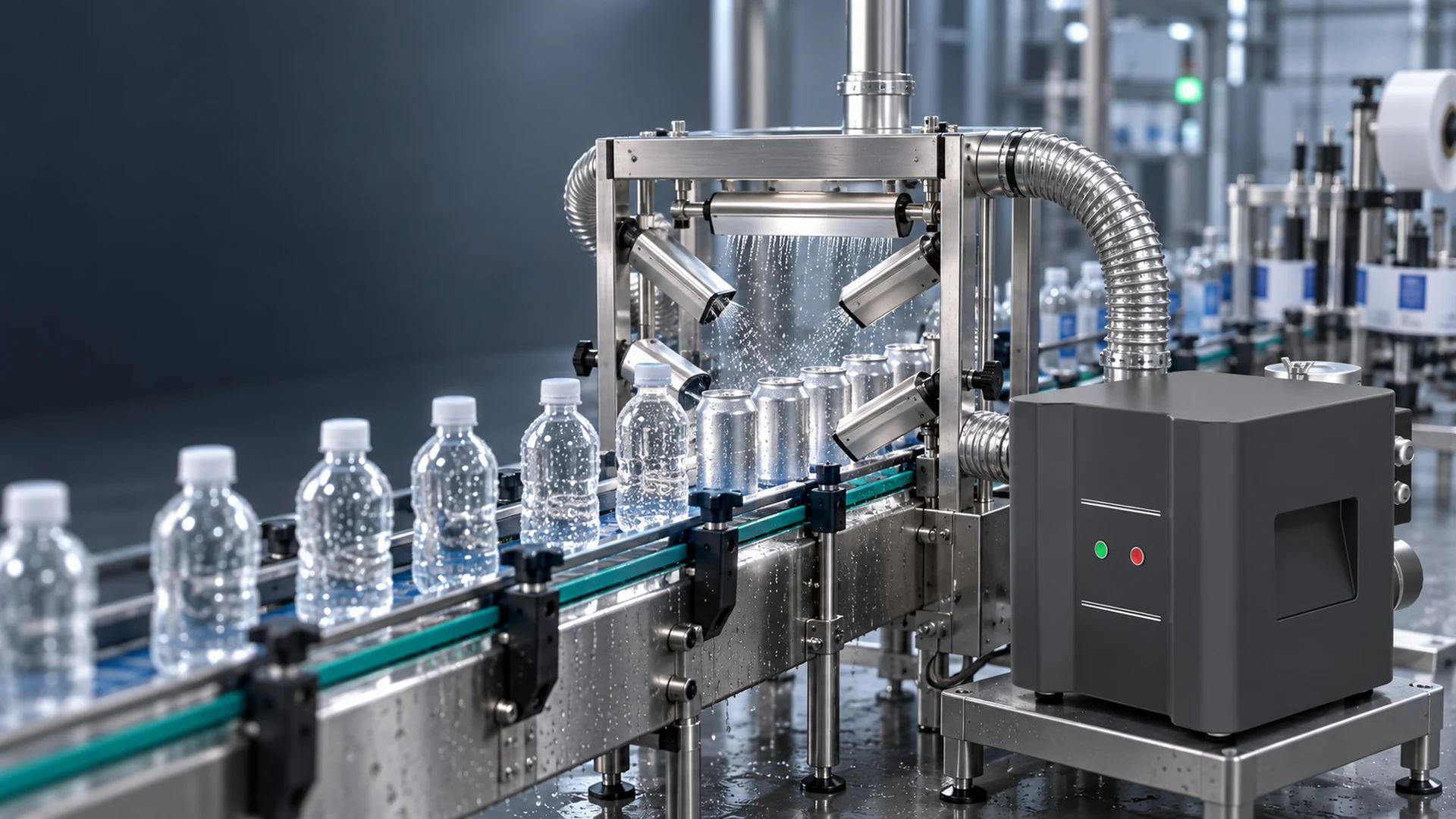
What Is an Energy Saving Blower? A Practical Buyer’s Guide

Selection

What Is an Energy Saving Blower? A Practical Buyer’s Guide

An energy saving blower is an industrial air source designed to provide the airflow and pressure a process needs with less electrical input than a conventional alternative working at the same duty. The phrase describes an outcome, not a guarantee. A blower earns the description only when it meets the required production result and the reduction can be verified at the electrical meter.

Read article →