
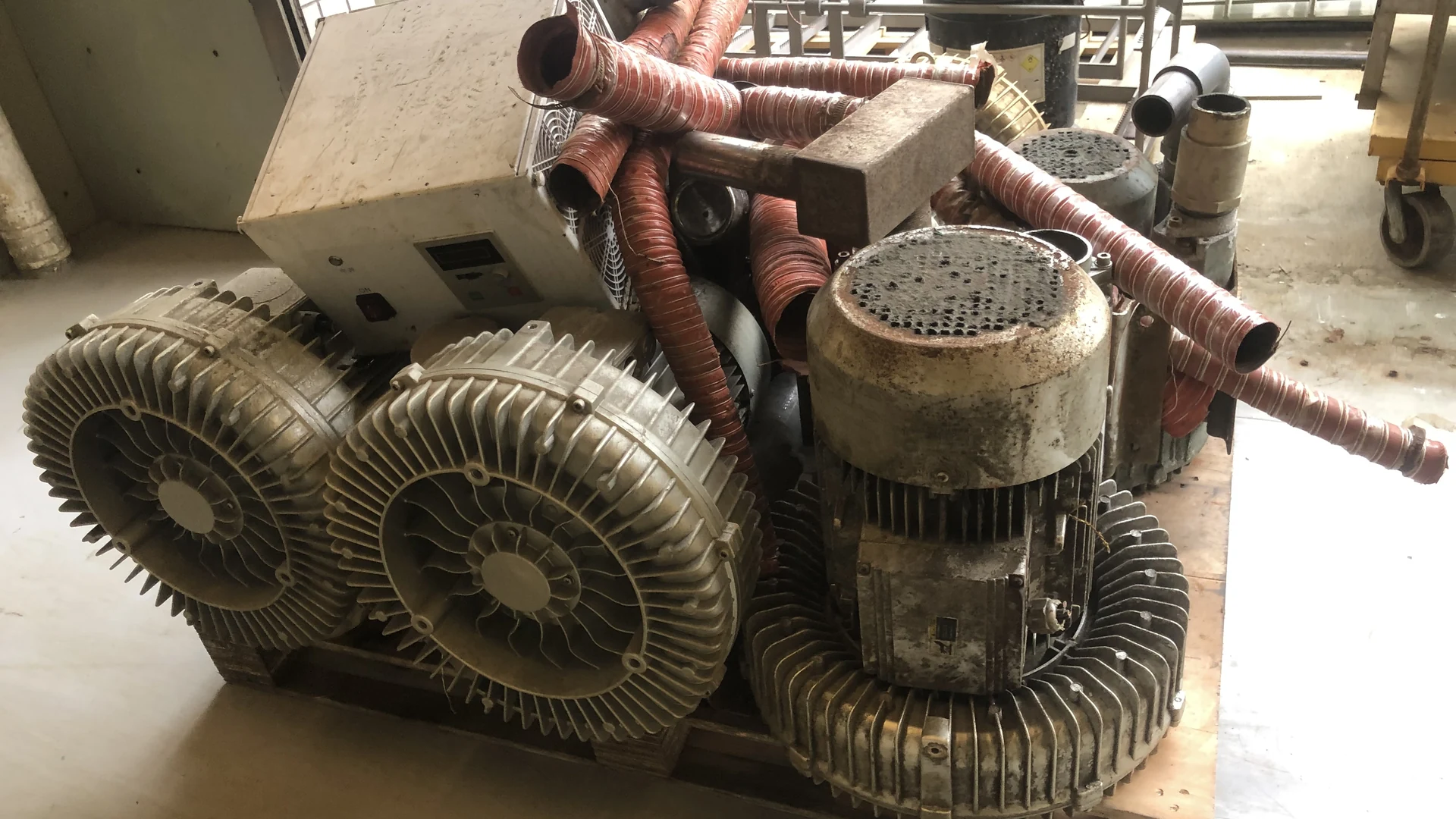
A label such as “ring blower” or “vortex blower” may not identify a different machine from one sold as a “regenerative blower” or “side-channel blower.” These names often overlap, but their use varies among manufacturers. Before asking whether another blower can replace the installed unit, identify the actual model, air path, stage arrangement, operating duty and protective devices.
Quick Answer: Are Ring and Regenerative Blowers the Same?
Often the terms refer to the same or a closely related regenerative/side-channel blower family. “Side-channel” describes the passage beside the impeller; “regenerative” describes repeated energy transfer to the air. “Ring” and “vortex” are also used as product names for equipment in this family. None of these labels proves that two particular models have the same curve, stage count, pressure or vacuum capability, motor, connections or protection. Use the exact model and its documentation to identify what is installed.
Why Blower Terminology Causes Confusion
Catalogues, nameplates and site records may use different terms for similar-looking equipment. A maintenance log might say “ring blower,” while the manufacturer’s catalogue describes the model as a regenerative or side-channel blower. Another supplier may use “vortex blower.” Treat those words as a starting point for identification, not as a complete technical specification.
The same generic name may cover different stage arrangements and duties. Conversely, different names may appear on equipment built around the same air-moving principle. Record the manufacturer’s exact model or variant before concluding that two installed units are equivalent.
What “Regenerative” and “Side-Channel” Describe
In the equipment discussed here, air enters near a rotating impeller and travels through a passage alongside it. The impeller repeatedly adds energy to the moving air before it leaves the housing. “Regenerative” points to that repeated transfer; “side-channel” points to the passage. These are descriptions of an operating principle, not guarantees of a particular airflow or pressure.
Some models use one stage and others use more than one. Stage arrangement, impeller and casing design, and motor configuration affect the documented performance. If the machine has been altered since installation, the original catalogue entry may no longer describe everything on site.
How “Ring Blower” and “Vortex Blower” Are Used
“Ring blower” is commonly used for a blower in the regenerative/side-channel family. “Vortex blower” can be another regional or commercial name for related equipment. Neither term should be treated as a separate performance class solely because the wording differs, and neither guarantees that every model bearing it is interchangeable.
When a drawing or purchase record uses one of these names, ask for the model number and the manufacturer’s curve. If only a generic label survives, mark the equipment identity as unconfirmed rather than assigning a replacement specification from the name.
How to Identify the Blower Installed on Your Machine
Record the Nameplate and Physical Model
Photograph the complete nameplate and the whole installation. Record the manufacturer, model or variant, serial number if legible, voltage, phase, frequency and motor rating. Note any replacement motor, altered impeller, added drive, changed rotation or other modification. Do not assume the plate on a replaced motor identifies the blower housing.
Find the Stage Arrangement and Performance Curve
Check the original drawing, manual or model-specific catalogue for the stage arrangement and the airflow-pressure or airflow-vacuum curve. A single maximum-flow figure and a single maximum-pressure figure are usually separate endpoints, not one simultaneous duty. If the curve or stage information is missing, record that gap explicitly and ask the manufacturer or supplier to identify the exact variant.
Identify Pressure or Vacuum Service
Record whether the process uses the discharge side for pressure or the inlet side for vacuum. State the sign, reference and location of each pressure reading, and how airflow was measured or estimated. Note the usual operating condition, not just a catalogue maximum. A similar-looking housing does not prove that the same model is suitable for both kinds of service.
Document Connections and Protection
Photograph the inlet and outlet, pipe connections, mounting and available service clearance. Record the filter, silencer, relief valve or vacuum breaker, check valve and any backflow protection that is actually installed. Their presence and arrangement help identify how the unit is used; they are not proof that a proposed alternative will preserve the same protection.
Why Identification Comes Before Replacement Comparison
A request to “replace a vortex blower” leaves the supplier without a reliable duty or interface basis. First establish what the existing machine is and how it is connected. Then separate catalogue facts, site measurements and unknowns. Only after that can an engineer compare another blower against the required operating point and accepted process result.
Motor rating alone is not an airflow specification. Nor does a shared family name show that two machines fit the same pipework, electrical supply or protective scheme. If the original model or curve cannot be confirmed, describe the uncertainty and agree how the missing duty information will be measured.
When to Move to a Like-for-Like Comparison
Once the existing model, operating duty and process requirement are documented, the reader can move from equipment identification to a separate keep-or-replace decision. The companion article “Energy Saving Blower vs. Ring Blower: A Like-for-Like Comparison” (TW-BLG-079) covers same-duty performance, measured electrical input, controls, retrofit interfaces and total ownership cost. This terminology guide does not assign a replacement model or predict energy savings.
What to Send for an Equipment-Identification Review
Send Towwind Technology the nameplate and installation photos, exact model or variant if known, original curve or manual, documented stage arrangement, pressure or vacuum service, available operating readings, and details of connections and protective devices. Label each item as documented, measured, reported or unknown. Towwind can then identify what further information is needed before any replacement comparison; a generic blower name alone is not enough.
Questions About Blower Names and Identification
Are ring blowers and regenerative blowers the same?
The names commonly overlap for equipment using regenerative/side-channel air movement. Confirm the manufacturer, exact model, stages, curve and installed duty before treating two particular machines as equivalent.
Is a side-channel blower a different technology?
“Side-channel” describes the passage used in the regenerative action discussed here. It may be a different name for a closely related blower family, not an independent performance guarantee. Check the actual model documentation.
Does “vortex blower” identify a precise specification?
No. The term is used in some markets for related equipment, but it does not state stage count, operating curve, pressure or vacuum duty, electrical data or connection dimensions.
What if the nameplate or performance curve is missing?
Record what can be seen on the housing and installation, identify any surviving purchase or maintenance records, and mark unverified details as unknown. Ask the manufacturer or a qualified supplier for model identification; measure the installed duty rather than inventing it from the generic name.