
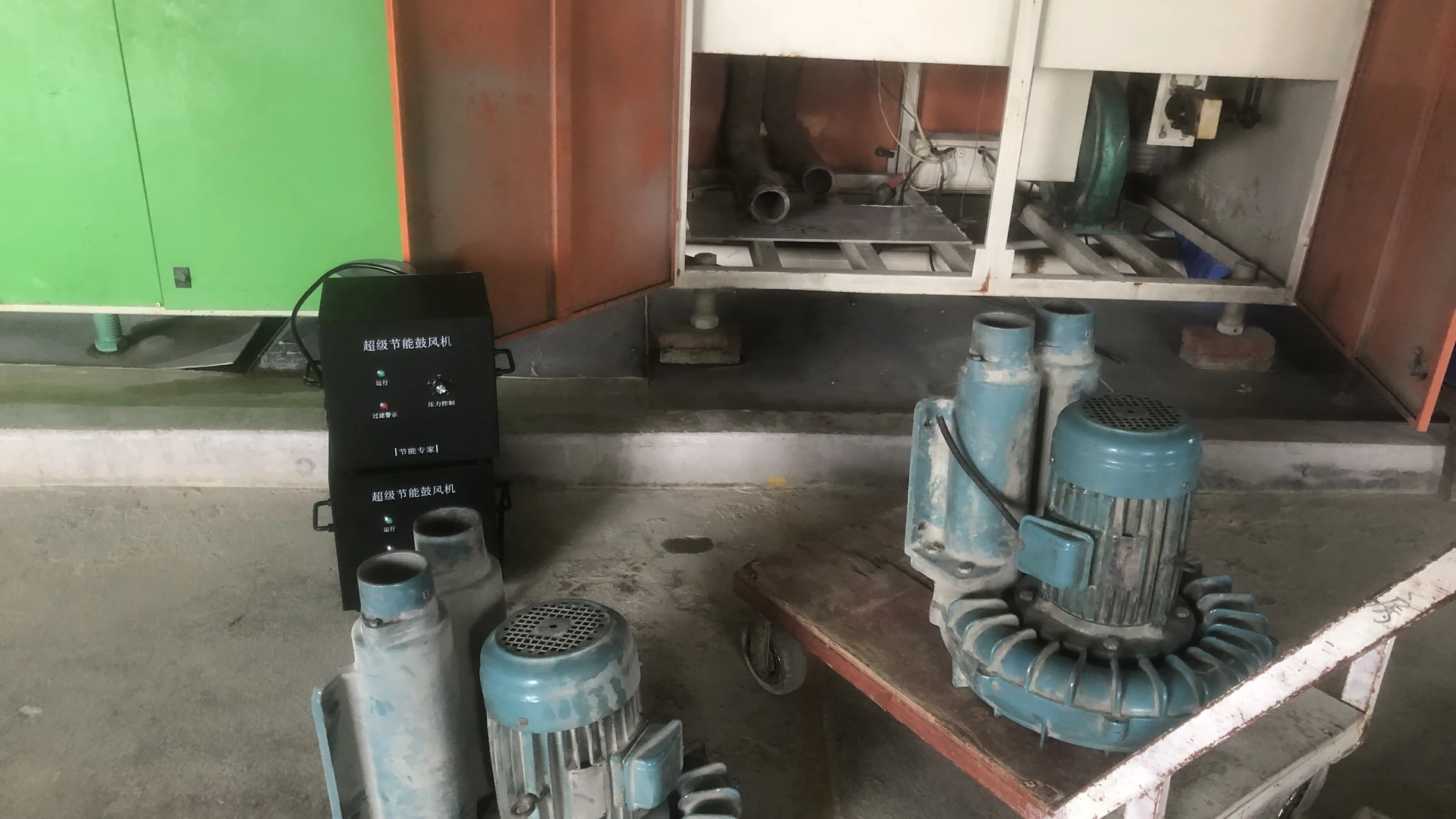
Traditional ring blowers remain practical in many fixed-duty systems. They are mechanically familiar, widely available and capable of clean, oil-free air. The case for replacement becomes stronger when the installed unit is oversized, runs continuously at one setting, sheds excess pressure through throttling, or creates recurring heat and maintenance concerns.
Quick Answer: What is the difference between an energy saving blower and a ring blower?
Compare both blowers at one verified operating point and under the same process conditions. Review measured input power, ability to follow demand, electrical and pipe interfaces, cooling, service access and acceptance results. A lower nameplate value is meaningful only after the required air duty has been maintained.
Set Up a Like-for-Like Comparison
Technology names do not decide the winner. Record the existing blower’s pressure and airflow at named points, normal valve positions, active branches, filter condition and accepted production result. Repeat the same measurements with the proposed unit. Correct obvious leaks or restrictions first so neither blower is judged through a faulty system.
Motor rating remains useful for electrical planning, but it is not the air duty. A 1.5 kW proposal does not automatically replace a 3.0 kW ring blower, and a 3.0 kW ring blower is not necessarily delivering 3.0 kW of shaft output continuously. Use measured input power and a common measurement boundary.
Technology and Operating Differences
| Comparison point | Traditional ring blower | Towwind Energy Saving Blower |
|---|---|---|
| Air generation | Regenerative or side-channel action | High-speed impeller package driven by BLDC motor |
| Output adjustment | Often fixed speed; may use valves, bypass or external drive | Confirm the delivered controller’s usable adjustment range at the required duty |
| Part-load strategy | Depends on installed controls | Speed can be matched to demand within permitted limits |
| Selection basis | Performance curve at required duty | Performance curve or verified data at required duty |
| Electrical versions | Depends on existing model | 220 V single-phase and 380 V three-phase variants listed |
| Retrofit work | Existing baseline | Controller, wiring, adapters and control logic may change |
| Energy proof | Metered input at accepted output | Metered input at the same accepted output |
The table describes comparison points, not an automatic ranking. A fixed-speed ring blower working close to its design point may be a sensible, robust solution. A controllable energy-saving blower has a stronger opportunity where demand varies or the old unit spends most of its life away from the useful duty.
Compare the Installed Operating Point
The air system creates resistance. Filters, pipe diameter, bends, valves, manifolds and terminal devices determine where each blower operates on its curve. Maximum pressure and maximum airflow are separate endpoints; combining them creates a duty that the catalogue has not promised.
Pressure needs a location. Outlet pressure cannot be compared with a reading after a long manifold without accounting for loss. Airflow needs a method and condition. If only nozzle velocity is available, record the nozzle and instrument rather than relabelling it as total m³/h.
Towwind model families must be compared using released pressure–airflow curves and delivered electrical data for the exact variants. A motor class or separate catalogue maximum does not establish useful air delivered at the site’s pressure.
Control Can Change the Cost Picture
Many ring blowers run whenever the machine is enabled, even when no product is present or only part of the air system is active. If excess air is discarded across a valve, the motor still carries much of the operating cost. Electronic adjustment can reduce output during lower-demand modes, provided the process remains within acceptance limits.
Before assigning value to control, document the load profile. Note hours at full production, reduced speed, idle and stopped conditions. A variable-speed feature has little financial value if the process genuinely requires one constant duty for every running hour. Conversely, automatic reduction during gaps or narrow products can be important on a long-running line.
Heat, Noise and Maintenance
Heat around the blower can be a maintenance clue, but surface temperature is affected by load, ambient air, ventilation and measurement point. Compare temperatures only after similar run time and under similar conditions. Do not convert one surface reading into a general efficiency claim.
Both technologies need a clear inlet and a clean filter. Define inspection and replacement from the delivered manual and site contamination and runtime; a clogged filter changes the operating point and can invalidate a power comparison.
Noise figures need a common test basis. Installed sound depends on mounting, pipe radiation, inlet treatment, room reflections and measurement distance. If noise influences the purchase, define the measurement position and machine condition in the acceptance plan; a catalogue claim and an uncontrolled handheld reading are not equivalent evidence.
Maintenance scope differs by installation. Review access to the inlet filter, electrical connections and controller, along with availability of consumables and technical support. A compact replacement that requires the machine to be dismantled for routine filter service is not a good integration.
Retrofit Interfaces That Purchasing Must Price
The purchase price should include the work required to make the proposed blower functional. Confirm inlet and outlet adapters, flexible connections, pipe support, mounting, electrical protection, grounding, control signals, alarm wiring and commissioning responsibility. Use the final drawing for the exact model to confirm package size, weight and connection layout.
The 220 V B220 and 380 V B380 variants have different listed currents. Do not order from voltage alone; verify phase, frequency, protective devices and the machine’s available control interface. Multi-blower systems also require isolation so that one unit cannot affect another during startup or shutdown.
Compare Energy Cost with Measured Data
Use accumulated kWh over a representative period or integrate measured input across the operating modes.
Energy use = measured input power × operating hours
Operating cost = energy use × site electricity tariff
Apply the same electrical and process boundary to both packages, including controllers and auxiliaries where relevant. Compare measured input at equivalent accepted airflow, pressure and process output; a general saving estimate is not a like-for-like result.
A credible trial records product or process acceptance alongside power. For drying, specify product condition and line speed. For aeration, record active branches and the process indicator used by the operator. For cleaning, define the surface or zone that must be cleared.
Decide from Total Ownership Cost
Keep the existing ring blower when it reliably meets a stable duty, energy use is acceptable, parts and service are straightforward, and replacement risk outweighs the likely benefit. Consider a Towwind retrofit when the old blower is oversized, demand varies, throttling or idle running wastes energy, or measured consumption supports a reasonable business case.
The final recommendation should state the proposed model, electrical version, duty assumption, included interfaces and acceptance test. Send Towwind the existing nameplate, measured pressure and airflow, power or kWh data, operating schedule, air-path drawing and process criterion. That evidence turns a technology comparison into a purchase decision the engineering and finance teams can both review.
Frequently Asked Questions
What is the difference between an energy saving blower and a ring blower?
The main practical differences are motor and control architecture, ability to match variable demand, installation interfaces and measured input at the required air duty. A ring blower may still be suitable for a stable fixed-duty system.
Is an energy saving blower always more efficient than a ring blower?
No universal result should be assumed. Compare both units at the same airflow, pressure and accepted process output, then measure electrical input over representative operating modes.
Can a smaller Towwind blower replace a larger ring blower?
Possibly, particularly when the existing blower is oversized. The proposed model must still cover the installed operating point and pass a process acceptance test.
What retrofit costs should be included?
Include adapters, flexible connections, mounting, pipe support, controller, protective devices, wiring, PLC changes, commissioning and planned downtime—not just the blower price.
When is keeping the existing ring blower reasonable?
Keeping it may be reasonable when it operates reliably near the required duty, demand is stable, energy use is acceptable and a retrofit would add more risk or cost than benefit.
How should a replacement trial be documented?
Record settings, pressure and airflow locations, electrical input, filter and valve state, production mode, process result, alarms and responsible approval for both old and new configurations.