
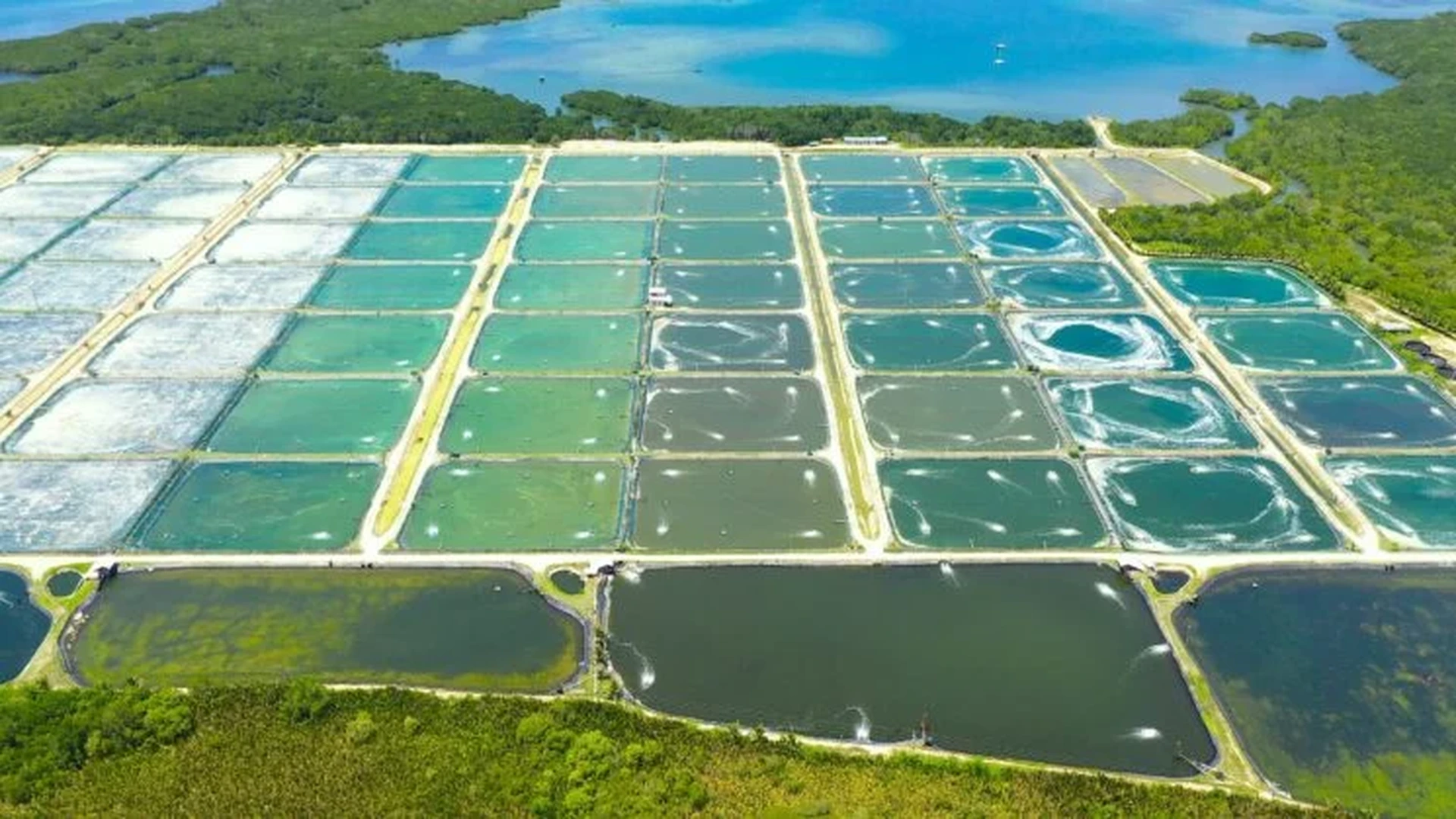
In a fish farm or recirculating aquaculture system, blower air is not simply a utility. A loss of distribution to one tank can become a stock-risk event, while an oversized blower can add electricity cost every hour it runs. The correct decision must balance process demand, pressure, control, redundancy and local service capability.
An aquaculture aeration blower should be selected from the required operating point and the complete diffuser network. Buyers also need to know how demand changes with biomass, water depth, temperature and feeding. This guide focuses on continuous operation and the evidence needed to purchase and maintain a dependable air system.
Quick Answer: What Matters Most in Aquaculture Blower Selection?
The blower must deliver the required airflow at the pressure created by water depth, diffuser resistance and pipe losses, across the farm's normal and demanding operating modes. Stable branch distribution, dissolved-oxygen monitoring, backup air and measured electrical input are equally important. Motor kilowatts or maximum catalogue airflow alone cannot establish suitability.
Begin with the Aeration Duty, Not the Existing Motor
Before comparing blower models, document what the air system must support. Identify the tanks, ponds or process vessels served, the aeration method, operating water depth, diffuser type and the branches expected to run together. Note whether the same blower also supplies air lifts, moving-bed media, degassing or another process function.
Demand changes with stocking density, fish size, feeding, water temperature and production stage. The farm may also isolate tanks or change water levels. Define normal, reduced and demanding approved modes rather than one unexplained airflow figure.
Dissolved oxygen provides essential process feedback, but it does not translate into one universal blower flow. Oxygen transfer depends on the system, including diffuser condition, bubble behavior, depth, water quality, mixing and biological demand. Use aquaculture expertise and site monitoring to establish the required process result.
For a replacement project, record the current blower model and measured performance, but do not assume its motor rating is the required duty. The old unit may be oversized, throttled, worn or operating against a restricted network.
Calculate Pressure from the Real Aeration Network
The blower must overcome the pressure associated with submergence as well as losses through the distribution system and diffusers. The governing branch is not always the longest one. It may be the deepest tank, the most restrictive diffuser group or the route with the most fittings and control devices.
Map the air path from blower inlet to each terminal group. Include the inlet filter, silencer, main header, bends, valves, flow-control devices, branch piping, check valves and diffusers. Mark water depth and elevation where relevant.
Ask where the stated pressure applies. A pressure at the blower outlet is not automatically the pressure available at a remote diffuser branch. Likewise, a clean diffuser test may not represent service after fouling develops.
Avoid selecting from maximum free-air flow. Blower airflow changes as system pressure changes, so the proposed operating point should be marked on the relevant performance curve. The selected model must also remain within its documented operating range across expected branch combinations.
Design for Balanced Air Distribution
Adequate total airflow does not guarantee that every tank receives enough air. Air follows the network according to branch resistance. A short or shallow branch can take more flow while a deep or restricted branch receives less.
Provide a practical way to observe and adjust distribution using suitable valves, flow indicators, pressure points or another verified method. Label each branch and record approved settings after commissioning.
Do not use throttling as a substitute for poor pipe design. Some balancing is normal in multi-branch systems, but excessive restriction consumes pressure and can move the blower away from an efficient operating condition. Header size, branch arrangement and diffuser grouping should support the intended distribution before fine adjustment begins.
When one tank looks weak, compare it with neighboring branches. A local decline may come from a valve, hose, water ingress or diffuser fouling rather than the blower. Weak aeration everywhere points toward a common air-path, control, demand or blower issue.
Treat Diffuser Condition as Part of Blower Performance
Diffusers create useful bubbles, but they also add resistance. Their condition can change with fouling, scaling, biological growth, physical damage or cleaning history. As resistance changes, branch flow and blower operating point can change.
Record diffuser type, quantity, installation depth and service status. If pressure rises at the same blower setting and branch configuration while aeration weakens, inspect the diffuser network and other restrictions before ordering a larger blower. More capacity can hide a maintenance problem and increase long-term energy use.
Damaged or disconnected diffusers create a different pattern. Air may escape through the easiest path, leaving other areas underserved even when total flow appears acceptable. Visual bubble patterns are useful observations, but combine them with defined readings and process monitoring.
Cleaning methods and intervals must suit the diffuser material, water conditions and supplier instructions. The blower manufacturer cannot prescribe a universal diffuser-maintenance schedule for every farm.
Connect Air Supply with Dissolved-Oxygen Monitoring
Blower readings tell only part of the story. The process objective is suitable water conditions for the farm's species, stocking plan and operating method. Monitor dissolved oxygen using the farm's approved locations, instruments and response plan.
Sensor placement matters. A single probe may not represent every tank, depth or circulation zone. Sensors also require inspection and calibration according to their documentation. A drifting probe can cause unnecessary blower output or hide a real oxygen problem.
Where control is automated, define how dissolved-oxygen signals affect blower speed, valves or staged units. Include signal failure behavior and manual operation. A controller should not quietly reduce aeration because a sensor value is invalid.
Do not copy one dissolved-oxygen threshold from another farm or species. The responsible aquaculture professional should establish operating targets and alarm actions for the actual stock and system.
Plan for Continuous Duty and Changing Demand
Many aeration systems run for long hours or continuously. Confirm that the complete blower package, controller, enclosure and cooling arrangement suit the stated duty under actual ambient conditions. Installation space must allow cooling airflow and service access.
Demand may vary through the day or production cycle. A controllable blower can reduce output when the verified process demand is lower, provided the system remains within the permitted operating range and all tanks continue to meet their requirements. This can be more efficient than constant throttling, but it needs a sound control strategy and reliable feedback.
Record hours by operating mode. One full-speed reading multiplied by every annual hour can overstate energy use, while one low-load reading can understate it. For buyers, a load profile is more valuable than a single power number.
Starts, stops and changeovers also need review. Do not assume a model can start as often as the process demands; follow the final documentation for the selected blower and controller.
Build Redundancy Around Biological Risk
Aeration reliability cannot depend entirely on optimistic delivery times for spare parts. Decide what happens if the duty blower, controller, electrical supply or main header becomes unavailable.
Possible measures include a standby blower, split duty across multiple units, emergency oxygen or another farm-approved contingency. The correct arrangement depends on biomass risk, system volume, response time, local power reliability and how long the process can remain safe without normal aeration.
A standby unit is useful only if it can deliver air to the required branches. Test changeover and record valve positions, controls and process response. Automatic changeover should signal the primary failure.
Review common-cause risks. Two blowers connected to one unprotected electrical source or one vulnerable header may not provide meaningful redundancy. Maintenance access also matters: technicians should be able to isolate one unit without disabling the entire aeration system where the design intends continued operation.
Monitor Conditions That Reveal a Developing Problem
A short, repeatable operating log can show changes before aeration visibly declines. Record readings in a defined operating mode so that comparisons remain useful.
| What to record | Why it matters |
|---|---|
| Active tanks, branches and valve state | Defines the actual air demand and network configuration |
| Blower command and feedback | Shows whether the unit follows the control request |
| Pressure at named header or branch points | Helps identify changing resistance or distribution |
| Filter condition or differential pressure | Reveals inlet restriction where measurement is provided |
| Measured input power at a defined boundary | Supports load and energy tracking |
| Runtime, alarms and maintenance actions | Connects events with equipment history |
| Dissolved oxygen and relevant process context | Confirms whether aeration supports the required outcome |
Temperature, vibration or other equipment-condition readings should use the locations and limits in the final model documentation. Do not create universal limits from a different blower.
If pressure, power or dissolved oxygen changes, first confirm the operating mode and instruments. Then inspect filters, valves, branches, leaks and diffusers before blaming the blower.
Compare Operating Cost with Transparent Measurements
Aeration often accumulates many operating hours, so a modest difference in measured input power can materially affect annual cost. Use real power at a stated measurement boundary, not motor nameplate power.
For each mode:
Energy Use = Measured Input Power × Operating Hours
Then apply the relevant electricity tariff to estimate cost. Add the modes to form the annual estimate. State whether the measurement includes the controller, cooling equipment or other package auxiliaries.
Purchasing should compare more than initial price. Include filter consumption, service access, spare-part availability, controller support, redundancy and production risk. A low purchase price can be poor value if local support is weak.
Energy comparisons must use equivalent aeration duty and process outcome. Reducing blower power by starving remote branches is not an energy-saving result.
Applying a Towwind Energy Saving Blower to Aquaculture
A Towwind Energy Saving Blower may suit diffuser aeration, RAS equipment or related air duties when the required airflow and pressure fall within a selected model's performance range. It may also replace some traditional ring, regenerative or side-channel blowers after the existing network and operating point are verified.
Towwind uses high-efficiency BLDC motor technology and may offer controlled output for applications with changing demand. Suitability still depends on the complete installation, including water depth, diffuser resistance, pipe losses, ambient conditions, continuous-duty requirement, electrical supply and control interface.
For a recommendation, send Towwind the number and dimensions of tanks or ponds, water depths, diffuser information, simultaneous branches, required process modes, measured pressure and airflow where available, dissolved-oxygen control method, operating hours, electrical supply, site environment and backup plan.
Actual savings depend on the required operating point, load profile, system resistance, operating hours and the efficiency and control method of the existing air supply. Verify the result with measured power while maintaining the same accepted aeration outcome. Energy use may be reduced in suitable applications, but actual savings depend on the required operating point, runtime, system resistance, controls and the equipment being replaced. Confirm airflow and pressure at equivalent accepted process output; motor nameplate power alone does not establish replacement suitability.
Commission the System Under Representative Conditions
Commissioning should prove distribution, control and response rather than only confirm bubbles. Test defined branch combinations and verify the demanding branch. Record blower settings, pressure locations, valve positions, process readings and diffuser condition.
Test alarms, standby changeover and the farm's approved response to loss of normal air. Confirm that staff can identify the running unit, isolate equipment safely and contact technical support with the model and event data.
Retain the accepted configuration as a maintenance baseline. Future readings can then be compared with a known working state instead of an undocumented memory of how the system once looked.
Buy a Reliable Aeration System, Not Just a Blower
Stable aquaculture aeration requires the blower, network, diffusers, monitoring, controls and contingency plan to work together. A catalogue flow number cannot prove delivery to the deepest tank or readiness for a trip.
Define the process modes, map the real pressure path, verify branch distribution and calculate cost from measured power and operating hours. With that information, Towwind can evaluate an Energy Saving Blower against the actual farm duty and buyers can compare proposals on reliability as well as price.
Frequently Asked Questions
How is an aquaculture aeration blower selected?
Select it from the airflow and pressure required at the same operating point, accounting for water depth, diffuser resistance, pipe losses, simultaneous branches, duty cycle and process demand. Verify the result with aeration and dissolved-oxygen monitoring.
Does more airflow always improve dissolved oxygen?
No. Oxygen transfer also depends on diffuser condition, bubble distribution, depth, water quality, mixing and biological demand. Excess air may add energy cost without solving poor distribution or a process limitation.
Why does one fish tank receive less air than another?
Branches may have different depths, pipe losses, valve settings or diffuser resistance. Leaks, water ingress and fouling can also affect one branch. Inspect the network and compare defined pressure or flow indicators.
Does an aquaculture blower need backup capacity?
The contingency should reflect the biological risk, response time and site reliability. It may involve a standby blower, multiple units, emergency oxygen or another approved method. Test the actual changeover arrangement.
Can Towwind replace an existing ring blower on a fish farm?
Potentially, if a Towwind model matches the validated airflow, pressure, duty, electrical, control and environmental requirements. Existing motor power alone is not enough to select the replacement.