
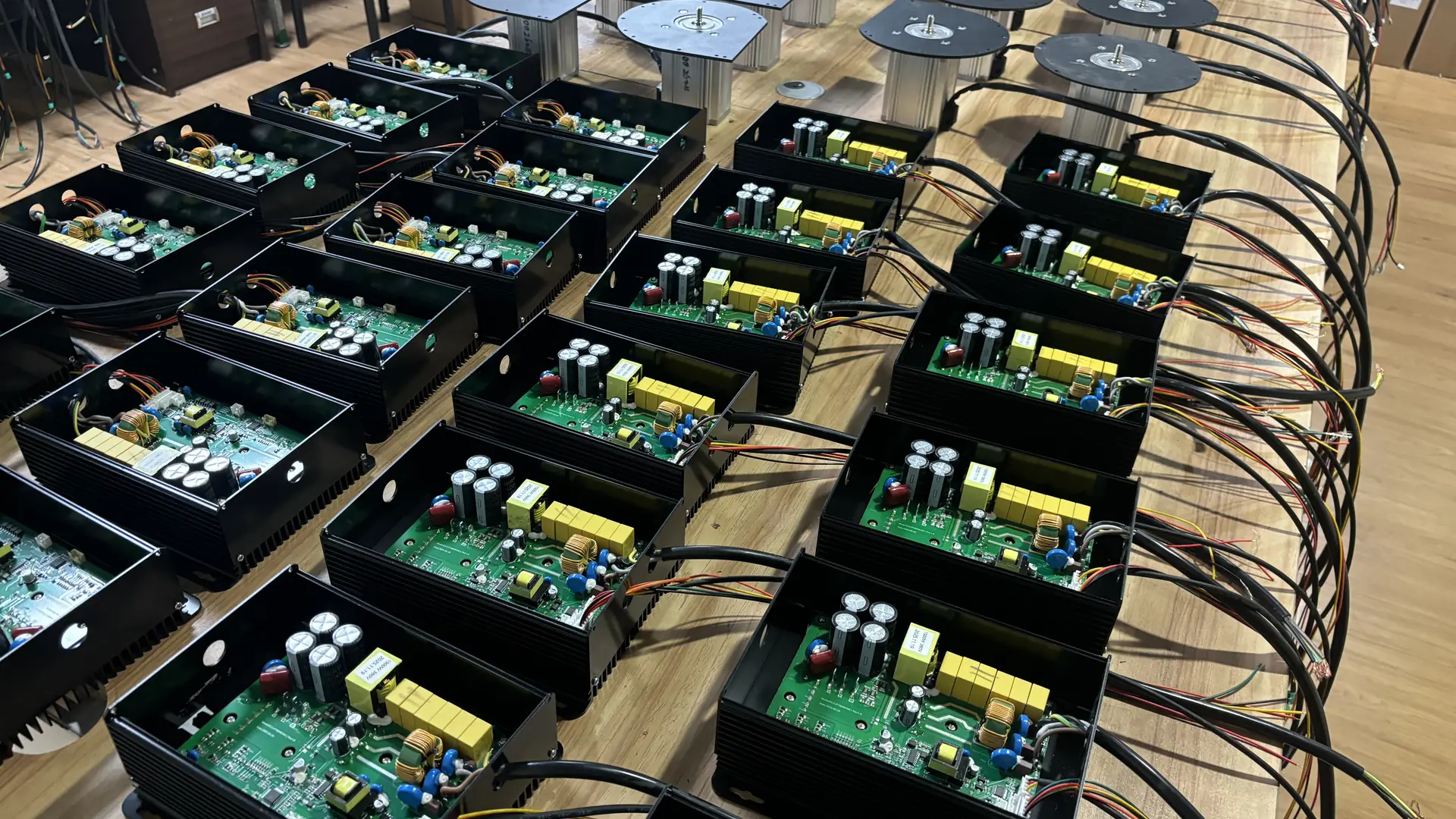
A blower can provide the high-volume, lower-pressure air used by many continuous air-knife systems. An energy saving model may reduce operating cost when it is matched to the actual duty and controlled around production. It is not, by itself, proof of hygienic suitability or a guarantee that every container will leave the line dry.
Quick Answer
Select the blower from the total demand of all active air knives, installed pressure loss, container shape, conveyor speed and defined downstream requirement. Check pressure and airflow together on the model curve, and verify performance on the most difficult normal package.
For food and beverage equipment, also perform the site’s hygiene and food-safety review. Confirm where the air comes from, what surfaces it contacts, how filters and ducts are cleaned, whether water can return to the blower, and whether materials in the product zone meet the required standard. A general industrial specification does not replace that assessment.
Define the Downstream Requirement
Drying quality should reflect the next step. A pressure-sensitive label may fail if the bonding area is wet. Inkjet coding can blur on residual water. Vision inspection may misread reflections, while water entering a tray or carton can weaken secondary packaging.
Identify the exact surfaces that matter. A bottle body may be easy to dry while the cap skirt, base ring, shoulder or handle retains droplets. Cans can carry water around seams and rims. Pouches may flap or deform under an aggressive jet.
Record package material, dimensions, orientation, spacing and maximum line speed. State whether the product arrives warm or cold and whether condensation can reform after the dryer. An air knife that removes rinse water cannot prevent later condensation if the package surface remains below the local dew point.
Map the Water-Removal Stages
Efficient systems remove bulk water before using high-velocity air for the final film and trapped areas. Allow drainage time after rinsing. Use guides and conveyor transitions that do not collect water beneath the container. Position knives so each jet moves liquid toward a free edge rather than back into a recess.
Several focused stages may outperform one oversized blast. A first knife can strip the main body, followed by targeted jets for shoulders, caps or bases. The correct arrangement depends on container geometry and stability.
Observe splash and re-entrainment. Water removed from one row should not strike the next. Drain pans, separators and guards need enough capacity for the production rate and must remain accessible for cleaning.
Establish Air-Knife Demand
Document each knife or nozzle: slot length and width, plenum design, working distance, angle, inlet size and branch pipe. Count all outlets that operate simultaneously. If formats use different knives, create a schedule for each recipe.
Use supplier consumption data at the intended plenum pressure where available. Add the flows of simultaneous knives, then calculate losses through the inlet filter, main duct, bends, valves, manifolds and branches. The result is a required airflow at a required pressure.
Maximum airflow and maximum pressure on a blower datasheet are normally separate curve endpoints. They cannot be assumed to occur at once. Ask the supplier to locate the required duty on the exact model curve and identify the permitted operating region.
Protect Container Stability
More air is not always safer. Lightweight empty bottles can tip, rotate or bunch. Flexible packs may flutter, and unsecured caps or labels can be disturbed. Even full containers can move if opposing jets are poorly balanced.
During trials, watch guides and conveyor loading as carefully as the dry surface. Adjust knife angle, working distance and staging before simply reducing line speed. A controllable blower can support recipes for light and heavy packages, provided each setting is validated and protected.
The acceptance test should include start-up gaps and irregular spacing. A system that is stable with a continuous wall of containers may behave differently when one package enters alone.
Hygiene and Air Quality Are Separate Requirements
Towwind’s blower specification provides industrial product data, but it does not by itself establish food-contact approval for a particular installation. The machine builder and food producer must conduct the applicable hazard analysis and meet local regulations and customer standards.
Questions to resolve include:
- Does air contact only the outside of closed packaging, or can it reach exposed product?
- Where is the blower inlet relative to dust, aerosols, chemicals and wash spray?
- What filter grade and monitoring are required?
- Can duct interiors be inspected and cleaned?
- Are downstream materials and lubricants suitable for the zone?
- Could condensate, rinse water or cleaning fluid collect in the air path?
An “oil-free air path” claim is not the same as verified air quality at the knife. Inlet environment, filtration, duct cleanliness and maintenance all influence the delivered air.
Towwind Range for Initial Screening
Request the released exact-model curve, electrical and environmental data, control details and final drawing. Confirm pressure and airflow at the packaging-line duty, then validate exterior dryness and applicable hygiene requirements.
Confirm the selected model’s control range, electrical supply, environmental rating, certification, noise and dimensions from current released documentation. Adjustable output does not replace a verified pressure-flow match.
Final selection requires the released curve at the combined duty, confirmation of the operating region and a package trial. Confirm port dimensions on the delivered drawing.
Installation in a Washdown Environment
Do not assume the selected blower is suitable for immersion or direct high-pressure cleaning. Verify its released environmental rating and locate or shield it according to the delivered manual and machine risk assessment; keep the inlet and cooling path clear.
Slope and drain piping so water cannot return toward the blower after shutdown. Provide suitable backflow prevention where needed. Support rigid duct independently and use an appropriate flexible connector to avoid pipe strain and vibration transfer.
Mount filters where operators can inspect and replace them without entering an unsafe area or dismantling hygienic guards. Avoid ledges, inaccessible cavities and poor drainage around the installation. Hygienic design applies to the surrounding machine even when the blower is outside the direct product zone.
Control the Blower Around Production
Different package formats may need different output. Establish the lowest setting that passes each representative product at the required speed, then add a justified margin. Store validated settings in the recipe system and limit unauthorized changes.
Integrate the blower state with the conveyor and inspection logic. The line should not release product as accepted when the blower is stopped, below the required command or in alarm. Define behavior during gaps, starved conveyors, planned pauses and cleaning.
For short gaps, reducing or stopping output may save energy, but the restart must be fast and reliable enough to protect the first package. Test transitions instead of assuming steady-state performance describes them.
Measure Savings Fairly
For packaging equipment, compare measured air-system input only after both arrangements meet the same exterior-dryness, hygiene and line-speed requirements. The old source, resistance, controls and product mix determine the site-specific energy result.
Measure complete package kWh or active power while both systems meet the same dryness, stability and line-speed criteria. Include representative formats and production pauses. If throughput varies, report energy per accepted unit or per production hour as well as total kWh.
Annual energy is the sum of average measured power in each mode multiplied by annual hours in that mode. Apply the site’s electricity tariff to the verified difference. Include maintenance, rejects and downtime separately and support them with records.
Maintenance That Preserves Drying Performance
A loaded inlet filter, leaking hose, altered knife gap or blocked slot can reduce effective air. Operators may compensate by increasing the command, causing energy use to drift.
At commissioning, record pressure, power, setting, temperature, active knives, line speed and the accepted result for a reference product. Use these values as a maintenance baseline. Inspect filter condition, duct joints, supports, drains, knife cleanliness and recipe settings on a defined schedule.
Set filter inspection and replacement frequency from the delivered manual, inlet environment and observed restriction. Hygiene plans may require additional controls.
Buyer and Commissioning Checklist
Before placing an order, confirm:
- package formats and maximum line speed;
- the surfaces and dryness criteria that matter;
- knife geometry and simultaneous outlet demand;
- system pressure losses and model curve at duty;
- electrical supply, current and protective requirements;
- control, status and alarm interfaces;
- inlet air and hygiene requirements;
- washdown shielding, drainage and backflow protection;
- filter and service access;
- warranty, spares and technical support; and
- the product-based acceptance test.
During commissioning, test the most difficult normal package, light or unstable formats, maximum speed and start-stop transitions. Record energy and operating readings only after the system is stable.
Final Recommendation
An energy saving blower can be a good air source for continuous container and packaging drying when the duty lies in its pressure-flow range. The strongest installation combines staged water removal, well-positioned knives, stable package handling, a defensible hygiene plan and recipe-based control.
Send Towwind the package range, line speed, knife schedule, pipe layout, pressure and power readings, voltage, operating hours, installation environment and acceptance requirement. That information supports a credible model review and prevents a purchase based only on old motor kilowatts.
Frequently Asked Questions
Can a Towwind blower be used in a food plant?
Application suitability depends on location, air contact, filtration, materials, cleaning and applicable rules. The listed industrial specification alone does not establish food-contact compliance; the site and machine builder must complete the hygiene review.
Why do bottle shoulders remain wet?
Likely causes include geometry, knife angle, working distance, insufficient targeted air, re-splash or inadequate drainage. Increasing total blower output may not solve the local problem.
Can one output setting handle bottles, cans and pouches?
Possibly, but it may waste energy or destabilize light packs. Develop and validate format-specific settings where demand differs.
How do I prevent water from reaching the blower?
Use suitable pipe slope, drainage, installation location and backflow protection based on the final design and manual. Verify behavior during shutdown and cleaning.
How should packaging-line savings be verified?
Measure complete-system kWh under comparable product, speed, active knives and accepted dryness. Include production gaps and reject effects in the review.