
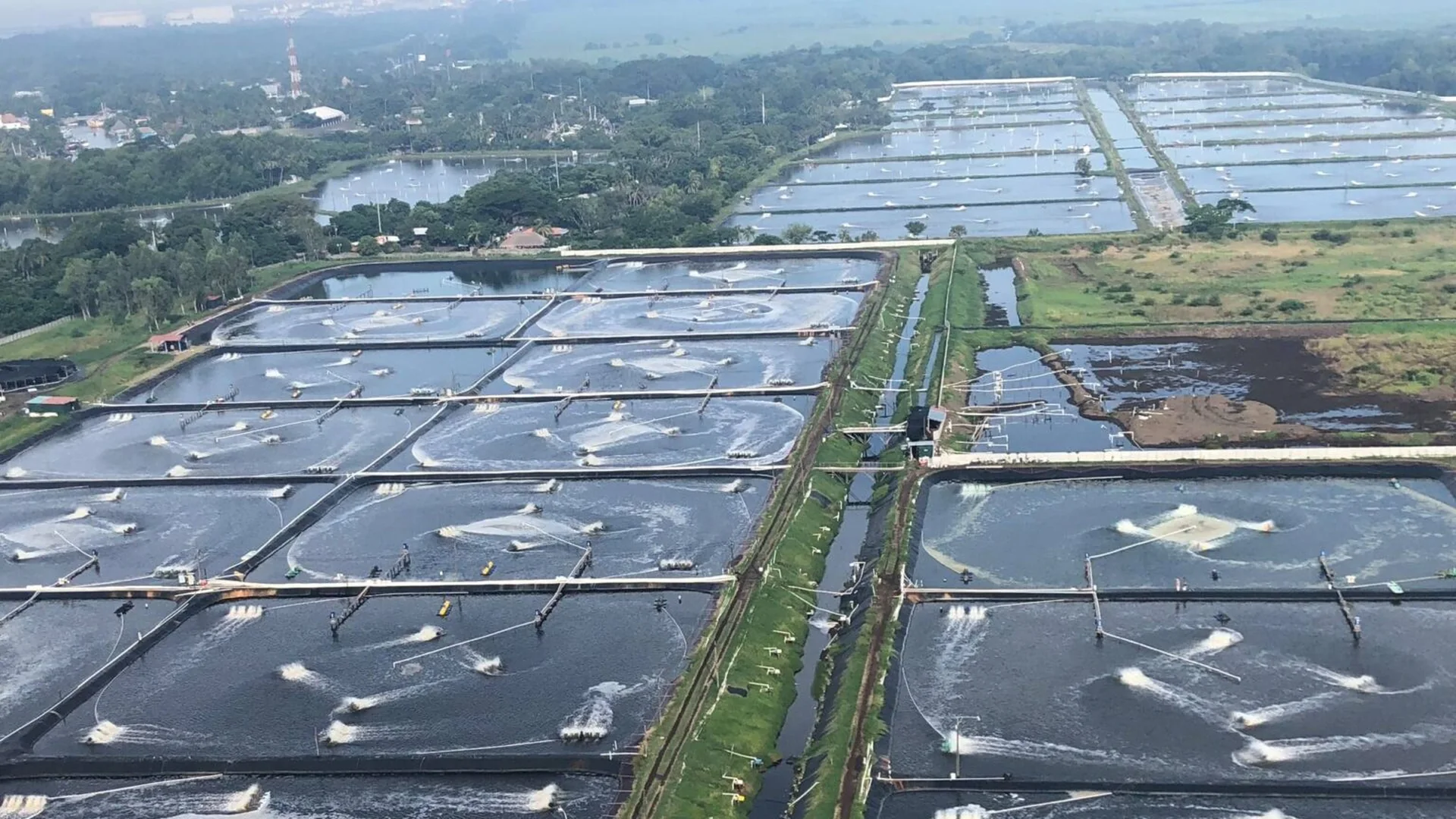
The correct blower must overcome water depth, pipe loss and diffuser resistance while delivering the airflow needed under demanding but realistic conditions. It also needs a practical redundancy and alarm plan. Energy efficiency matters, but continuity of oxygen supply comes first.
Quick Answer
Size an aquaculture aeration blower from the required oxygen transfer and airflow, then add the pressure needed for submergence depth, diffuser loss and pipework. Check airflow and pressure together on the exact blower curve. Review normal and peak biomass, water temperature, stocking density, feeding pattern, diffuser fouling and simultaneous basin demand.
Use adjustable output to follow measured demand where the control method is proven, but never reduce aeration below the biological requirement simply to meet an energy target. Provide alarms, backup power or backup air capacity according to the consequence of failure.
Begin with Oxygen Demand
Blower sizing should be tied to the farm’s oxygen balance. Fish, shrimp, microorganisms and decomposing organic matter all consume oxygen. Demand varies with biomass, species, feeding, water temperature, time of day and water quality.
Ask the process designer or farm specialist to establish the required oxygen input and minimum dissolved oxygen for the specific system. Do not copy airflow per pond from another site without checking depth, diffuser type, stocking and climate. A value suitable for a lightly stocked pond may be unsafe at peak biomass.
Record the design and normal conditions separately. Designing for a credible peak is necessary, but operating permanently at that peak may waste power. A monitored control plan can match output to actual demand while preserving minimum aeration and emergency margin.
Convert Oxygen Need into Airflow
Airflow alone does not state how much oxygen reaches the water. Transfer depends on bubble size, diffuser coverage, submergence, contact time, water characteristics and mixing. A clogged or poorly distributed diffuser field can receive air while transferring oxygen inefficiently.
Use diffuser supplier data and the process design basis to convert oxygen demand into airflow. Identify whether the published transfer performance was measured in clean water and how field conditions are accounted for. Keep calculated assumptions visible.
Divide the total flow among actual diffuser zones. Check minimum and maximum flow per diffuser; operating outside that range can produce poor bubble distribution or excessive pressure. Allow for balancing and credible fouling without hiding unknowns behind extreme blower oversizing.
Calculate the Pressure Requirement
The blower must first overcome hydrostatic pressure from water depth. It must then overcome diffuser resistance, pipe friction, fittings, valves and elevation effects. Pressure at the blower outlet is therefore higher than submergence pressure alone.
Use the deepest active diffuser for the demanding case and calculate losses at the simultaneous total flow. Long narrow pipes and restrictive manifolds can consume valuable pressure. A looped or well-balanced header may distribute air more evenly than a system with one long branch.
For an existing farm, measure blower discharge pressure and representative branch pressures. Record water level, active zones, valve positions and diffuser condition. A rising pressure trend with falling airflow can point to diffuser fouling or a restricted air path rather than a weak blower.
Pressure and Airflow Must Be Verified Together
A blower’s maximum airflow is generally measured near a low-resistance endpoint. Its maximum pressure occurs at another part of the curve. The two catalogue maxima are not available simultaneously.
Plot the normal and peak aquaculture duties on the exact model curve. Confirm that they remain within the permitted range and that the blower can supply the deepest, most restrictive combination that will actually occur. Also review minimum demand; excessive pressure or unstable distribution at low flow can make turndown impractical.
Ask the supplier to state the assumed water depth, diffuser loss, pipe loss and simultaneous zones. This makes proposals comparable and exposes any estimate that is based only on open-air flow.
Towwind Models for Initial Screening
Request the released curve for the exact proposed model and compare it with water-depth, diffuser and piping losses at every required airflow mode. Verify environmental suitability, controls and the backup arrangement before approving an aeration duty.
Confirm the selected model’s control range, electrical supply, environmental rating, certification, noise and dimensions from current released documentation. Adjustable output does not replace a verified pressure-flow match.
Aquaculture selection requires the released exact-model curve. Verify that submergence, diffuser and pipe losses lie within usable pressure at the required airflow; an endpoint cannot establish suitability for a water depth.
Design for Continuous Service and Failure
In intensive aquaculture, air loss can become urgent. The system design should answer: how long can stock tolerate reduced aeration, how will staff know a blower has stopped, and what restores air if power or equipment fails?
Depending on risk, the solution may include duty/standby blowers, split aeration zones, emergency oxygen, generator supply or automatic transfer. A standby blower must be valved and controlled so it can start into a safe condition. Test it under load; an untouched standby unit is not proven redundancy.
Monitor more than motor status. Useful evidence can include discharge pressure, blower alarm, electrical input and dissolved oxygen at representative points. The final scheme should be set by the farm’s biological risk assessment.
Use Control Without Creating Oxygen Risk
If the selected model supports suitable adjustment, output may be scheduled by stocked biomass or controlled from dissolved-oxygen measurements. Confirm the usable control range and account for sensor placement, calibration, response lag and minimum oxygen demand.
A single sensor can miss a low-oxygen zone. Fouling or calibration drift can command too little air. Establish minimum safe settings, alarm thresholds and a response to signal loss. Validate control through demanding periods, such as warm water, high feeding load or low natural oxygen.
Avoid rapid command changes that upset diffuser distribution. The control strategy should maintain adequate mixing and minimum diffuser flow while seeking energy reduction.
Installation in a Corrosive, Humid Environment
Place the blower in a ventilated, dry area protected from rain, salt spray, chemical vapor and direct wash. Check the selected model’s released environmental rating; do not assume immersion suitability. Provide service access for the filter and cooling path.
Support headers independently and use a suitable flexible connector. Install check or isolation devices as required to prevent water returning toward the blower after shutdown. Confirm valve orientation and safe pressure relief in the final engineering design.
Select the correct 220 V single-phase or 380 V three-phase variant. Verify current, cable, grounding, protective devices and backup-power compatibility against the delivered manual. Outdoor distribution equipment needs its own environmental assessment.
Maintenance Indicators That Matter
Create a baseline at normal water level and known diffuser condition. Record discharge pressure, blower setting, electrical input, dissolved oxygen response and which zones are open. Trend these values.
Rising pressure can indicate diffuser fouling, a closed valve or blockage. Falling pressure with weak aeration may indicate a leak or open bypass. A change in dissolved oxygen without a similar air-system change may point to biological load, sensor condition or water quality.
Inspect the filter, hose, manifold, valves, check devices and diffusers on schedules set from the farm environment, measured restriction and delivered manual.
Measure Energy per Useful Production Condition
For aeration, energy must be compared at an accepted dissolved-oxygen and airflow duty, with the same production conditions and backup requirements. Measure input over representative operating modes; pond layout, diffuser loss and control strategy determine the site result.
Measure complete package input while both systems maintain the same aeration requirement. Record biomass, water temperature, active zones, dissolved oxygen target and water depth. Long-term data are more useful than a short test because biological demand varies.
Annual energy is the sum of measured average power in each operating mode multiplied by its annual hours. Compare cost using the site’s tariff. Also account for maintenance and redundancy, but never credit energy savings achieved by reducing oxygen below the validated requirement.
Procurement Checklist
Provide suppliers with:
- species and production system;
- basin or pond dimensions and water depth range;
- biomass, feeding and oxygen design basis;
- diffuser type, quantity, depth and flow range;
- pipe sizes, lengths, fittings and zones;
- normal and peak simultaneous airflow-pressure duties;
- electrical supply and backup arrangement;
- control, sensor and alarm requirements;
- operating hours and environmental conditions; and
- redundancy and acceptance criteria.
Require the curve at duty, not only maximum values. Ask what happens if one zone closes, a diffuser field fouls or the deepest pond operates at peak demand.
Final Recommendation
An energy saving blower can support aquaculture aeration when the required duty falls within its verified curve and the installation includes safe controls and redundancy. The selection must begin with oxygen demand and end with a biological acceptance plan.
Send Towwind the depth, diffuser and piping data, required flow, measured pressure where available, dissolved-oxygen control approach, voltage, hours and backup plan. That information allows screening against released exact-model curves and shows when the application’s pressure requirement lies outside verified capability.
Frequently Asked Questions
Can I size an aquaculture blower from pond volume alone?
No. Volume is only one input. Biomass, species, feeding, temperature, oxygen demand, water depth, diffuser performance and mixing also affect the requirement.
Why does water depth affect blower selection?
The blower must overcome hydrostatic pressure before air enters the water, plus diffuser and piping losses. Deeper diffusers generally require more pressure.
Can maximum Towwind pressure and airflow occur together?
No. They are separate curve endpoints. Verify delivered airflow at the total pressure required by the specific aeration system.
Is dissolved-oxygen control enough for safe operation?
It can improve matching, but sensors need correct placement, maintenance and fail-safe limits. Provide alarms and backup appropriate to the consequence of air loss.
How should energy savings be verified?
Compare measured package input under equivalent water depth, biomass, active zones and dissolved-oxygen requirements over representative operation.