
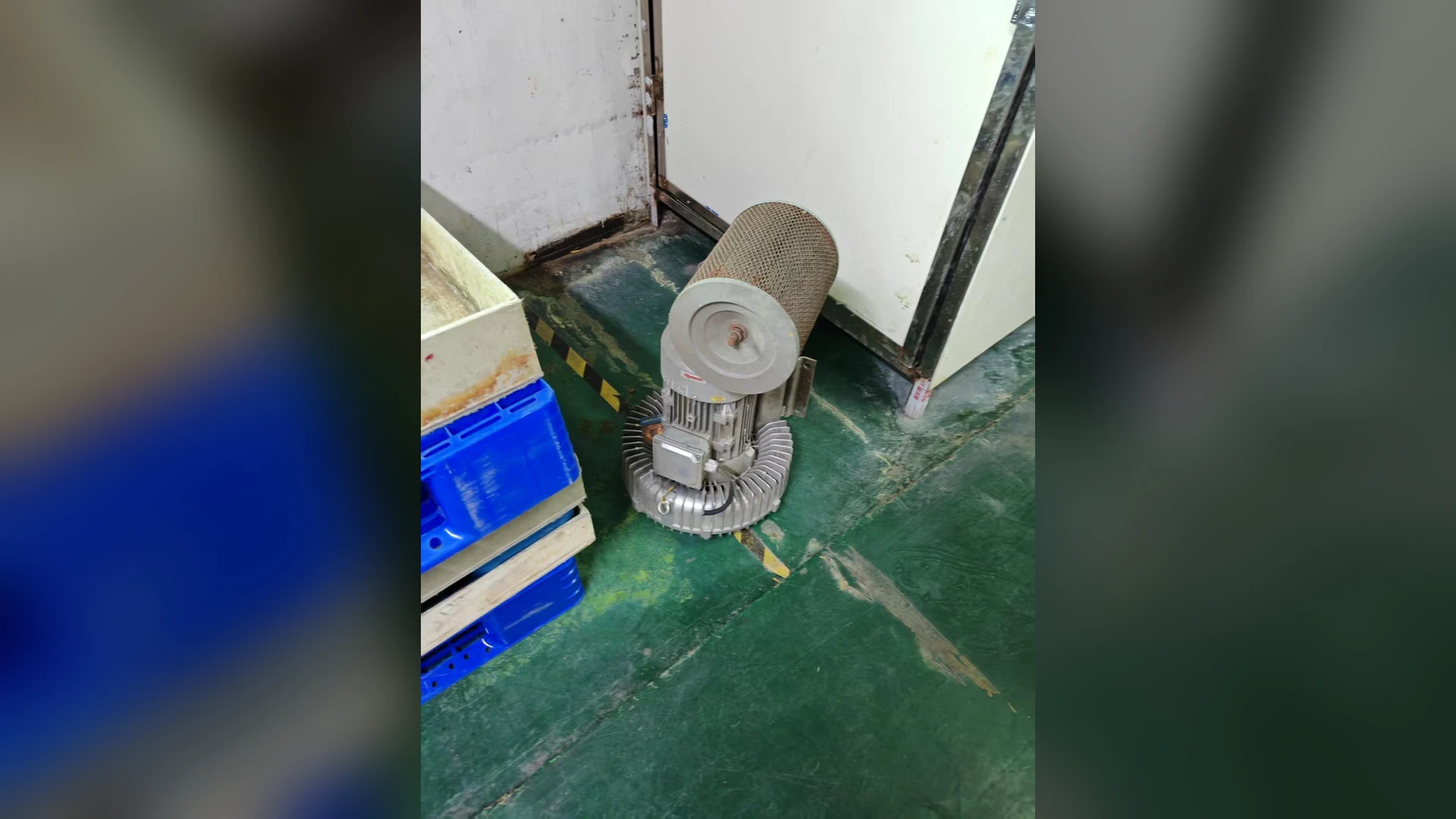
An outdoor aquaculture blower needs an installation that keeps liquid water away from its electrical and air-intake paths while preserving cooling, service access and the aeration duty. Rain, internal condensation and freezing are three different mechanisms. A weather cover that blocks direct rain can still trap humid air or obstruct cooling.
Start with the actual site: exposure to wind-driven rain, flooding, washdown, salt spray, temperature range, available drainage and the path to the tanks. Confirm the installed blower’s permitted ambient and ingress conditions from its current documentation. Do not infer outdoor suitability from a product category or an unrelated enclosure rating.
Keep the inlet clean and dry without starving it
Locate the inlet where it does not draw rain, pond spray, chemical mist or water from a drain. Inspect any hood, duct and filter for an accumulation point. A clogged or wet inlet filter can raise restriction and reduce delivered air. After changing inlet protection, remeasure operating pressure and the process result. The inlet-filter inspection guide provides the maintenance checks; the humidity guide explains why condensation needs separate consideration.
A housing must not recirculate hot discharge air into the blower’s cooling path or make filter access impractical. Verify clearances and ventilation against the exact installed variant rather than copying a generic enclosure design.
Follow rainwater and condensate to an exit
Check roof joints, cable entries, pipe penetrations, base height and floor drainage. Water that collects beneath the machine may reach cables or the intake during heavy rain. On the air-distribution side, long outdoor runs and low points can hold condensate. Drainage and isolation details must suit the process, the pipe arrangement and the blower supplier’s instructions. A low-point drain installed without maintenance access can become a new failure point.
When freezing is possible, inspect the vulnerable sections of exposed pipe, drain and valve. A frozen restriction can change header pressure and reduce air delivery. Any heat tracing or cold-weather control requires local electrical design, process approval and maintenance provisions. Do not assume that operating the blower alone prevents every exposed section from freezing.
Verify oxygen delivery, not just weather protection
After a cover, intake route or pipe treatment is installed, test aeration at the relevant operating modes. Record blower pressure, air distribution to the farthest branch and the site’s dissolved-oxygen response where monitored. The aquaculture aeration guide covers biological demand; the backup-air plan handles continuity if the air source fails.
Towwind TW750, TW1500 and TW2000 options should be checked against the actual system curve and site conditions. Send Towwind the weather exposure, enclosure sketch, air path and required duty for a model-specific review.