
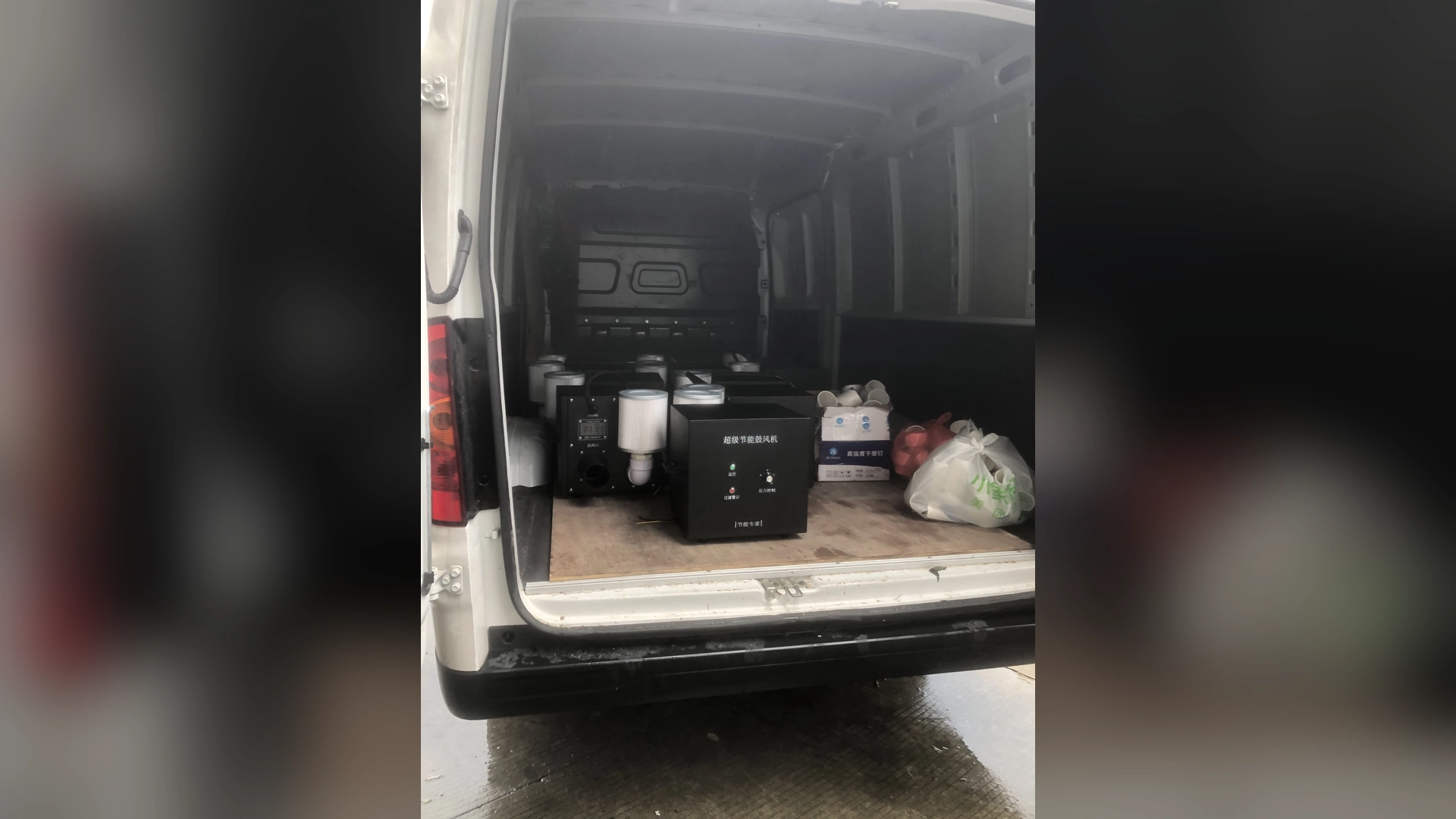
Effective blower noise reduction starts by identifying whether the dominant sound comes from the inlet, discharge, high air velocity, vibration, piping resonance, cooling fan or an internal fault. Measure a baseline, correct restrictions and installation defects, then apply silencers, isolation or an acoustic enclosure without compromising airflow, cooling, pressure limits or service access.
Do Not Treat Every Blower Sound as the Same Problem
A complaint that “the blower is too loud” is not yet a diagnosis. The sound may be airborne noise from the inlet or outlet, structure-borne vibration through the machine frame, turbulence at a valve or elbow, or an abnormal mechanical tone. Each source calls for a different correction.
Buying a silencer before finding the source can waste time. Worse, a poorly selected silencer or enclosure may add pressure loss or heat and move the blower away from its intended operating point. A maintenance engineer should first record when the noise occurs, where it is strongest and whether it changes with speed, valve position or production mode.
Noise also has a safety dimension. Compare workplace exposure with the applicable local occupational-noise rules and have a competent person conduct measurements where required. A product sound figure taken under one test condition cannot predict the sound level at every workstation.
Establish a Repeatable Noise Baseline
Use a calibrated sound-level meter and a documented method if the result will support acceptance or compliance. Record:
- measurement position and distance from the blower;
- microphone height and orientation;
- operating speed and control command;
- inlet and outlet pressure;
- airflow or a repeatable process indicator;
- filter condition and valve positions;
- nearby machines running during the test;
- enclosure doors open or closed;
- room surfaces and production state;
- frequency weighting and time weighting used by the instrument.
Take readings at operator positions as well as around the equipment. A single number beside the casing may miss a duct opening that directs sound toward a walkway. Frequency analysis is valuable when a narrow tonal peak, electrical switching tone or structural resonance dominates.
Repeat measurements under the same conditions after each change. Otherwise, a quieter reading could simply reflect a lower production load or a different measurement position.
Check the Operating Point Before Adding Acoustic Parts
Blowers become louder when they are forced into an unsuitable part of their performance range. A blocked filter, closed valve, undersized pipe or restrictive nozzle bank can raise pressure and turbulence. An open pipe or missing process load can also place some machines outside their intended region. The correct limits depend on the model and curve.
Record the actual airflow and pressure rather than selecting or judging a blower from motor power alone. Maximum airflow and maximum pressure are separate endpoints on a performance curve; they do not occur together. Confirm that the operating point, speed, current and temperature stay within the manufacturer’s limits.
Inspect for:
- dirty or wet inlet filters;
- collapsed hoses;
- partly closed dampers;
- sharp reducers and close-coupled elbows;
- undersized manifolds;
- clogged air knives or diffusers;
- leaks that make the controller increase speed;
- hot discharge air recirculating into the intake.
Correcting an air-path problem may reduce both noise and electricity use. It also protects the blower from a restriction that an acoustic treatment would otherwise conceal.
Separate Airborne Noise from Vibration
A simple field comparison can guide the investigation. If the sound is strongest at an open inlet or discharge, airborne pulsation and flow noise are likely important. If panels, guards or pipe supports buzz, structure-borne vibration may dominate. A change in pitch with speed suggests a rotating or aerodynamic order, while rattling may indicate looseness.
Do not touch moving or hot parts while investigating. Use appropriate vibration instruments and safe access procedures. Check mounting bolts, base flatness, frame stiffness and any transport restraints specified by the supplier. A blower mounted on a thin panel can make that panel act like a loudspeaker.
Flexible connectors can isolate some movement and prevent pipe strain, but they are not a substitute for supporting the pipework. Heavy piping should not hang from blower ports. Likewise, soft mounts selected without considering machine mass, speed and center of gravity can increase movement instead of reducing it.
If vibration, rubbing, bearing noise or an unfamiliar mechanical tone appears suddenly, stop and follow the model’s fault procedure. Acoustic foam is not a repair for internal damage.
Reduce Inlet and Discharge Noise Correctly
An inlet silencer attenuates sound radiated back through the intake. A discharge silencer addresses sound leaving the pressure side. The correct type, size and orientation depend on airflow, pressure, temperature, frequency range and permissible pressure drop.
Ask the silencer supplier for insertion-loss data and pressure-loss data at the real flow. A small unit may look convenient but create a serious restriction. Include its resistance when checking the blower operating point. Filters, silencers, check valves and pipe fittings all contribute to total system resistance.
Keep intake openings away from operators and reflective corners where possible. A lined duct or correctly designed plenum can change the sound path, but lining material must be suitable for the air, temperature and cleanliness requirement. Loose fibers or absorbent material do not belong in every food, electronics or clean-process installation.
Control Air Velocity and Turbulence
High velocity through a small opening produces broadband aerodynamic noise. Sudden expansions, sharp turns and partially closed valves add turbulence. Air-knife systems can be particularly noisy because narrow slots intentionally create high-speed air sheets.
Practical changes may include:
- increasing pipe or manifold area where the process permits;
- using smoother transitions;
- adding straight length around sensitive fittings;
- distributing flow across more nozzles;
- correcting uneven air-knife gaps;
- removing local restrictions;
- operating only at the speed required for the process.
Do not reduce air velocity blindly. Drying, cleaning and blow-off depend on the momentum and coverage reaching the product. Validate line speed, dryness and reject rate after any nozzle or pressure change.
Prevent the Machine Frame from Amplifying Sound
The blower, mounting plate, enclosure panels and connected pipe form a mechanical system. A component that is quiet on a rigid test base may excite a lightly braced cabinet in the final machine.
Check for large unsupported panels, loose doors, worn seals and pipe clamps fixed to resonant sheet metal. Bracing or damping a panel can be more effective than changing the blower. Isolate panels from direct contact where vibration bridges exist, but retain electrical bonding and safety provisions required by the design.
Flexible connections should be aligned and installed within their permitted movement. They must not be twisted, sharply bent or used to correct a large port mismatch. Recheck alignment after the pipe supports are tightened.
Use an Acoustic Enclosure Without Causing Overheating
An enclosure can reduce radiated sound when it has enough mass, sealed acoustic joints and treated ventilation paths. Merely putting a thin box around the blower often yields limited benefit. Leaving a large straight cooling opening can also create a direct sound path.
At the same time, a blower and its electronics reject heat. A sealed acoustic box can raise inlet and ambient temperature, shorten component life and trigger alarms. Enclosure design should account for:
- heat released by the blower and drive;
- permitted ambient temperature;
- cooling-air inlet and outlet area;
- separation of hot exhaust from the cooling intake;
- pressure loss through acoustic louvers;
- filter maintenance;
- cable and pipe penetrations;
- fire behavior of lining materials;
- access for inspection and removal.
Measure temperature during a representative long run after installation. A short no-load test cannot demonstrate thermal stability.
Use Speed Control as a Process Tool
Towwind energy-saving blowers use high-speed BLDC technology and offer adjustable speed for suitable industrial systems. If a blower has been oversized and throttled, matching speed to the required operating point may lower noise and power input. The process must still receive the necessary airflow and pressure.
Installed sound depends on duty, inlet and discharge treatment, mounting, pipework and the measurement method. Obtain the selected model’s test conditions and measure at the site.
A change in blower or control can alter power use, but the result depends on the existing duty, air path and schedule. Measure input and drying or aeration performance before and after.
A Practical Blower Noise Reduction Sequence
Work in an order that preserves diagnostic evidence:
- Record the complaint, operating state and baseline sound readings.
- Check alarms, current, speed, pressure, airflow and temperature.
- Inspect filters, valves, piping, nozzles and cooling paths.
- Check fasteners, base, supports, flexible connections and panels.
- Investigate abnormal mechanical or electrical tones before adding treatment.
- Model or measure the pressure loss of proposed silencers and filters.
- Improve sound paths, isolation or enclosure construction as needed.
- Run the machine at representative production load.
- Repeat noise, thermal and process-performance measurements.
- Update the commissioning baseline and maintenance instructions.
This sequence prevents a common mistake: spending money on acoustic material while leaving a clogged filter, unstable panel or unsuitable duty point unchanged.
Information to Send for a Quieter Blower Proposal
For a Towwind review, provide the required airflow and pressure, current blower model, measured power, operating hours, pipe sizes, filter and silencer details, nozzle layout, speed-control method, sound readings and measurement positions. Add photographs of the mounting, enclosure and pipe supports, plus any frequency spectrum available.
Also describe the process result that must be protected. Noise reduction for a PCB dryer cannot be assessed separately from board dryness and line speed. Noise reduction for aeration cannot ignore oxygen demand and diffuser pressure.
Towwind can use this information to assess whether a high-efficiency blower and speed control suit the duty. Final model selection must be based on the complete operating curve, electrical supply, installation environment and control interface, not on kW or a sound figure alone.
Conclusion
Blower noise reduction is most successful when it begins with diagnosis. Measure a repeatable baseline, verify the operating point, remove air-path restrictions and correct vibration paths before selecting silencers or an enclosure. Every acoustic measure must be checked for pressure loss, cooling and process impact.
A quieter machine is not simply one with more insulation. It is a system in which the blower, pipework, controls, frame and process load work within their intended range. Send Towwind the operating and installation data for a model-specific review, then verify the result under real production conditions.
Frequently Asked Questions
Will a silencer reduce all blower noise?
No. A silencer treats airborne sound in a defined frequency range. It will not correct bearing damage, a vibrating panel, pipe strain or a loose mounting. Diagnose the dominant source first.
Can an acoustic enclosure make a blower overheat?
Yes. An enclosure can restrict cooling and trap hot discharge air. Its ventilation path, heat load and acoustic treatment must be designed together and validated during a representative long run.
Does lowering blower speed always reduce noise?
It often reduces aerodynamic noise, but the process still needs its required airflow and pressure. Verify drying, cleaning, aeration or other process performance after changing speed.
Why is the installed blower louder than the supplier’s sound value?
Published values apply to stated test conditions. Distance, room reflections, mounting panels, pipe openings, operating point and nearby equipment can all raise the level measured at the workplace.
What data help a supplier recommend a quieter blower?
Provide airflow, pressure, speed, power, pipework, filters, silencers, mounting photographs, operating schedule, process requirement and repeatable sound measurements, including the measurement method and position.