
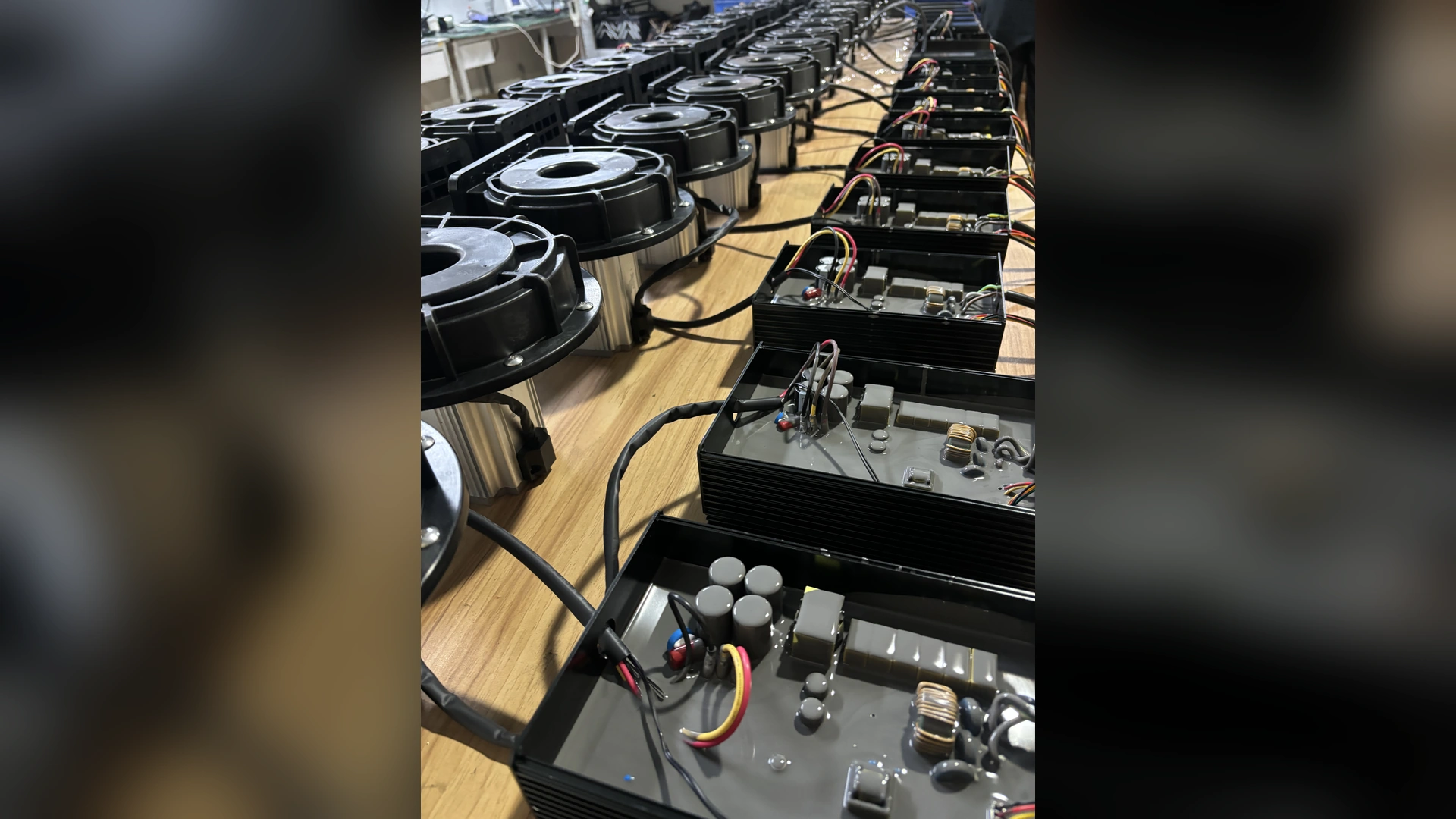
Choose an industrial blower manufacturer that can select a model at your real airflow-and-pressure operating point, explain the test basis, provide clear drawings and electrical requirements, and support commissioning and faults with documented procedures. A low price, large motor or headline energy-saving claim is not enough.
Send the same application data to every candidate and compare written responses. Ask for performance at the required duty, expected input power, continuous-duty limits, controls, filtration, cooling, warranty and lead times. The strongest supplier makes assumptions visible and asks for missing data before recommending a model.
Begin with a Complete Application Brief
Manufacturer comparisons become unreliable when suppliers receive different information. Prepare one request package containing:
- required airflow and total pressure;
- normal and maximum operating states;
- duty cycle and annual hours;
- process purpose and acceptance standard;
- inlet and discharge pipe layout;
- filters, valves, manifolds and terminal devices;
- voltage, phase and frequency;
- ambient temperature, altitude, humidity and contamination;
- speed-control and alarm requirements;
- installation space, orientation and connection limits;
- target delivery date and destination;
- documentation and certification needs.
For a replacement project, add measured airflow, pressure, true input power, speed, nameplate information and photographs. Motor kilowatts alone are insufficient.
1. Evaluate Engineering Selection Ability
A capable manufacturer should explain how the blower was selected. The quotation should identify the required duty point on a model-specific performance curve and state the speed or control setting used.
Watch for recommendations based only on:
- existing motor rating;
- maximum airflow;
- maximum pressure;
- inlet diameter;
- a generic industry label.
Maximum airflow and maximum pressure are separate curve endpoints and do not occur together. A responsible supplier will not combine them into a fictitious operating point.
Ask how filter loading, altitude, ambient temperature and pipe losses were included. If key data is missing, the manufacturer should state an assumption and request confirmation.
2. Review Performance Data and Test Basis
A performance number has value only when its conditions are known. Ask whether pressure is static or total, whether airflow is actual or standardized and at what speed and reference conditions the data applies.
Useful documents include:
- P–Q performance curve;
- expected input power or current at the duty point;
- test method or factory test basis;
- applicable tolerances;
- voltage and control configuration;
- noise test conditions, if noise matters;
- sample factory test or inspection record.
Factory data and site performance can differ because the installed system adds resistance and measurement conditions change. A good manufacturer can help define a fair site acceptance test rather than dismissing every difference.
3. Check Specification Transparency
Technical documents should be consistent across quotations, drawings, labels and manuals. Verify:
- exact model number and voltage version;
- rated power, current and speed;
- performance endpoints and curve;
- inlet and outlet dimensions;
- outline dimensions and mass;
- protection rating;
- permitted ambient and process-air conditions;
- cooling and service clearances;
- control and alarm signals;
- included accessories.
If a supplier changes figures without explaining the model or test condition, resolve the discrepancy before ordering.
4. Examine Quality-Control Practices
Quality claims should connect to repeatable inspections. Ask what is checked on incoming parts, during assembly and before shipment.
Depending on the product and order, relevant checks may include:
- model and component verification;
- electrical safety and wiring inspection;
- rotation or functional test;
- speed and controller operation;
- vibration or noise observation;
- airflow and pressure performance testing;
- dimensional and connection inspection;
- alarm and communication testing;
- packaging and documentation review.
Request evidence appropriate to the commercial risk. A buyer may not need a full witnessed test for every small unit, but the supplier should be able to explain its standard process.
5. Confirm Manufacturing and Supply Scope
The word “manufacturer” is sometimes used loosely. Determine who designs, assembles, tests, warrants and supports the blower. A distributor can still provide excellent service, but the commercial chain should be clear.
Ask:
- Which parts and processes are completed in-house?
- Who owns the performance data and drawings?
- Who approves custom changes?
- Where are final tests performed?
- Who handles warranty decisions?
- Are critical components traceable?
- How are engineering changes controlled?
This information becomes important when a project requires repeat orders or long-term spares.
6. Review Customization Carefully
Equipment builders may need a specific voltage, control signal, connector, mounting bracket or pipe interface. The manufacturer should confirm what is standard, configurable or genuinely custom.
Every custom change should appear in the model code, drawing, quotation and test requirement. Verbal agreements create installation risk.
Do not fabricate the machine interface from a marketing image or approximate envelope. Obtain and approve the final connection drawing before production.
7. Assess Documentation Quality
Clear documents reduce commissioning time and maintenance errors. The handover package should cover, as applicable:
- installation and electrical connections;
- control and alarm interface;
- permitted operating range;
- cooling and clearance requirements;
- commissioning checks;
- maintenance tasks and intervals;
- filter and spare references;
- troubleshooting and alarm response;
- warranty and technical-support procedure.
Documentation should match the delivered model and language needs of the site team. A generic brochure is not an operating manual.
8. Test Technical Support Before You Need It
The purchasing stage is a good time to assess support quality. Send a realistic technical question and note whether the response identifies missing information, explains assumptions and provides a useful next action.
Ask who supports your time zone, what data is required for a fault and how quickly cases are acknowledged. For international projects, consider language, remote diagnostics, shipping and customs.
A supplier that promises immediate answers without reviewing the operating point may be less useful than one that asks for measured evidence.
Frequently Asked Questions
Warranty length alone can be misleading. Read:
- start and end dates;
- covered components;
- exclusions for environment, installation and operation;
- required maintenance records;
- responsibility for removal, freight and reinstallation;
- repair versus replacement process;
- evidence required for a claim;
- treatment of custom configurations.
The best warranty is one the buyer can actually use, supported by clear installation and maintenance requirements.