
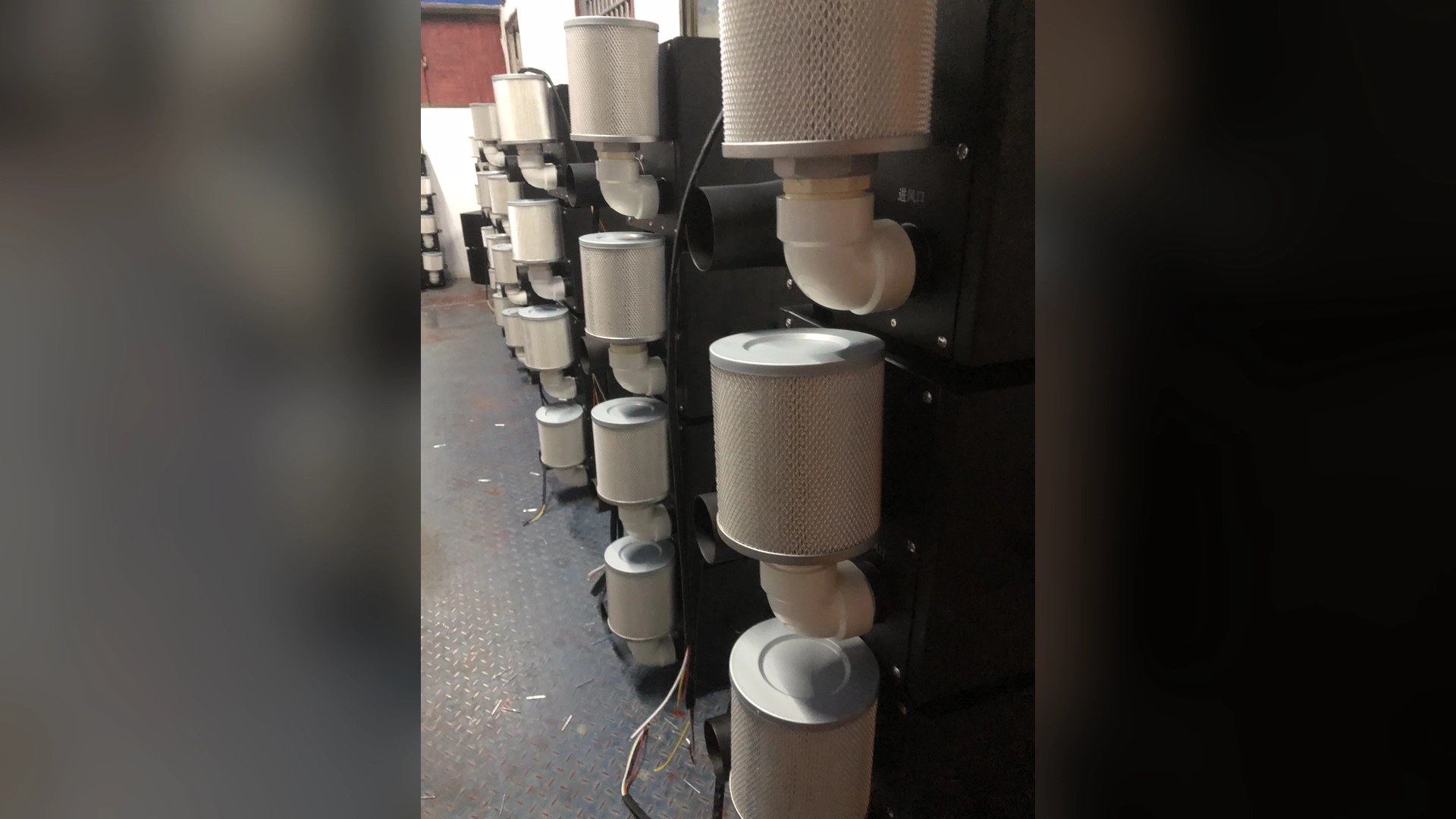
A blower inlet air filter keeps dust, fibers and process debris out of the impeller and internal air path. This helps preserve clearances, balance, cooling and downstream air cleanliness. However, the filter also adds resistance. If it is too small, too fine or allowed to load with dirt, airflow can fall and the blower operating point can shift.
The correct filter is therefore not simply the finest available. It must suit the contaminant, required airflow, allowable pressure drop, environment and maintenance access. Monitor its condition and verify performance at the actual operating point rather than treating filtration as an afterthought.
What Enters an Unprotected Blower
Industrial air is rarely clean. Even a plant that looks tidy can contain fine dust, packaging fibers, abrasive particles, oil mist or residue from nearby processes. An open inlet may also collect insects, loose hardware or cleaning debris during shutdown.
A blower moves a large volume of air over many operating hours. A low concentration of contamination can therefore become a significant accumulated mass. High-speed equipment is particularly sensitive to deposits and foreign objects because rotating components and cooling paths depend on controlled geometry.
An inlet filter provides the first barrier before contamination reaches the machine. It is cheaper and safer to inspect a serviceable filter than to clean or repair inaccessible internal parts.
How Filtration Protects the Blower
It limits impeller contamination
Deposits on a rotating assembly can alter surface condition and, in severe cases, balance. Abrasive dust can also contribute to wear. The exact effect depends on blower design and contaminant, but keeping debris out is a basic reliability measure.
It protects internal passages and clearances
Dust and fibers can collect at narrow passages or surfaces. Restricted internal flow may affect performance and temperature. Foreign material can create more immediate damage if it contacts rotating components.
It supports cooling
High-speed blowers rely on the specified cooling arrangement. Contamination around cooling openings or internal paths can reduce heat removal. A clean inlet does not replace external cooling clearance, but it prevents avoidable contamination from entering with process air.
It protects downstream equipment
In drying, cleaning and blow-off applications, dirty inlet air can carry particles onto the product. Filtration may therefore protect process quality as well as the blower. The required cleanliness should be based on the product and process, not on a generic assumption.
A Filter Also Creates Pressure Loss
Every filter consumes pressure. Air must pass through the media, support structure and housing. Pressure drop usually increases with flow and rises as the element collects contamination.
This added resistance changes the system curve and can move the blower operating point toward lower airflow. Operators may respond by increasing speed, which can raise electrical demand and temperature without addressing the loaded filter.
The solution is not to remove the filter. Instead:
- select enough filter area for the required flow;
- use media appropriate to the contaminant and process;
- minimize avoidable housing restrictions;
- monitor differential pressure;
- provide convenient maintenance access;
- replace or service the element at the correct condition.
A filter specified only by connection diameter may be undersized internally.
Why “Finer Is Better” Can Be Wrong
Finer media may capture smaller particles, but it may also create greater clean pressure drop or load more quickly. If the process does not require that filtration level, the system may pay an ongoing energy and maintenance penalty without a corresponding benefit.
Conversely, coarse media that passes damaging dust is not a good economy. The selection should consider:
- particle type and size distribution;
- dust concentration;
- whether particles are abrasive, sticky or fibrous;
- required downstream cleanliness;
- airflow and allowable initial pressure drop;
- acceptable loaded pressure drop;
- temperature, humidity and chemical exposure;
- maintenance frequency and disposal requirements.
Where air quality is critical, involve the filter and equipment manufacturers rather than assuming a standard workshop element is adequate.
Filter Size Matters
A larger effective media area generally reduces face velocity and can lower pressure drop for a given airflow. It may also extend service life by holding more contamination before reaching the maintenance limit.
Housing design still matters. A large element connected through a small, abrupt inlet can remain restrictive. Inspect the complete assembly: weather hood, screen, silencer, transition, media and pipe connection.
For a blower replacement, do not automatically reuse an old filter because its pipe thread fits. Confirm its rated flow, pressure-drop curve, filtration class and physical condition at the proposed duty.
Measure Differential Pressure, Not Appearance Alone
A filter can look dirty and still operate within its permitted pressure loss, or appear acceptable while fine contamination restricts it. Differential pressure gives a more useful condition indicator.
Install suitable taps upstream and downstream of the filter. Compare readings at the same blower speed and outlet configuration because pressure loss changes with airflow.
Trend the value over time. A gradual rise helps maintenance plan service before process performance suffers. A sudden change may indicate a collapsed element, blocked intake, incorrect installation or instrument problem.
Use the filter and blower manufacturer’s final limits. Do not invent a universal replacement pressure. Record the clean baseline after commissioning or element replacement.
A Practical Inspection Routine
With the equipment safely isolated:
- inspect the housing for damage, corrosion and loose fasteners;
- confirm that the intake is not blocked by packaging, a wall or stored material;
- check seals and gasket seating so air cannot bypass the media;
- inspect the element for dust loading, moisture, oil, tears or deformation;
- confirm the installed element matches the specified type;
- clean the housing without allowing debris into the blower;
- replace or service the element according to its approved method;
- restore the housing and verify differential pressure after startup;
- record date, hours, reading and observations.
Do not blow contamination deeper into media unless the filter manufacturer specifically permits that cleaning method. Some elements are replaceable rather than cleanable.
How Often Should the Filter Be Checked?
The correct interval depends on airborne contamination, running hours, filter capacity and acceptable pressure loss. A clean indoor assembly and a dusty woodworking line cannot share one reliable calendar rule.
Use the final model manual and site evidence to set an initial inspection schedule. Inspect more frequently during early operation until filter-pressure and contamination trends are established.
Severe dust, seasonal changes or nearby construction may require a temporary shorter interval. Differential-pressure trending is more useful than extending a calendar schedule by habit.
Warning Signs of an Inlet Filter Problem
Possible symptoms include:
- reduced airflow or weaker drying;
- more negative inlet pressure;
- rising filter differential pressure;
- a higher speed command needed for the same result;
- changed current or input power;
- increased operating temperature;
- filter alarms or controller limits;
- abnormal inlet noise;
- collapsed, wet or bypassed media.
These signs are not proof on their own. Pressure taps can be blocked, valves can move and downstream restrictions can create similar process symptoms. Compare airflow, pressure, speed and electrical data with the baseline.
Filter Placement and Inlet Layout
Place the filter where it draws the intended ambient air and remains accessible for service. Avoid areas exposed to direct process spray, hot exhaust or heavy contamination when a better intake location is practical.
Provide the required inlet clearance. A filter housing pressed against a panel can restrict air even with clean media. Use gradual transitions and adequate pipe size; sharp fittings immediately at the inlet can add loss and uneven flow.
Outdoor installations need weather protection suitable for the final equipment specification. A rain hood should not be so restrictive that it defeats the intake design. Consider drainage and moisture exposure in the chosen media.
Applying Filtration to Towwind Energy-Saving Blowers
For a Towwind candidate, request the released exact-model curve and filtration requirements. Include clean and expected loaded-filter loss at the required airflow; catalogue endpoints cannot confirm a usable point.
Confirm the selected model’s motor and usable control range from released documentation. Include filter loss in the system duty; speed adjustment must not mask a clogged element.
When requesting a Towwind recommendation, provide the target airflow and pressure, filter type and pressure-drop information, contamination conditions, pipe layout, duty cycle, voltage, ambient temperature and available service space. Confirm the final model manual and connection drawing before installation.
Filtration and Energy Consumption
A properly sized clean filter has an unavoidable but controlled pressure cost. An undersized or loaded filter increases that cost and may force a higher speed to maintain output.
Measure true electrical input at equivalent airflow and process performance. Annual consumption is:
Energy use (kWh) = measured input power (kW) × operating hours
Do not remove filtration to create an artificial short-term savings result. The comparison must include the protection needed for reliable production and equivalent air quality.
Filtration changes both equipment protection and system resistance. Any energy comparison must include the required filter in clean and expected loaded condition and use measured input at equivalent process output; no generic saving percentage can be inferred from filter presence alone.
What Buyers Should Ask for
Before approving a blower package, ask the supplier to state:
- filter media and filtration rating;
- rated airflow and initial pressure drop;
- recommended condition or differential for service;
- element dimensions and replacement reference;
- whether the element is washable or disposable;
- housing material and environmental limits;
- access needed for element removal;
- pressure-tap or alarm provisions;
- how filter loss was included in blower selection.
These details affect operating cost and maintenance workload long after the purchase price is forgotten.
Keep Filter Data in the Maintenance Baseline
At commissioning, record the clean filter differential pressure, total airflow, blower speed, system pressure, input power and process result. Repeat the measurements after the first service to confirm correct installation.
Maintenance trends become easier to interpret when the same production state is used. If differential pressure rises while airflow falls, the filter is a logical inspection point. If differential remains normal, investigate other restrictions or blower speed before replacing a good element.
Final Takeaway
A blower inlet air filter protects the rotating assembly, internal air path and downstream process from avoidable contamination. Its value is preventive: it reduces the chance that dirt becomes wear, imbalance, blockage or a product-quality problem.
The filter must also be treated as an engineered part of the air system. Choose it for the contaminant and flow, include its pressure loss in selection, make it easy to inspect and trend its differential pressure. That balance protects reliability without imposing unnecessary resistance or maintenance cost.
Frequently Asked Questions
Can an industrial blower run without an inlet filter?
An unfiltered inlet exposes the blower and process to contamination. Use the filtration specified for the model and application rather than removing it to reduce pressure loss.
Does a finer filter always protect the blower better?
Not automatically. Finer media may add pressure loss and load faster. Select filtration for the actual contaminant, blower requirement and process cleanliness.
How can I tell when a filter is clogged?
Trend differential pressure across the filter at a consistent airflow or operating state, and inspect the element safely. Appearance alone is not enough.
Can a dirty filter increase energy use?
It can increase system resistance and require greater speed or input to maintain process output. The exact electrical response depends on the blower and controls.
What filter information should be sent to the blower supplier?
Send rated flow, media or filtration grade, clean and allowable loaded pressure drop, contaminant description, housing layout, service interval and ambient conditions.