
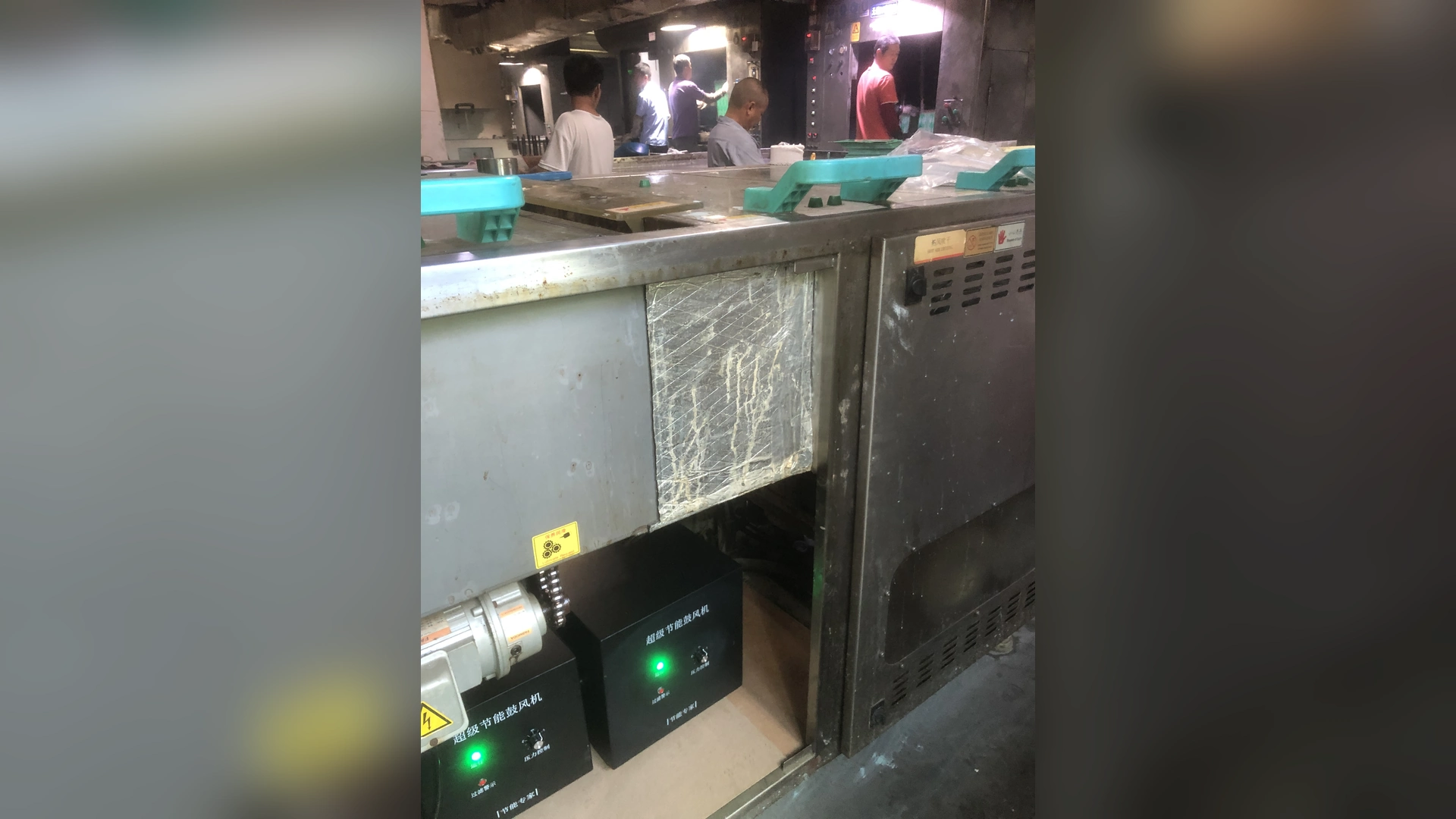
A drying line can have adequate total blower flow and still leave a wet stripe near one end of an air knife. That is an across-width distribution problem, not proof that the whole blower is undersized. This guide shows how to test one knife at a controlled operating condition and identify whether the weak zone comes from the slot, plenum or feed arrangement.
Hold the Test Condition Constant
Choose one representative product, line speed and knife setting. Record blower command, the number of other outlets in service, filter condition, knife angle, working distance and incoming water condition. Mark the wet or weak-air positions on the product. Do not change speed, gap and geometry simultaneously; otherwise the cause of an improvement cannot be identified.
Map the Discharge Along the Effective Length
Divide the working slot into repeatable positions from feed end to far end. Where a safe, suitable method exists, measure outlet velocity at the same stand-off and instrument orientation at each position. Record knife-plenum pressure at identified taps if the design provides them. A velocity traverse is a comparison of local discharge; it is not automatically a calibrated total-airflow measurement.
Repeat readings after the system reaches steady operation. Document the device and test geometry. Compare weak positions with product defects, but distinguish an air-flow pattern from a water path that is caused by part shape or drainage.
Separate Upstream Supply From One-Knife Distribution
If the whole slot is weak, check the supply condition and the measured pressure at that knife before adjusting the knife. If only one segment is weak, inspect the corresponding slot for contamination, damage or uneven gap. A feed-end-to-far-end gradient can indicate plenum or inlet-distribution limitations; confirm against the knife maker’s design rather than assuming that every long knife must behave the same way.
Check for a feed hose that is kinked or a connection whose internal bore differs from the drawing. Do not cure a local weak area merely by raising blower speed: that may overdrive the already-strong part of the slot.
Make One Controlled Correction at a Time
Clean or repair a blocked slot using the equipment maker’s procedure. Restore the specified gap and confirm it along the working length. If the plenum or feed position is the likely cause, ask the knife supplier to review inlet geometry or internal distribution. Record the before-and-after traverse at the same blower setting and product condition.
Keep clearance and guarding limits intact. A correction is useful only if the weakest product zone passes its acceptance criterion without creating splashback, contamination or a new defect elsewhere.
Boundary With Related Guides
Balancing air between several different knives is a branch-network task, not this single-knife across-width test. Nozzle layout and total blower sizing are separate design tasks. A lower kWh claim requires a measured energy comparison at equivalent accepted output; a uniformity traverse alone cannot prove it.
What to Send for Technical Review
Send Towwind and the knife supplier the product-defect map, slot dimensions, feed arrangement, measurement positions, pressure and velocity readings, blower setting, active outlets and before-and-after acceptance results. Request a distribution review before buying a larger blower.
Frequently Asked Questions
Does one pressure reading prove uniform discharge?
No. One plenum reading does not show local outlet conditions across the working slot.
Should every point have identical velocity?
The acceptable distribution depends on the knife design and process requirement. Use the supplier’s tolerance and a defined product acceptance test.
Is this the same as balancing multiple air knives?
No. This procedure examines positions along one knife; branch balancing compares separate knives or outlets.