
The best architecture depends on where and when air is needed. Plants should compare actual pressure-flow duties, diversity, distribution loss, production criticality and future expansion rather than choosing a layout from installed motor power alone.
Quick Answer
Choose a centralized blower system when users need compatible pressure, operate with predictable diversity and can be served through an efficient network with acceptable failure planning. Choose individual blowers when duties differ, machines run independently, long piping would waste pressure or process ownership needs local control.
Model both alternatives across normal and peak schedules. Include piping, controls, metering, redundancy, maintenance and downtime in the lifecycle comparison.
What Makes a System Centralized?
A central system uses one blower plant or shared blower bank to feed a distribution header. Branch valves and controls deliver air to individual users. The source may be located in a service room away from production.
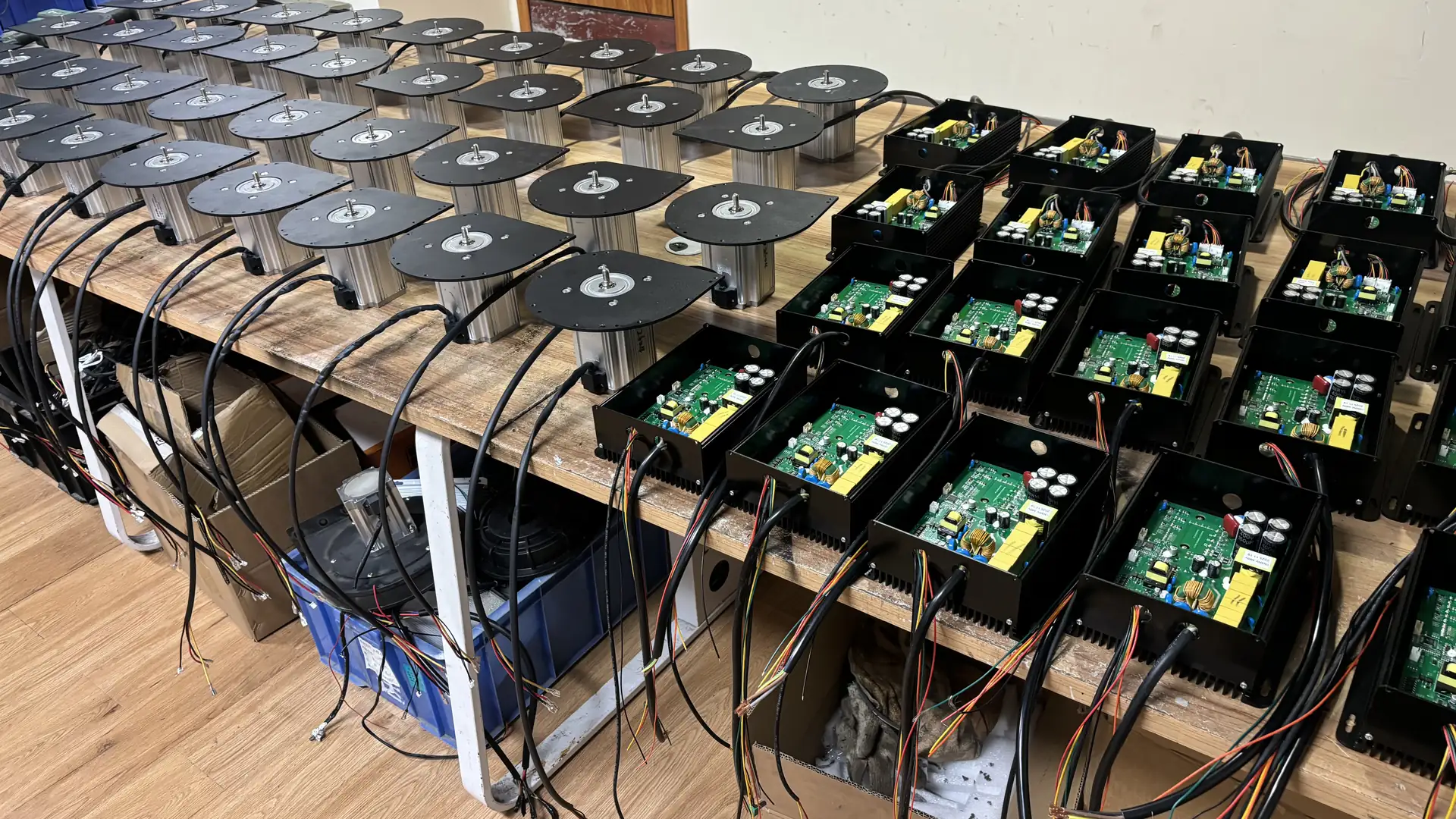
An individual system gives each machine or zone its own blower, filter, controller and short air path. Several local units can still use coordinated plant controls, but they do not share the main pressure network.
Hybrid arrangements are common. A central source serves steady common loads, while a local blower handles a remote, high-loss or different-pressure application.
Compare the Required Pressure Levels
Central supply works best when users need similar pressure. If one small process requires much higher pressure, raising the entire header to serve it can waste energy at every lower-pressure branch.
Throttling local valves does not recover the upstream energy used to create excess pressure. A dedicated high-pressure source may be more efficient for the exceptional load.
Build a table of user airflow and pressure, operating modes and annual hours. Group compatible demands before deciding the architecture.
Account for Distribution Loss
A central network can require long mains, risers, tees, valves and branch pipes. Calculate pressure loss at simultaneous flow through each section. The farthest user is not always the governing one; a restrictive branch or terminal may dominate.
Local blowers reduce distribution distance, but each still has inlet, connector and terminal losses. They may be installed in hotter, dustier or tighter locations than a central plant.
Compare the pressure required at each blower, not only pressure desired at the process. Avoidable network loss becomes a permanent energy burden.
Use Load Diversity Carefully
Not every machine operates at peak demand simultaneously. A central system can benefit from diversity if the real schedule is known. The source may be sized for a credible coincident peak rather than the sum of every installed maximum.
However, diversity must be supported by production data or enforced controls. If future scheduling allows all machines to run together, the header and blower plant must cover that condition.
Local blowers avoid diversity assumptions because each is sized for its machine. This can create more installed capacity overall, but the units stop when their machines stop.
Part-Load Control
A central system needs a broad control strategy. Blower staging, speed adjustment and header-pressure control should follow total demand without excessive bypass or throttling.
Sensor location matters. A pressure sensor near the plant may hide excessive drop at a remote machine. Critical users may need local pressure monitoring or minimum-pressure alarms.
Individual blowers can use machine recipes and line states directly. Their control range still needs validation; a local unit selected for a rare peak may run inefficiently at normal demand.
Failure Consequences and Redundancy
A central blower failure can affect several machines at once. Central systems therefore often require duty/standby or N+1 capacity, isolation and tested changeover.
Individual blower failure normally affects one machine, reducing the size of the production event. The plant may keep one common spare if local units are standardized.
Define required capacity after the largest credible failure. “Redundant” is meaningful only when remaining equipment delivers the required airflow and pressure.
Maintenance Organization
Centralization places filters, controllers and blowers in one service area. Technicians can monitor them without entering multiple production machines. The room can be designed for cooling, lifting and noise control.
Local units create more service points and may be difficult to access. On the other hand, one machine can be maintained without shutting down the rest of the plant.
Compare inspection routes, filter access, spare compatibility, replacement time and alarm visibility. A central system with poor isolation can turn routine service into a factory-wide outage.
Energy Metering and Accountability
Local blowers are easy to meter by machine. Their input can be linked to a production recipe or product cost.
A central system needs flow or allocation data if departments share energy cost. One header meter shows plant total but not which branch wastes air or runs during idle time.
Submeter important branches or use validated control and schedule data. Energy management improves when the responsible team can see its own demand.
Noise, Heat and Working Environment
A central plant can move blower noise and heat away from operators. The service room still needs ventilation and acoustic planning.
Local blowers add heat and sound near equipment. Enclosures must not block cooling. Long inlet or exhaust silencers add resistance and need to be included in selection.
Assess noise from the complete installed system, including piping, air knives, mounting and room acoustics. Obtain the selected model’s released sound data and verify site conditions against the project requirement.
Cleanliness and Inlet-Air Location
A central inlet can draw from a controlled clean location. Distribution piping must remain clean and suitable for the process.
Local units may draw dusty, humid, hot or chemically contaminated air near production. Filters and environmental compatibility require careful review.
For food, electronics, chemical or other sensitive uses, define air-quality and material requirements separately. A general industrial blower specification does not prove process compliance.
Towwind Models in Either Architecture
For either architecture, request current exact-model curves and network calculations. Check the combined central header or each local duty separately, including distribution loss, staging and controls; model endpoints alone do not establish system capacity.
Confirm the selected model’s control range, electrical supply, environmental rating, certification, noise and dimensions from current released documentation. Adjustable output does not replace a verified pressure-flow match.
Do not multiply maximum airflow values to claim central capacity at pressure. Build combined curves and include common-header loss.
Expansion and Production Changes
A central header can simplify connection of a new compatible user if capacity, pipe size and control were planned. Uncontrolled additions can gradually consume pressure margin and reduce performance at existing machines.
Local architecture lets new equipment receive its own matched blower without disturbing the network. It requires new electrical supply and service space each time.
Document reserved capacity and update the duty table after expansion. Spare pressure is not the same as spare airflow at pressure.
Installed and Lifecycle Cost
For a central system, include blower plant, standby capacity, large header, branch valves, controls, service room, metering and commissioning.
For individual systems, include every blower, controller, filter, electrical feed, local mount and maintenance point. Account for differences in usable floor space and installation downtime.
Calculate annual energy from expected active combinations and hours. Add maintenance and the financial consequence of failures. A lower equipment count can still have a higher lifecycle cost if distribution loss or central downtime is large.
A Structured Decision Matrix
| Decision factor | Centralized system | Individual system |
|---|---|---|
| Pressure compatibility | Strong when users are similar | Strong when duties differ |
| Distribution loss | Can be high over long networks | Usually shorter local path |
| Load diversity | Can share coincident capacity | Capacity dedicated by machine |
| Failure impact | Several users may be affected | Usually one machine affected |
| Maintenance location | Consolidated | Distributed |
| Energy allocation | Requires branch data | Direct local metering |
| Expansion | Easy if real spare capacity exists | Add a matched local package |
| Control | Plant-level staging and header control | Machine-level recipes |
Use the matrix to organize evidence, not to assign a universal winner.
Commissioning Requirements
For a central network, test minimum, normal and coincident peak demand. Measure pressure at the plant and critical remote branches. Verify blower staging, load sharing, alarms and standby transfer.
For local systems, test every machine’s normal and peak recipe, machine interlocks and safe stop. Confirm each inlet and cooling path remains clear in the final enclosure.
Record complete-package power and accepted process results. Baseline data are needed for later network expansion and diagnostics.
Energy-Saving Claims
Neither architecture has an inherent savings percentage. Compare representative load modes, distribution losses, staging, standby operation and measured system input at the same useful process output before selecting a central or local arrangement.
Compare central and local alternatives at equal process output. Model annual energy by mode and verify with measurements after installation. Do not use summed nameplate differences as the business case.
Final Recommendation
Centralized blower systems suit compatible users, controlled diversity and well-designed distribution. Individual blowers suit independent machines, different pressure levels and situations where local control or fault isolation matters.
Send Towwind the user duty table, plant layout, simultaneous schedule, pressure classes, redundancy target, voltage and control plan. The final decision should use verified operating points and lifecycle cost, not a preference for centralization or decentralization.
Frequently Asked Questions
Is a centralized blower system always more efficient?
No. It can share capacity effectively, but long piping, excess header pressure and poor part-load control can offset the benefit.
When are individual blowers preferable?
They are strong candidates when machines have different duties, run independently, need local metering or require fault isolation.
Can spare central pressure support a new machine?
Not necessarily. Verify spare airflow at the new total pressure-flow operating point and check header capacity.
Which architecture is easier to maintain?
Central systems consolidate service, while local systems allow one machine to stop independently. Access, spares and production impact determine the practical answer.
How should both options be compared for energy?
Calculate or measure package input for each real operating mode, include distribution loss and annual hours, and hold process output equal.