
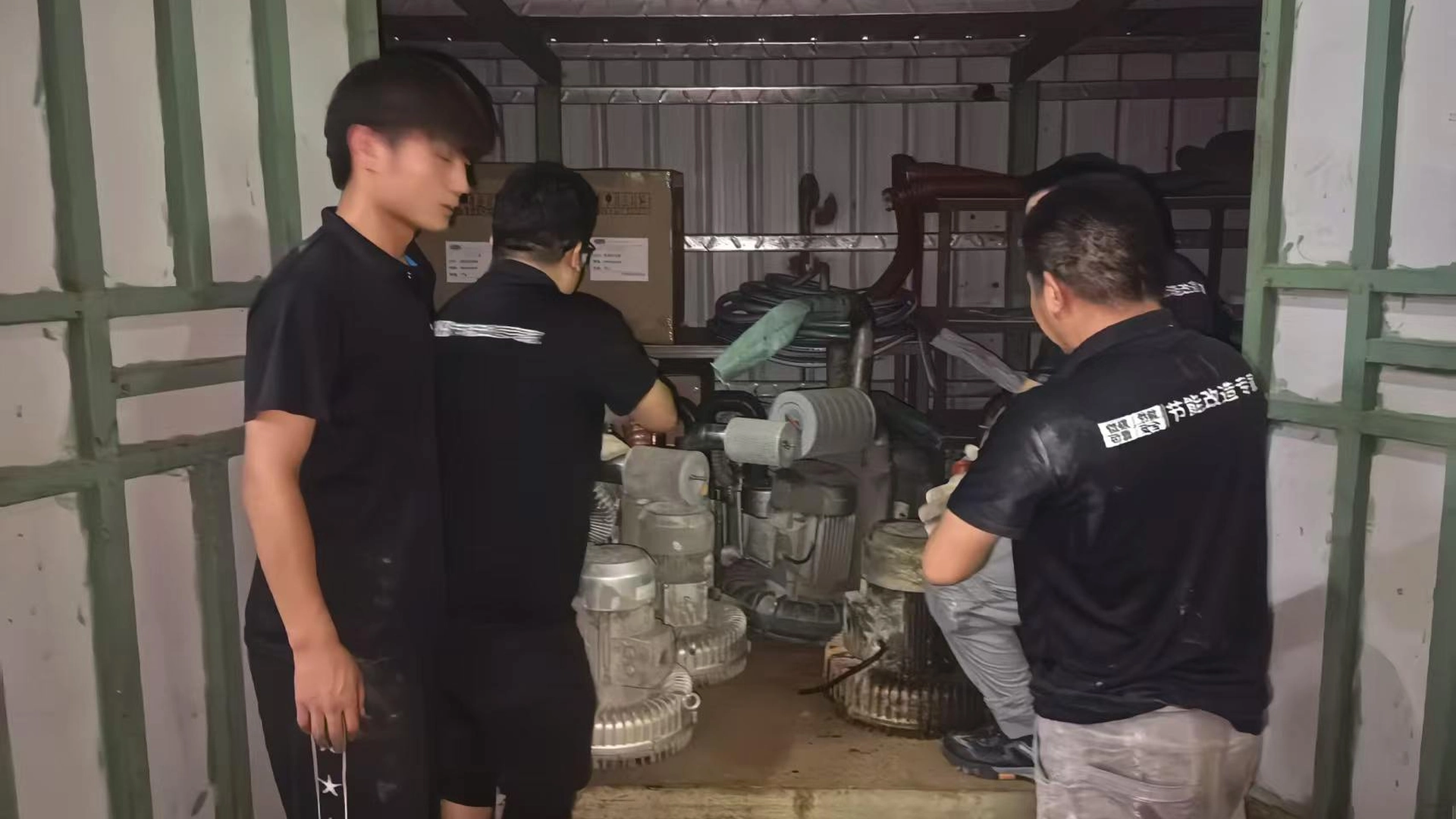
Maintenance records provide the best starting point. Trend failures, running current, pressure, temperature observations, filter condition, repair hours and production interruptions. Then compare correction, repair and replacement as three separate options.
Quick Answer
Replace when repeat faults, unstable process output, unavailable parts, rising measured energy or planned production changes create an unacceptable lifecycle risk. First correct external restrictions and electrical faults; then size the replacement from the verified future duty rather than copying the old motor rating.
Do Not Condemn the Blower Before Checking the System
Many blower complaints originate outside the blower. A clogged inlet filter, crushed hose, closed valve, blocked air knife, leaking joint or altered manifold changes the operating point. Low supply voltage, loose connections or a faulty control signal can create intermittent operation that resembles an internal failure.
Start with a safe inspection of the complete air path and electrical supply. Compare readings with the commissioning baseline if one exists. Correct obvious defects and repeat the test before authorizing a major repair or replacement.
An overheated housing is a symptom, not a diagnosis. Record ambient temperature, measurement location, run time, current, pressure and filter condition. The same principle applies to unusual sound: determine whether it follows the blower, mounting, pipework or a nearby machine.
Three Possible Maintenance Decisions
1. Correct the System
Choose correction when the blower itself remains sound and the problem comes from restriction, leakage, valve position, mounting, wiring or controls. This is often the lowest-risk action and produces a cleaner baseline for any later energy study.
2. Repair the Existing Blower
Repair is reasonable when the fault is isolated, parts and qualified service are available, process duty has not changed, and the expected remaining life justifies the cost. Include removal, transport, labor, balancing, testing and production coverage in the repair estimate.
3. Plan Replacement
Replacement becomes stronger when faults repeat, the repair scope is uncertain, spares are obsolete, process requirements have changed, or energy performance is poor at the verified duty. A planned outage also gives the team time to engineer interfaces and acceptance instead of making an emergency like-for-like purchase.
Five Replacement Triggers Worth Documenting
Trigger 1: Repeat Failure and Rising Repair Exposure
One fault does not define a trend. Review work orders over a meaningful period. Record failure mode, parts, labor, time to diagnose, time to restore and whether the root cause was removed. Repeated repairs to the same symptom without a confirmed cause are a warning.
Mean time to repair matters alongside frequency. A failure that takes one hour to correct is different from one that waits weeks for a special part. Include contractor mobilization and temporary-production measures where relevant.
Trigger 2: Process Output Is No Longer Stable
Drying defects, uneven aeration or weak blow-off can justify action when they are tied to blower performance under a known configuration. Record pressure and airflow basis together with line speed, active branches and accepted product result.
If performance returns after filter service or valve correction, the evidence points toward system maintenance. If it continues to deteriorate while the air path remains controlled, internal condition or lost capability deserves investigation.
Trigger 3: Parts and Support Risk Is Unacceptable
Obsolete bearings, seals, impellers, motors or proprietary electrical components can turn a manageable fault into extended downtime. Ask for confirmed part numbers, stock status and realistic lead time rather than assuming availability from a generic catalogue listing.
Support documentation also matters. An undocumented control modification or missing curve increases diagnosis time. Replacement may reduce that exposure if the new package includes a final manual, clear alarm information, consumable details and a defined support route.
Trigger 4: Measured Energy Cost Is High
Use input power or accumulated kWh, not motor rating. Pair energy readings with airflow, pressure, process output and operating hours. A rise over time may point to filter loading, restriction, wear or a changed duty; diagnose the trend before attributing it to basic technology.
Use site data for the replacement business case. Compare old and proposed systems at equivalent accepted output, then weight each operating mode by actual annual hours. Motor ratings or a general savings claim do not establish the result.
Trigger 5: Production Is Changing
A planned increase in line speed, new product width, deeper tank or additional branches can make the existing blower unsuitable even when it still runs. Conversely, removed branches or lower demand can leave it oversized.
Define the future airflow-pressure duty before choosing a replacement. Do not copy the old motor size and do not assume the smallest new model will cover future requirements.
Build a Repair-versus-Replacement Cost Record
| Cost or risk | Repair option | Replacement option |
|---|---|---|
| Equipment and parts | Repair parts and specialist labor | Blower, controller and accessories |
| Installation | Removal and reinstallation | Adapters, mounting, wiring and controls |
| Downtime | Repair duration and parts delay | Planned retrofit and commissioning |
| Energy | Current measured baseline | Verified proposed input by mode |
| Process risk | Repeat failure/root-cause uncertainty | Selection and commissioning risk |
| Support | Existing spares and knowledge | Manual, consumables, warranty and support |
Avoid false precision. Mark uncertain costs and use ranges where appropriate. A low repair quotation may exclude production loss, while a blower quotation may exclude adapters, electrical work or commissioning.
Time the Replacement Around Production
Planned replacement is usually safer than waiting for failure. Coordinate the work with a maintenance shutdown, product change or other line activity. Prepare adapters, mounting, cables and PLC changes before the outage.
Keep a rollback plan when production risk is high. The old blower may be retained temporarily as a standby if its condition and isolation arrangement permit. Test standby or changeover operation rather than assuming it from the pipe diagram.
The outage plan should include lockout, removal, pipe support, electrical checks, dry commissioning, loaded process test and responsible acceptance. Define who can authorize production restart.
Select the Replacement from the Future Duty
Measure or calculate required airflow and pressure at one operating point. Record filters, pipework, valves, branches and terminal devices. Check minimum, normal and peak modes.
Screen the proposed Towwind family only against its released pressure–airflow curve for the exact model and variant. Separate maximum endpoints are not a simultaneous duty point, and conflicting source-sheet values must be reconciled before selection.
Confirm 220 V single-phase or 380 V three-phase supply, current, protection, grounding, signals, alarms, mounting, connections, cooling and filter access for the exact model. Prevent water or condensate backflow and support external pipework independently.
Commission and Reset the Maintenance Baseline
Test the complete air system under representative process load. Record the blower setting, electrical input, pressure and airflow locations, filter and valve state, alarms, temperature observations and process acceptance. Test the most demanding normal mode and any standby function.
Run long enough to reveal heat or instability. Stop for repeated alarms, inadequate process output, abnormal current or unusual sound. Do not change protection settings to force operation.
After acceptance, issue a new baseline and maintenance checklist. Use the delivered manual and site evidence to set filter inspection and replacement intervals based on contamination and runtime.
Make the Decision Before the Emergency
The best replacement time is when evidence shows rising lifecycle risk and the factory still controls the schedule. Correct external faults first, repair when a contained repair remains economical, and replace when reliability, support, energy or future-duty evidence justifies the change.
Document the decision and its supporting evidence.
For a Towwind review, send the existing model, failure history, measured operating point, energy data, air-path layout, future production modes and acceptance criterion. That gives engineering and purchasing a common basis for deciding—not just a list of recent frustrations.
Document the decision for future maintenance reviews.
Frequently Asked Questions
When should a side channel blower be replaced?
Replace when documented failure, process, parts, energy or future-duty risk outweighs the installed cost and risk of a planned retrofit. Correct external system faults first.
Is high blower temperature enough reason to replace it?
No. Record load, ambient condition, current, pressure, ventilation and measurement location. Restriction or poor cooling may be the real cause.
Should an old but reliable blower be replaced for energy savings?
Only after measuring its energy at the required duty and comparing a verified alternative at equivalent output. Age and nameplate power alone do not establish the saving.
What costs belong in a repair-versus-replacement comparison?
Include parts, labor, removal, installation, adapters, controls, commissioning, downtime, process risk, energy, consumables and support—not only equipment price.
What records should be created after replacement?
Keep approved settings, pressure and airflow locations, electrical input, filter and valve state, alarms, process result and sign-off as the new maintenance baseline.