
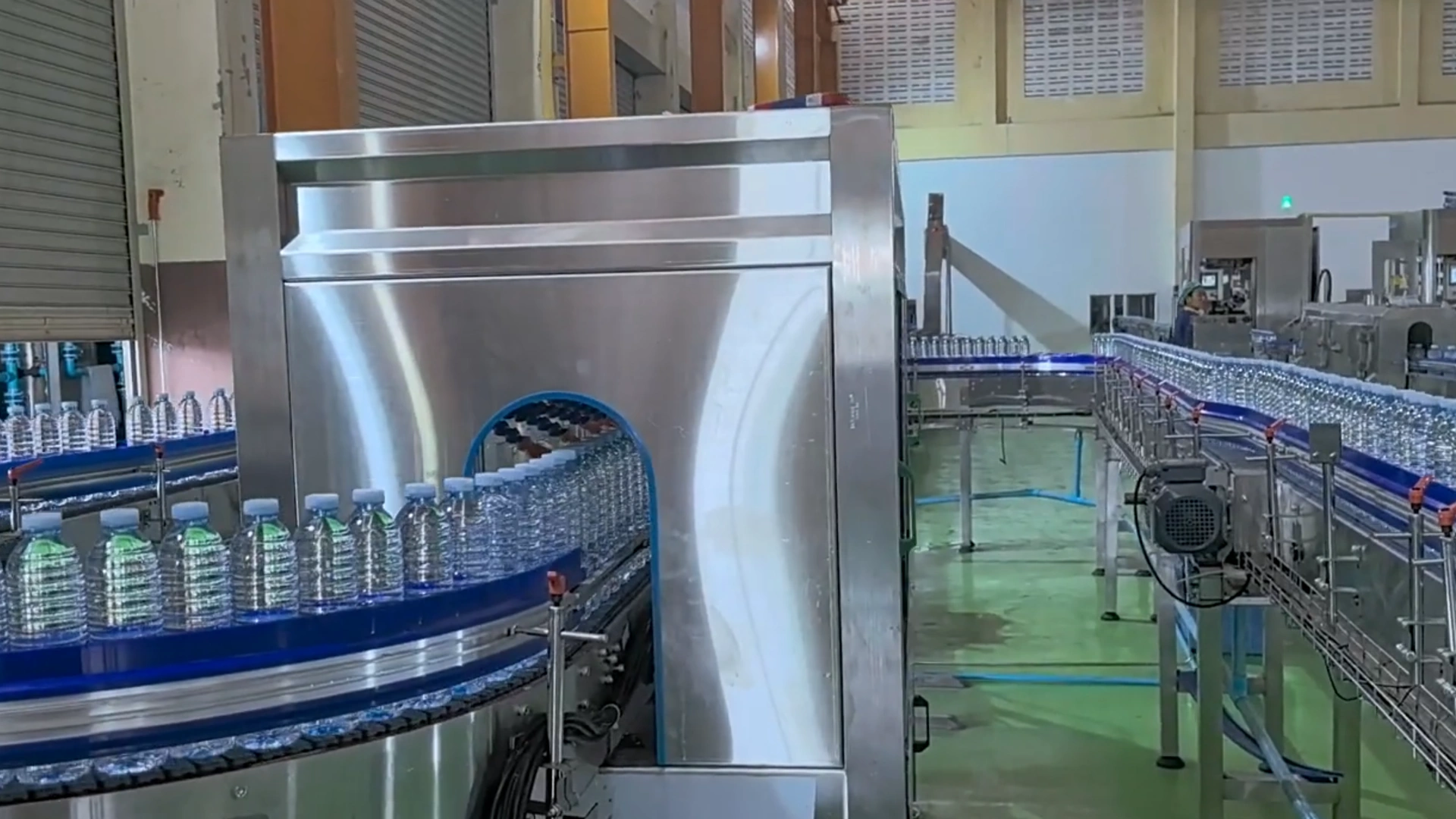
A drying station that works for one package may fail after a format change. A taller bottle can put its closure above the useful air zone; a wider tray can shield another surface; a flexible pack can move under the same jet. The correct question at changeover is whether the new format reaches the required downstream condition at its actual production setting.
This checklist concerns exterior surface water on packages after a wet process. It is not a food-dehydration guide or a complete packaging-line air-system specification. The site's food-safety and equipment owners remain responsible for hygiene boundaries and permitted air contact.
Define the downstream result for the new format
Start at the operation that is affected: labeling, coding, inspection or packing. Identify which surface must be dry and where it is checked. A package may look dry at the knife yet release water from a closure, seam or base ring after conveyor movement.
Compare the accepted result for the previous format with the requirement for the new one. Record the inspection point, timing, package orientation and any visible or process-related defect. Do not use an arbitrary air-speed reading as a substitute for the downstream result.
Record what changed on the package and line
Note package height, width or diameter, cap or seal design, base geometry, rigidity, fill condition, lane count and spacing. Also record the line speed or dwell time used for the new format. These differences can change both nozzle coverage and product stability.
Inspect incoming water before the first air outlet. A new rinsing setup, guide position or conveyor path can introduce more water or move it into a recess. If apparent wetness forms later as condensation, investigate downstream conditions separately from rinse-water removal.
Restore and verify the approved air setup
Check the changeover recipe or physical reference marks for nozzle height, angle, working width, active outlets and blower command. Confirm that a guard, guide or adjacent package is not blocking useful air. Record deviations before making an approved adjustment.
If a wet stripe stays at one machine position across formats, check that outlet or manifold section. If it follows a feature of only the new package, inspect geometry, orientation and exposure. Do not compensate for a local coverage gap by increasing the whole-line air setting without checking stability and other formats.
Test at representative operating conditions
Run the new format at the intended speed, spacing and fill condition. An empty setup sample may behave differently from a filled package; a slow demonstration may hide limited exposure time. Observe whether air moves lightweight products, changes spacing or creates contact with guides.
Inspect immediately after the dryer and at the actual downstream station. Check closures, handles, seams, recessed label panels and bases as applicable. Distinguish droplets that were never removed from water released after movement or mist redeposition. Use only the acceptance method approved for that process.
Keep a changeover verification record
A compact record makes repeat checks easier:
- format identifier, package geometry and fill condition;
- line speed, spacing and active lanes;
- incoming water condition;
- nozzle positions, active outlets and blower command;
- filter and drain condition;
- inspection point, downstream result and defect location;
- corrective adjustment and retest outcome.
Do not invent a universal acceptance threshold. The process owner should define what passes for each downstream operation. Retain the approved setup so a later failure can be compared with a known baseline.
If the new format fails, isolate the cause
First confirm that the intended settings were restored. Then compare one variable at a time: incoming water, nozzle coverage, product orientation, speed or blower feedback. A changing wet area may point to format geometry; a fixed cross-line stripe may point to air distribution. Persistent water under a closure may require a different local exposure path rather than more total air.
If the format needs different air demand, verify the installed operating point and all active outlets before changing blower capacity. A motor nameplate or maximum catalogue airflow cannot establish delivered air at the knives. Hygiene, cleaning and air-contact questions should be referred to the responsible site specialists rather than inferred from blower type.
Ask for a format-specific technical review
When a particular changeover fails, send Towwind the format list, line rate, photographs or drawings of the wet feature, approved and actual nozzle settings, blower feedback and the result at labeling, coding or packing. The purpose is to diagnose the changed duty and evidence needed for a technical decision, not to assume that every format requires a new blower.
A verified changeover is one that repeatedly meets the downstream result without destabilizing the package or relying on undocumented settings.
Frequently Asked Questions
Why can a new package fail when the old format dried correctly?
Height, closure, seam, base shape, spacing or fill condition may change which surfaces receive air and how the package moves. Compare the new format with the approved setup and inspect at the downstream station.
Is more blower air the first response after a changeover failure?
No. Check incoming water, nozzle positions, active outlets, product stability and the actual defect location first. More air may not reach a shielded surface.
What should a changeover record include?
Keep the format and fill condition, speed, spacing, nozzle settings, blower command, incoming water, inspection location, downstream result and any approved correction.