
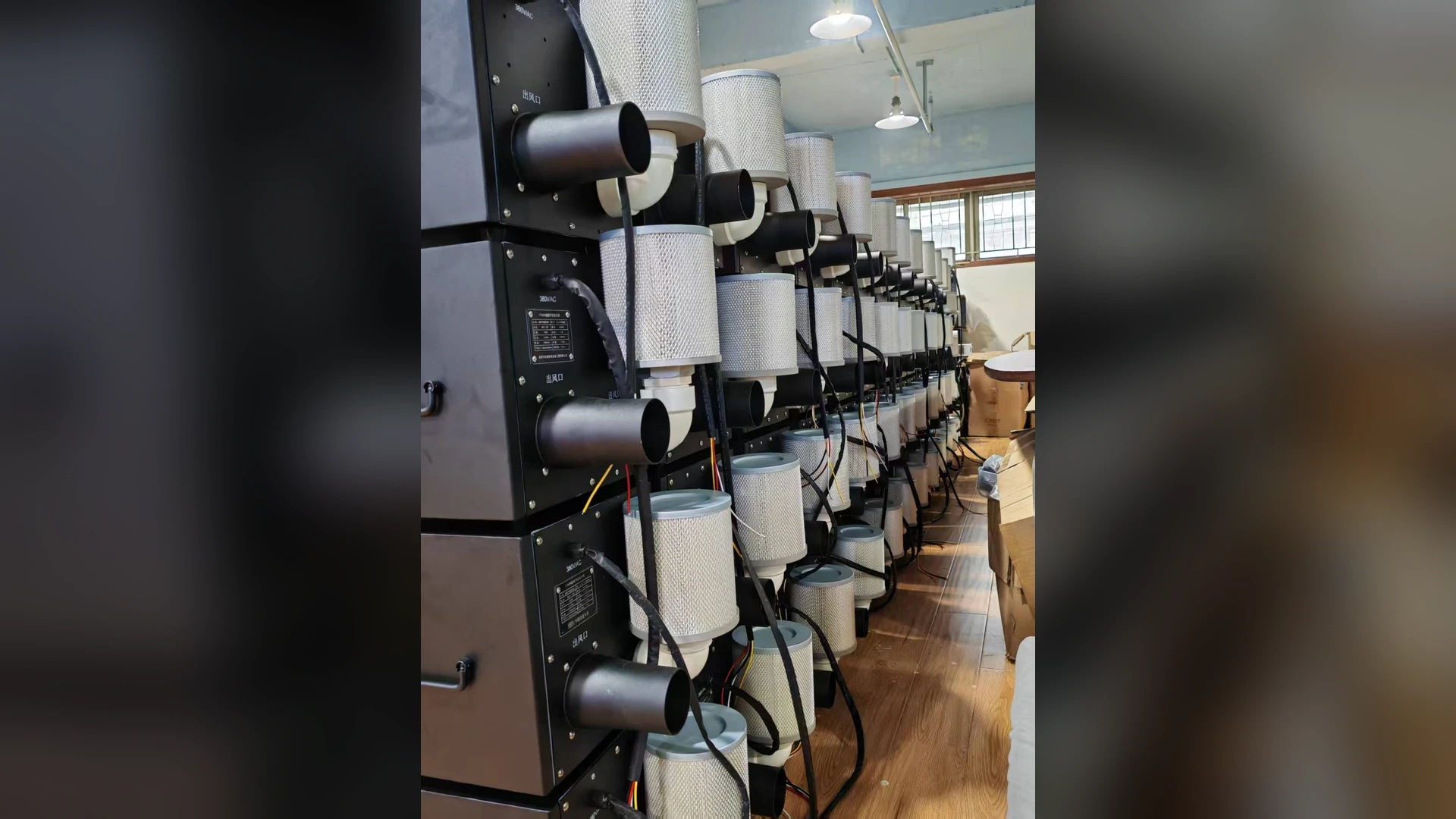
The right Towwind series is the one that delivers the required airflow at the pressure your installed system creates. A larger motor rating or a larger maximum-flow figure does not settle that question. TW750, TW1500 and TW2000 serve different duty ranges, but a buyer should compare them against one documented operating point and the same installation conditions.
This guide is a model-comparison worksheet. If the required duty has not yet been measured or estimated, begin with how to define the blower operating point before comparing series.
What the published range tells you
The current Towwind product range lists TW750 at 750 W, TW1500 at 1.5 kW and TW2000 at 2.0 kW. Each series has listed 220 V and 380 V configurations. The headline maximum airflow and pressure values on the product listing help identify candidates; they are not a promise that both maxima occur together. The relevant evidence is the performance curve for the exact voltage variant at the required flow and pressure.
| Decision input | Record for your machine | Check against each candidate |
|---|---|---|
| Process result | Acceptable drying, cleaning or aeration result | Can the candidate maintain it at production speed? |
| Airflow | Required flow at the point of use | Is it available at the required pressure? |
| Pressure | Loss through filters, pipework, manifold and outlet | Is the duty point inside the verified curve? |
| Operating modes | Normal, peak and reduced demand | Can each mode be served without an unsupported setting? |
| Electrical supply | Voltage, phase, frequency and controls | Does the exact variant fit the site? |
| Installation | Space, cooling, mounting and connections | Can the unit be installed and serviced? |
Compare the same duty on three curves
Put the required airflow on the horizontal axis and required pressure on the vertical axis of each model’s current curve. A candidate that falls outside the curve is eliminated, regardless of its nameplate power. A candidate close to a boundary needs a review of measurement uncertainty, filter loading and the most demanding operating mode. Ask Towwind for the current curve and the conditions under which it was measured; do not infer intermediate points from the two headline maxima.
For a retrofit, place the existing blower’s measured operating point on the worksheet too. An old motor marked 3 kW may run far from its rated output. Replacing it with a 1.5 kW unit is possible only if the process duty fits the proposed curve and the process result remains acceptable. Read the operating-point comparison method before comparing electricity use.
The smallest rating is not automatically the best purchase
If two series can cover the normal duty, examine the full operating schedule. Does one line occasionally run a wider product, more open branches or a dirtier filter? Is the expected peak a measured production condition or a speculative future expansion? A smaller series may be sufficient for today’s duty; a larger one may be justified by a verified peak. Neither choice should be made from a vague “extra margin” rule.
Power cost also needs a like-for-like test. Compare measured real input power while both systems deliver the same accepted process result, with equivalent product, line speed and operating mode. The 750 W, 1.5 kW and 2.0 kW series labels are not measured power consumption at every duty point. Towwind’s energy calculation guide explains the baseline required for a savings claim.
Send a decision package, not just a model request
For a useful recommendation, send the application, required or measured flow and pressure, measurement locations, operating modes, voltage and frequency, air-path drawing, ambient conditions, installation space and existing-blower data. Ask the supplier to return the exact model and voltage variant, its curve at the stated conditions, control requirements and a proposed acceptance test. If a key input is unknown, label it as an assumption and agree on a site measurement before ordering.
The result should be a short decision record: required duty → candidate curve → electrical and installation fit → production acceptance → measured input power. That record makes a TW750, TW1500 or TW2000 choice reviewable by engineering, procurement and operations.
For help reviewing a documented duty, send Towwind your application data.