An air knife may dry the outside of a closed bottle or can, blow across an empty container, or operate near exposed food. These are different air-quality situations. Before selecting filtration or stating that a blower is “food safe,” define what the delivered air can touch and which contamination controls the plant requires.
For airflow and drying performance, see Towwind’s food and packaging application guide. This article covers the separate question of air quality.
Map the product-contact path
Draw the line from the blower intake through filters, ducting, manifolds and air-knife outlets to the product. Identify whether the air can contact food, a food-contact surface, the inside of an empty package, or only the outside of a closed package. Include overspray and recirculation paths. A closed container’s exterior may be a simpler case, but it still needs a plant-specific risk review if the same area handles exposed materials.
In the United States, 21 CFR 117.20(b)(6) requires fans and other air-blowing equipment to be located and operated to minimize allergen cross-contact and contamination of food, food-packaging materials and food-contact surfaces. Requirements differ by country and process. The plant’s quality team should set the applicable criteria.
Check the inlet environment
The inlet filter cannot correct every poor intake location. Inspect for dust, washdown mist, cleaning chemicals, exhaust from nearby machines and water that can enter during sanitation. Check whether an enclosure creates a route for removed droplets to return to the blower intake. If the air source changes between production and cleaning modes, document both.
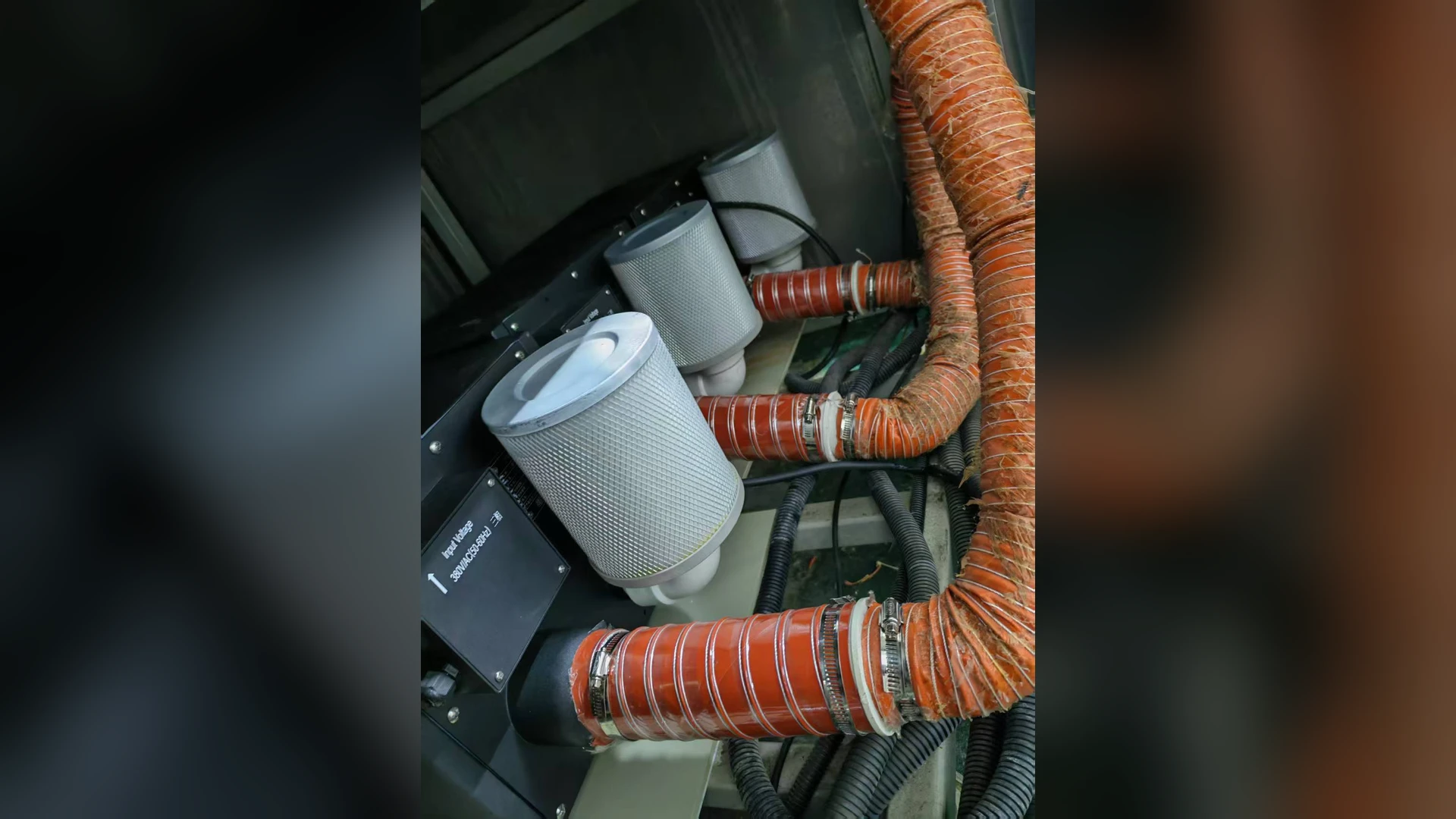
Specify filters from the required air quality and the blower’s permitted inlet resistance, not from an unsupported claim that one filter grade works for all food lines. A finer filter may add pressure loss and alter the installed operating point. Record the filter type, installation orientation, sealing arrangement and replacement or inspection method.
Verify at the point of use
If testing is required, collect samples at a location that represents air delivered to the product or package, not just air entering the blower. Decide what is being tested—particles, microorganisms, moisture or another site-defined contaminant—and use the plant’s approved method. A clean motor design or an “oil-free” description alone does not establish that the complete air path meets the required standard.
Inspection should include the air knife and ducting, which can collect water or debris after the filter. A damaged filter seal or bypass can defeat a nominally suitable element. Review sanitation access without compromising the blower’s electrical and cooling requirements.
Keep a change record
For each accepted configuration, record the product type, point-of-use exposure, intake location, filter specification, pressure drop, cleaning procedure, inspection frequency and any test result. Reassess the air path if the line is moved, a package changes, a new chemical is introduced or airflow is increased.
Towwind can evaluate whether the required airflow and pressure fit the TW750, TW1500 or TW2000 and discuss integration details, but the food manufacturer must define the hygiene standard and approve the process. Share your application conditions together with the quality team’s requirements.