
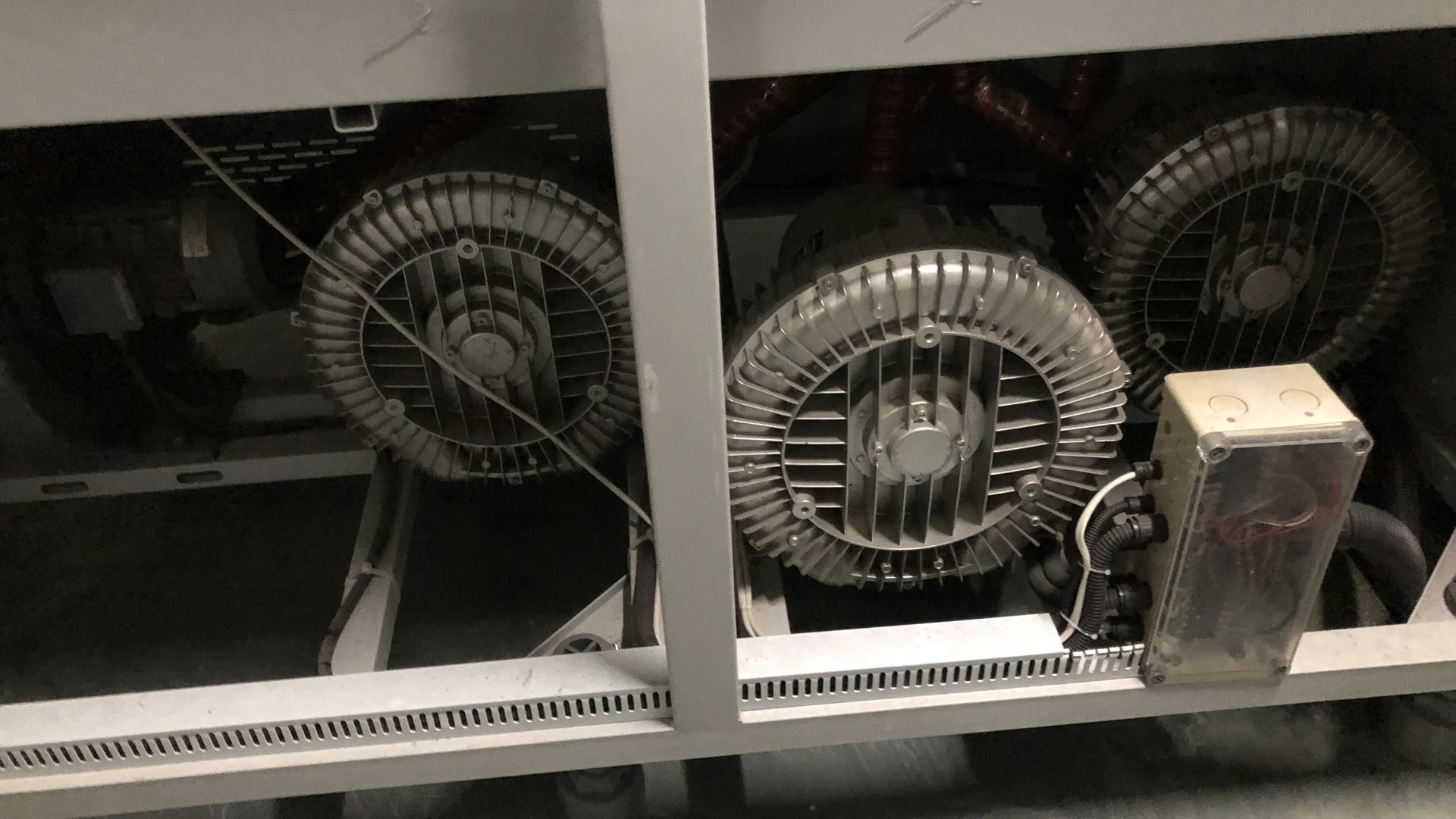
A blower can sound normal while the machine is idle and become noticeably louder when a branch valve changes position. Before adding insulation or replacing the motor, determine whether the sound comes from moving air, a vibrating pipe or the blower assembly. The difference matters: an acoustic cover will not repair a loose support, and a new blower may reproduce noise created by the same downstream restriction.
Keep the operating condition with the recording
Record a short audio sample at the same distance in idle and loaded modes. Note the branch configuration, blower setting, pressure, input current and process result for each sample. If the change follows a particular valve or nozzle, inspect that branch first. A whistle concentrated at a joint suggests a different investigation from a rough mechanical sound at the casing. Do not put a hand near moving parts to locate a sound.
Look at mounting bolts, flexible connectors and pipe supports when the machine is safely isolated. A rigid pipe can transmit vibration from an otherwise functioning side channel blower into a large machine panel. In a food and packaging drying line, compare the loaded sound with the packaging format and number of active air knives; a format change may alter the air path as well as the product.
Avoid a false “blower fault” diagnosis
The existing guide to unusual blower noise discusses general causes. Here the deciding clue is load dependence. If noise rises only when discharge pressure rises, inspect throttling, restrictions and relief behavior against the exact blower manual. If a rough mechanical sound remains with the air path returned to its accepted condition, isolate the machine and arrange qualified mechanical inspection. Do not keep running a unit with a new severe vibration or bearing-like noise merely to collect more recordings.
If the system is redesigned
Measure the useful air duty and define an acceptable sound measurement location before comparing new equipment. The product pages for TW750, TW1500 and TW2000 provide three pressure-air ranges to investigate, but noise values from different test setups are not a like-for-like site comparison. A useful proposal states the operating point, mounting and cooling requirements, and how noise will be checked on your assembled machine.