
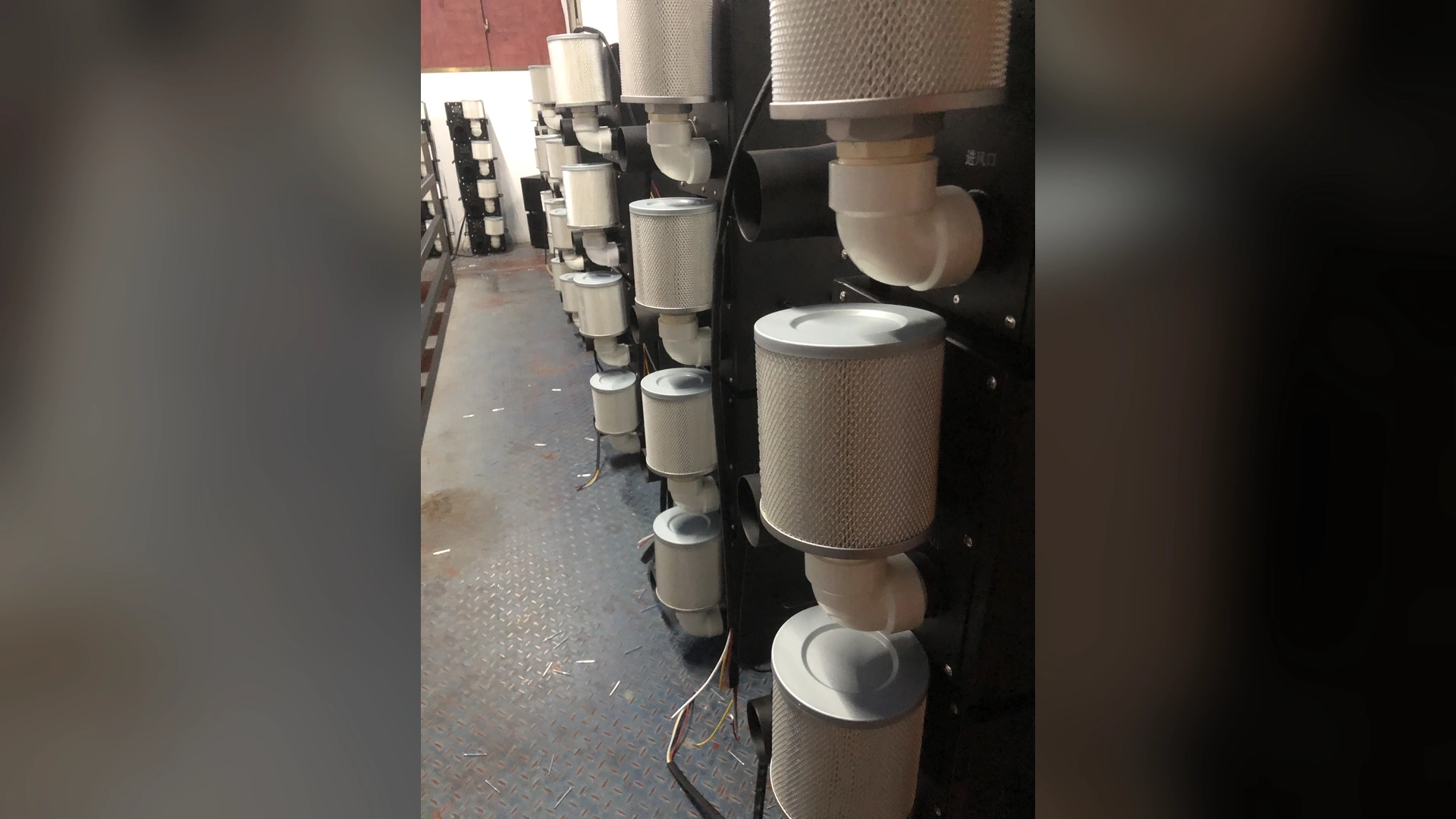
An inlet filter change should not make a drying line weaker. When useful airflow falls immediately afterward, start with what changed during the service: the element, its fit, the intake cover and anything moved to gain access. A new filter can still be unsuitable for the operating flow, installed incorrectly or obstructed by packaging left inside the housing.
Compare before and after under the same load
Use the same product, number of open air knives and blower setting for both readings. Record pressure on the inlet side if a suitable port exists, blower discharge pressure, electrical input and the actual drying result. A current reading on its own cannot locate an intake restriction. If the process was also changed during maintenance, restore a comparable production condition before drawing a conclusion.
Ask the technician which replacement part was installed, not just whether the box said it fits. Check element dimensions, filtration specification, allowable flow and housing compatibility against the original equipment instructions. The article on how a dirty filter affects blower performance explains gradual loading; an immediate step change after service is a different investigation.
Inspect the installation, not just the element
With the machine isolated under site procedure, check that the seal is seated, the element has not folded into the inlet and the cover can close without pinching it. Look for a blocked pre-screen, a collapsed intake hose or a loose connection disturbed during the filter change. A bypass gap can allow contaminated air into the blower even if airflow seems acceptable, so a higher flow after refitting is not by itself proof of a sound seal.
On a PCB cleaning and drying line, verify the result at the board or air knife as well as at the blower. Air moving through a leak in the wrong place does not serve the process. Avoid running without the filter as a production workaround; it changes the protection condition.
When is the blower itself the next suspect?
If the correct element is fitted, the housing and intake are clear and the process still fails at a repeatable duty, compare the measured operating point with the existing ring or side channel blower’s curve. If replacement is being considered, TW750, TW1500 and TW2000 are pressure-air candidates to screen against that measured duty, not automatic substitutions for a particular old motor rating.
Keep the old and new filter part numbers, photos of the seating surfaces and matched before-and-after readings. They will usually shorten the next service investigation more than another guess about blower size.