
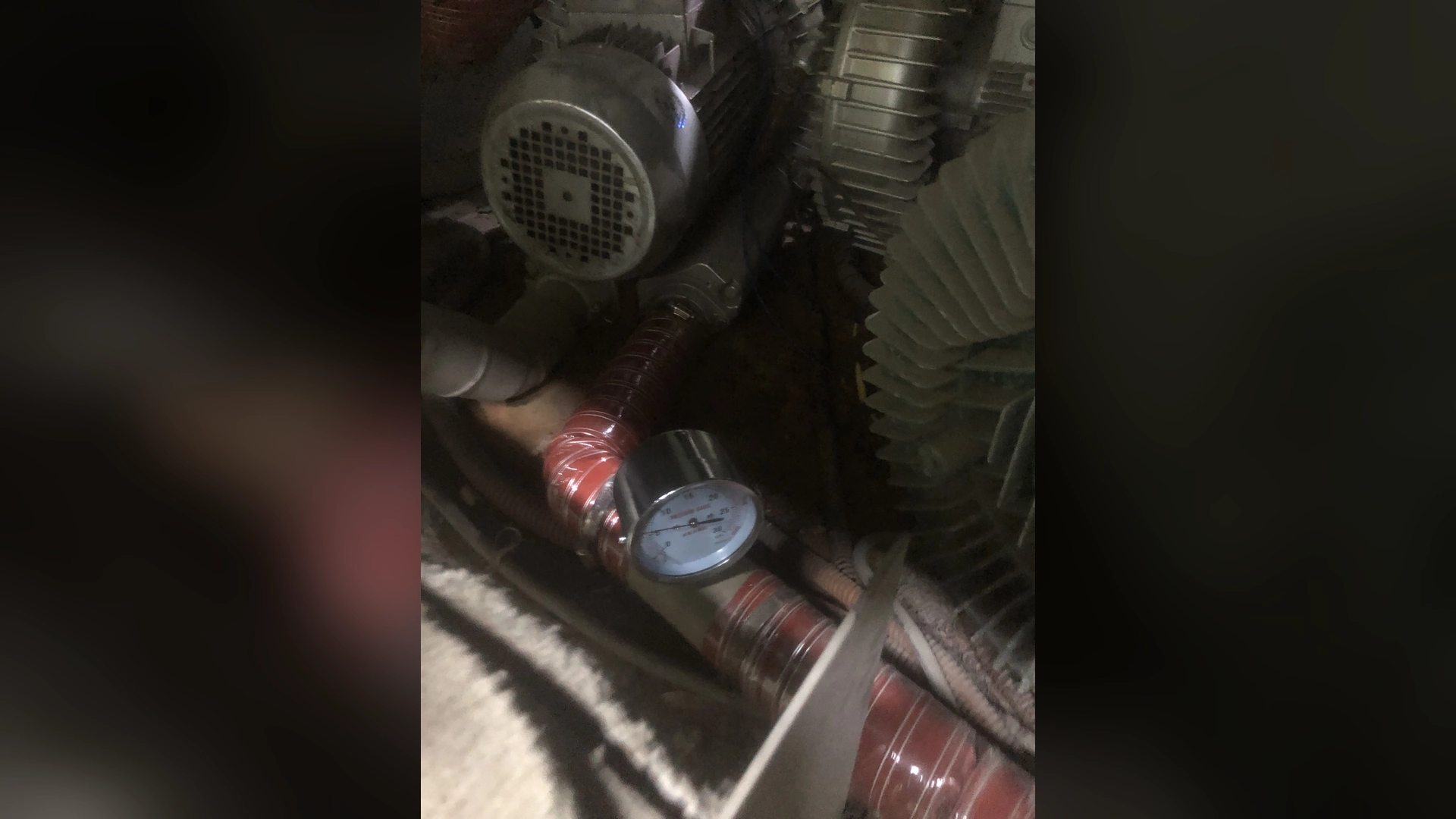
If your ring blower’s relief valve opens every time the line runs a particular product, the valve is telling you that pressure at its location has reached its opening condition. It does not tell you why. A partly closed downstream valve, a clogged air knife, a changed recipe or an incorrectly specified relief device can create the same visible symptom. Do not keep tightening the spring to silence it: that can remove the protection the blower was installed with.
Record when it opens
Write down the product, line speed, blower speed, number of outlets in use and the pressure reading before and during the event. Note where the gauge is mounted. A gauge at the blower outlet does not describe the pressure at the far end of the header. If the event started after maintenance, compare the valve positions, filter and air-knife gap with the last accepted configuration.
The first split is useful: does the valve open as soon as the blower starts, or only when a branch closes or the process changes? An immediate event points you toward the starting air path and valve specification. A process-dependent event asks for a branch-by-branch check. Isolate equipment only under the site’s approved procedure; never test by blocking the discharge of a running unit.
Separate valve trouble from system resistance
Check the relief valve’s model, condition and documented setting against the blower maker’s limits. Then trace the actual discharge route: flexible hose, manifold, branch valves, filters where fitted and final nozzles. A narrowed hose or closed branch can raise blower-side pressure while reducing useful flow at the product. The industrial air-knife application is a good example: the acceptance test should include the required air at the knife, not just a pressure reading near the blower.
If pressure and airflow cannot both be measured, record that limitation. A high reading alone does not prove the ring blower is oversized. For the broader replacement review, use the existing ring blower engineering checklist; this article is about finding the cause of a valve that is opening today.
Decide what to change
Restore any incorrect valve or air-path condition first, then repeat the same production run. If the system is correctly configured and the valve still opens, compare the required pressure–flow points with the existing blower’s full curve and its protection limits. An energy-saving replacement must be screened in the same way: review TW750, TW1500 and TW2000 at the combined operating point. Their separate maximum pressure and maximum flow figures are not one achievable point.
Send the valve model and setting record, a simple air-path sketch, the gauge position and readings from a normal and an opening event. Those details let an engineer decide whether the protection device, the process restriction or the blower selection needs attention.