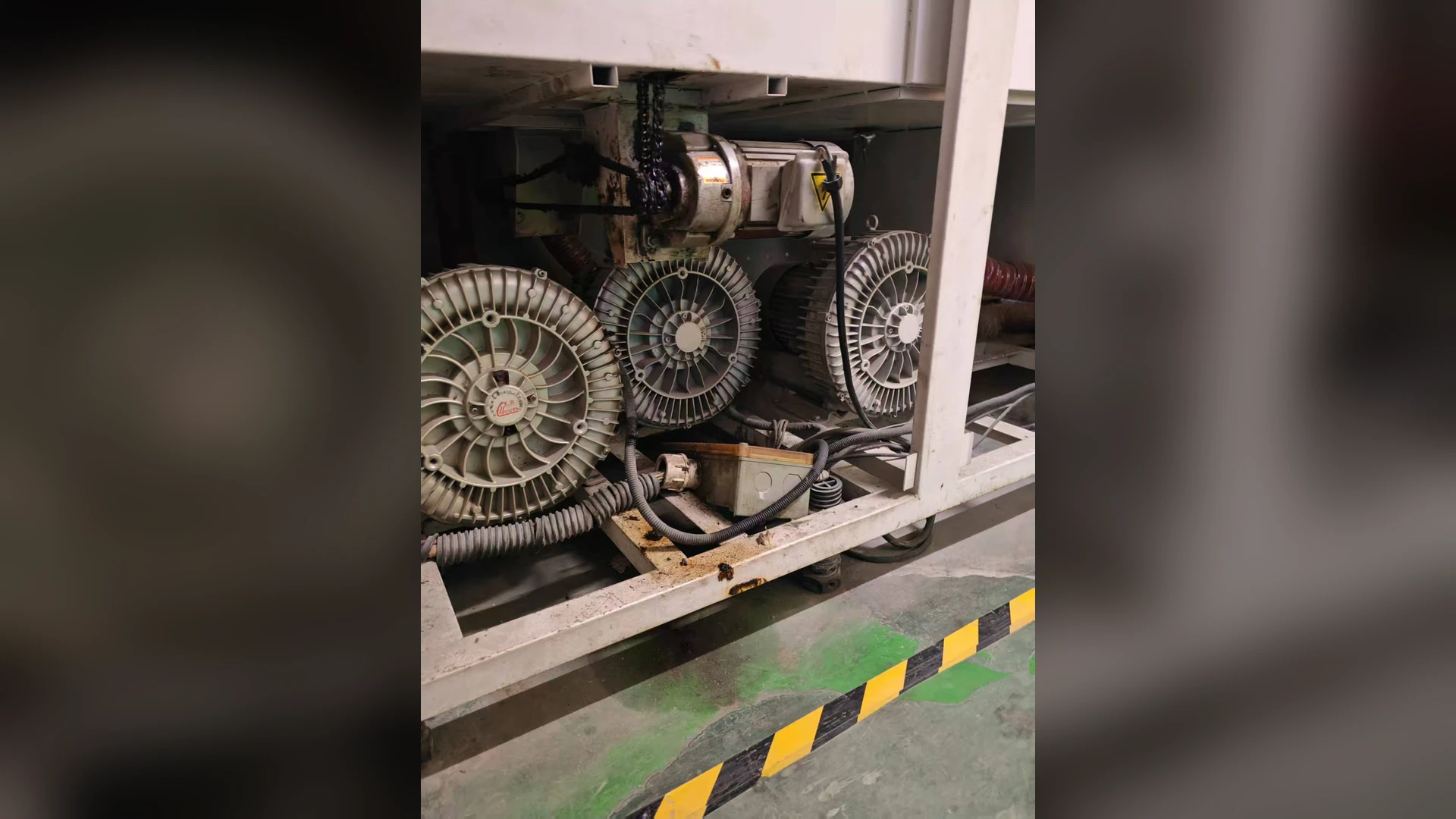
Lightweight bottles can tip when an air jet applies a side force that their conveyor support cannot resist. The weak point may be the bottle shape, fill state, guide-rail setting, conveyor transfer or air-knife angle. Increasing blower output before identifying that weak point can make the instability worse and may move water onto a previously dry surface.
The first question is where and when the bottle begins to move. Use a safe, controlled observation at normal production speed, including the bottle format that fails most often. Note whether tipping begins at the first jet, a transfer gap, a rail opening or a later knife.
Distinguish airflow force from poor support
Run an approved comparison with the air knives off, then at the validated setting. If the same bottle is unstable without air, inspect conveyor speed changes, belt condition, guide-rail contact, transfer plates and bottle spacing first. If the instability appears only with air, record the knife position, angle, distance and active branch setting. Do not place personnel near moving conveyors or exposed jets to make this observation.
Bottle mass and center of gravity change with fill level, cap state and material. An empty lightweight container may behave differently from a filled one. Test the actual production state rather than assuming that a stable sample represents every format.
Change one physical cause at a time
Check whether the jet strikes mainly above the bottle’s supported base. A high side load produces a larger overturning moment than the same load applied lower down. The knife may be aimed at the water band around the shoulder or label area, but its path should be evaluated against bottle stability. Small changes in angle, distance, height or sequence can redirect water while reducing lateral push. Record each setting before changing it.
Guide rails may help, but excessive pressure against a thin bottle can deform it, create scuffs or disrupt spacing. Verify both sides of the bottle path and the transfer into the next machine. A staggered arrangement or support fixture may be appropriate for some formats, but it needs a production test and equipment-builder approval.
Keep the drying result in the test
A setting that stops tipping but leaves water at the labeler is not a successful correction. Inspect the downstream point that matters, at production speed, for the lightest and hardest-to-dry formats. Record tip rate, wet-area location, line speed, bottle condition and air setting together. Towwind’s container-drying guide explains how to map the wet area; the changeover checklist helps retain the approved settings for each format.
If a redesigned knife arrangement changes required airflow or pressure, recalculate the system duty before comparing TW750, TW1500 and TW2000. Their motor ratings do not indicate the side force on a bottle or guarantee drying at the new arrangement.
For an application review, send Towwind the bottle drawings, fill state, line speed, nozzle layout and drying acceptance point. A short video of the controlled test can help identify the first movement.